Category: Lawn & Garden

Helpful lawn and garden product reviews, ideas, and maintenance tips.

  • What to Plant in a Raised Bed in Iowa: Crops, Spacing and Timing

    What to Plant in a Raised Bed in Iowa: Crops, Spacing and Timing

    Skip to content

    Lawn & Garden • Iowa Raised Beds • Updated October 29, 2026

    What to Plant in a Raised Bed in Iowa: Crops, Spacing and Timing

    Explore related guides: How much soil for a raised bed · Best raised beds for Iowa · When to start seeds in Iowa · Last frost date in Iowa.

    A raised bed warms up and dries out earlier in spring than an Iowa in-ground garden, so you can plant sooner and fit a lot of food into a small space. This guide covers what to plant in a raised bed in Iowa: the crops that work best, how many plants fit per square foot, when to plant each one in Iowa, and a sample 4 x 8 ft plan, based on Iowa State University Extension and Outreach guidance.

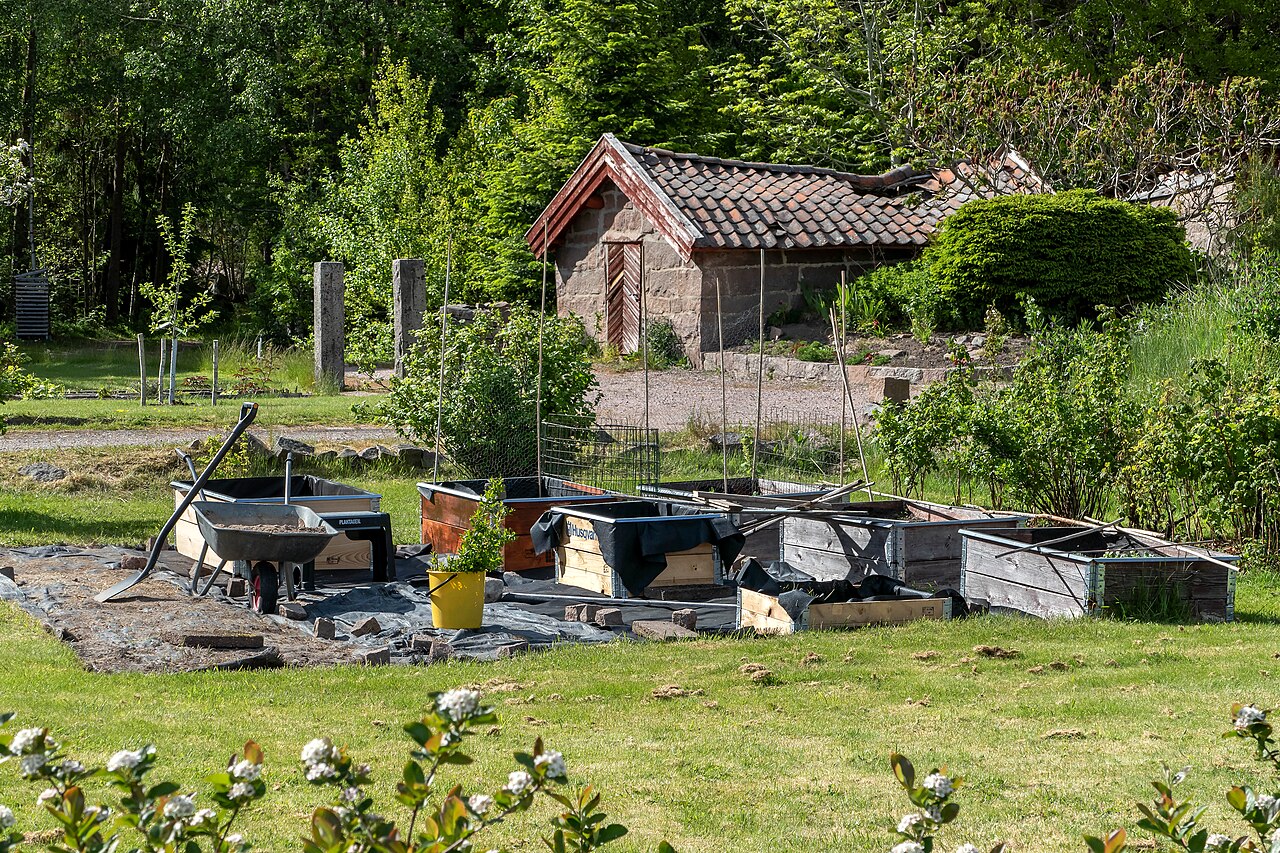
    Raised garden beds filled with soil at a community garden
    Spring planting in raised beds at the USDA People’s Garden. Photo: U.S. Department of Agriculture, public domain, via Wikimedia Commons.

    What to plant in a raised bed in Iowa: the short answer

    The best raised bed crops for Iowa are compact, high-yield plants that you harvest often: lettuce, spinach, radishes, carrots, beets, onions, peas, bush beans, peppers, tomatoes (one per square foot, caged) and herbs. Plant cool-season crops from early to mid-April, warm-season crops in mid-May in central Iowa, and a second round of cool-season crops in early August for fall.

    How many plants fit per square foot

    ISU Extension notes that raised beds can be planted with the square-foot method: the bed is divided into a grid of 1-foot squares and each crop gets a set number of plants per square. Plants grow closer together, so yields are higher and there is less weeding. An ISU Extension Master Gardener in Linn County gives these spacings:

    Square-foot spacing for raised beds (ISU Extension Master Gardener)
    Plants per square foot Crops
    1 (extra large) Tomato, broccoli, cabbage
    4 (large) Leaf lettuce, Swiss chard, bush snap beans, cucumbers (trellised)
    9 (medium) Spinach, beets, peas
    16 (small) Onions, radishes, carrots

    Peppers do well at about one plant per square foot in a bed. Large vining crops such as summer squash need a full 2 x 2 ft area or more.

    Iowa raised bed planting calendar

    These dates come from ISU Extension’s planting guide for central Iowa. Southern Iowa runs about a week earlier and northern Iowa about a week later. Raised beds warm early, so cool-season crops can often go in at the start of each window.

    When to plant raised bed crops in central Iowa (ISU Extension)
    Crop Plant Fall crop
    Peas Early spring, as soon as soil can be worked About August 1 to 10
    Spinach Early to mid-April About August 10
    Lettuce, radishes, kale Early spring Kale: direct-seed early July
    Broccoli, cauliflower Transplants early to mid-April —
    Carrots, beets, Swiss chard Early spring through summer Seed by about August 1
    Snap beans Any time after May 5 Last practical date about August 1
    Tomatoes, peppers Transplants in mid-May Last practical date about June 20
    Cucumbers, summer squash Seed mid-May —

    For crop-by-crop details see our guides on tomatoes, peppers and potatoes, and start transplants indoors with our Iowa seed starting calendar.

    Sample plan for a 4 x 8 ft raised bed

    A 4 x 8 ft bed has 32 square feet. Here is one way to fill it for a full Iowa season, with taller crops on the north side so they don’t shade shorter ones:

    Example 4 x 8 ft raised bed plan for Iowa (32 squares)
    Squares Spring (April) Summer (mid-May on)
    4 (north edge) Peas on a trellis, 9 per square Cucumbers on the same trellis, 4 per square
    4 Lettuce and spinach Tomatoes, 1 per square, caged
    4 Radishes and lettuce Peppers, 1 per square
    4 Onions, 16 per square Onions continue
    4 Carrots, 16 per square Carrots continue
    4 Beets, 9 per square Bush beans, 4 per square
    4 Broccoli, 1 per square Broccoli, then fall spinach in August
    4 (south edge) Swiss chard and parsley Basil and other herbs

    Need to build or fill the bed first? Use our raised bed soil calculator.

    Space-saving tips from ISU Extension

    • Succession planting. Use the same space twice. After you harvest early lettuce and spinach, plant fast summer crops such as beans or summer squash in the same squares.
    • Interplanting. Grow two crops together, such as slow carrots with fast radishes, or lettuce between tomato plants.
    • Grow vertically. Pole beans, peas, cucumbers and squash vines can climb a trellis, which saves bed space and adds height.
    • Full sun. ISU Extension recommends at least six hours of sun a day; vegetables grown in shade are usually less productive.
    • Fertilize lightly. For very small areas, ISU Extension suggests 3 to 4 teaspoons of a complete fertilizer such as 10-10-10 per square foot, raked in before planting.

    Crops to skip in a small raised bed

    Some crops take up a lot of room for what they give back. In a single 4 x 8 ft bed, consider growing these in the ground or in a separate large container instead:

    • Sweet corn, which needs to be planted in a block of several rows to pollinate well.
    • Pumpkins, winter squash and watermelons, which sprawl for many feet.
    • Asparagus and rhubarb, perennials that would occupy the bed permanently.
    • Potatoes, which need hilling; grow bags work well instead.

    Tools for a raised bed garden

    All five were listed as sold by Amazon.com when checked on October 29, 2026. Check the current listing before you buy.

    For support: Happygrill Adjustable Tomato Cages, 60 in, 3 Pack

    Product pick

    Happygrill 60 in Adjustable Tomato Cages, 3 Pack
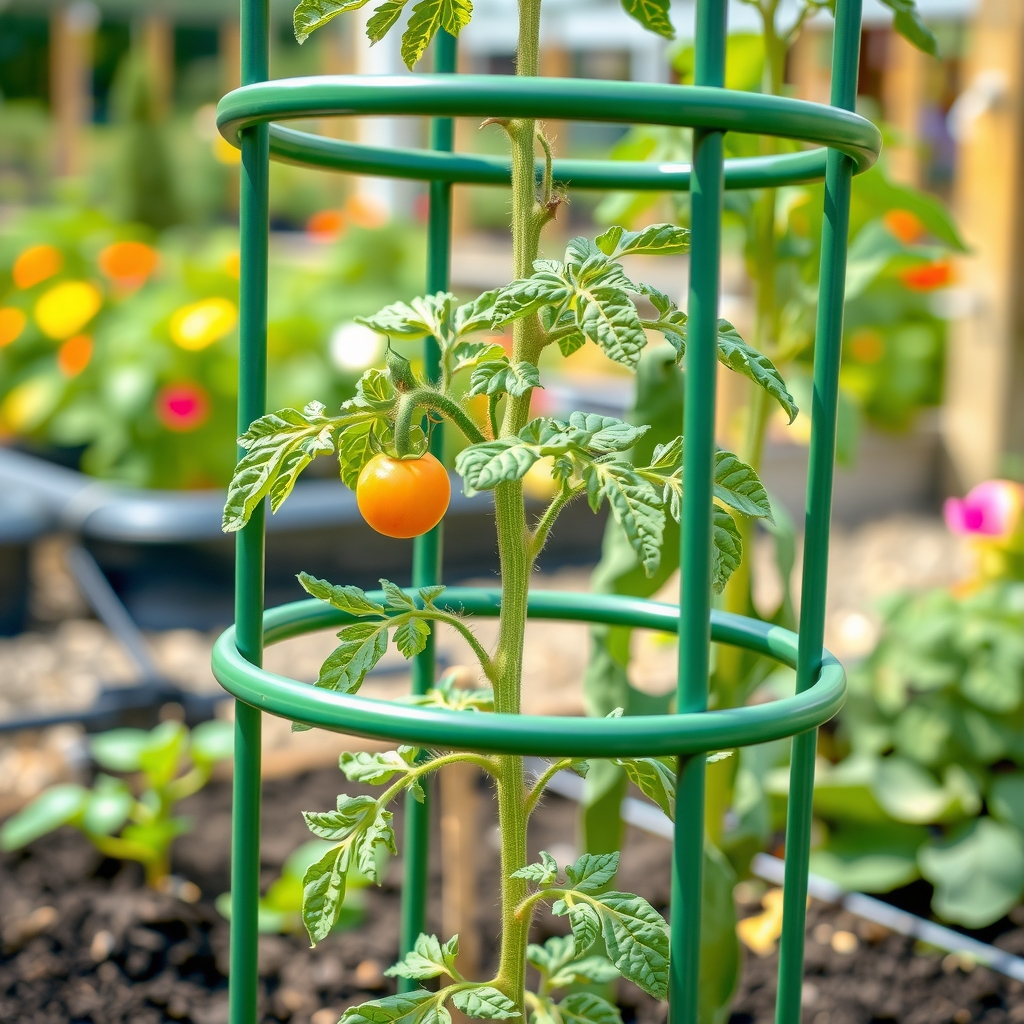
    Young tomato plant inside a green metal support cage, illustrative AI image

    Illustrative image (AI-generated), not the exact product.

    See current photos and price on Amazon →

    Tall, adjustable cages keep tomatoes and peppers upright and inside the bed, so they don’t shade or flop onto neighboring squares.

    For steady watering: Gilmour 50 ft Flat Soaker Hose

    Product pick

    Gilmour 50 ft Flat Weeper Soaker Hose
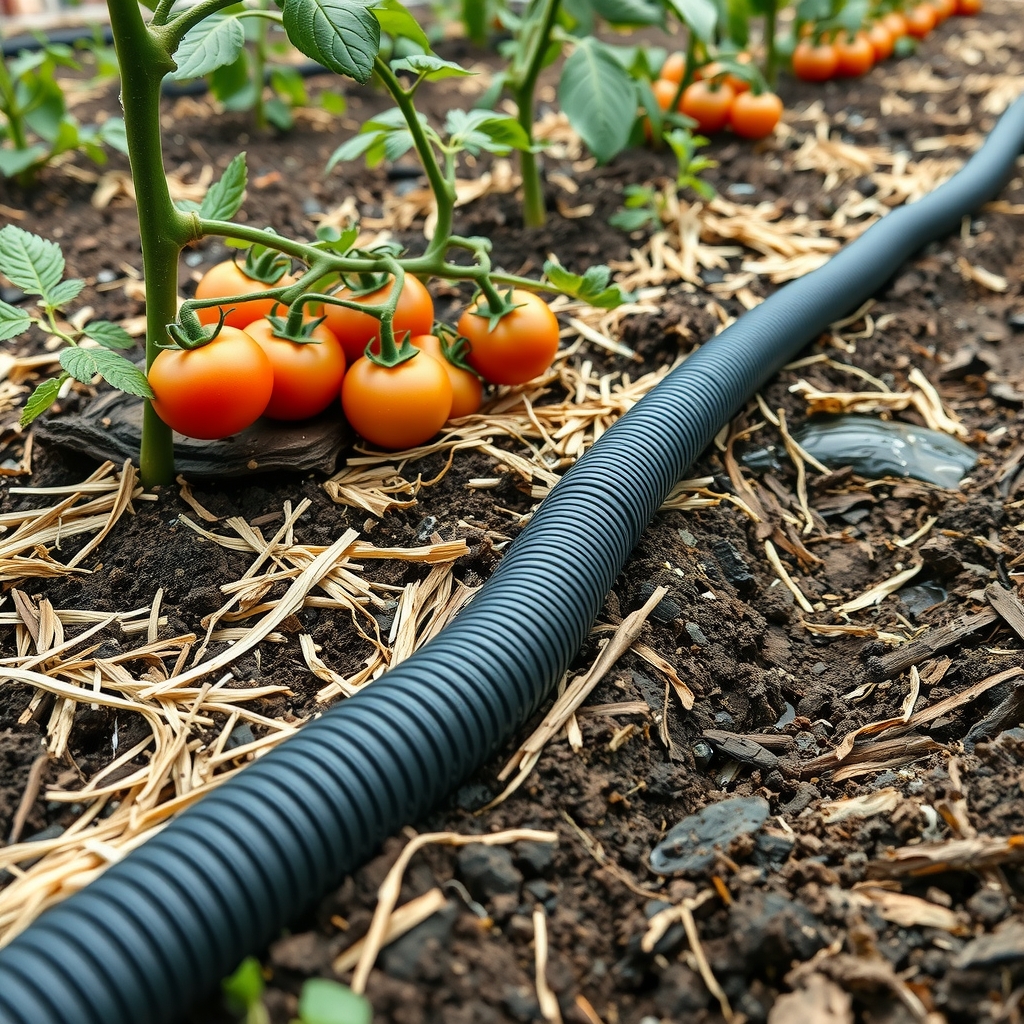
    Flat black soaker hose along tomato plants under straw mulch, illustrative AI image

    Illustrative image (AI-generated), not the exact product.

    See current photos and price on Amazon →

    Raised beds dry out faster than in-ground gardens. A flat soaker hose snaked through the bed waters roots evenly and keeps leaves dry.

    For a late cold snap: Amazon Basics Plant Covers, 10 x 30 ft

    Product pick

    Amazon Basics Plant Covers for Frost Protection, 10 x 30 ft

    White frost cloth covering young tomato plants, illustrative AI image

    Illustrative image (AI-generated), not the exact product.

    See current photos and price on Amazon →

    Raised beds warm early, which tempts you to plant early. Keep a frost cover ready for cold April and May nights over lettuce, broccoli and new transplants.

    To tie stems to stakes: VELCRO Plant Ties

    Product pick

    VELCRO Brand Adjustable Plant Ties, 75 ft x 1/2 in
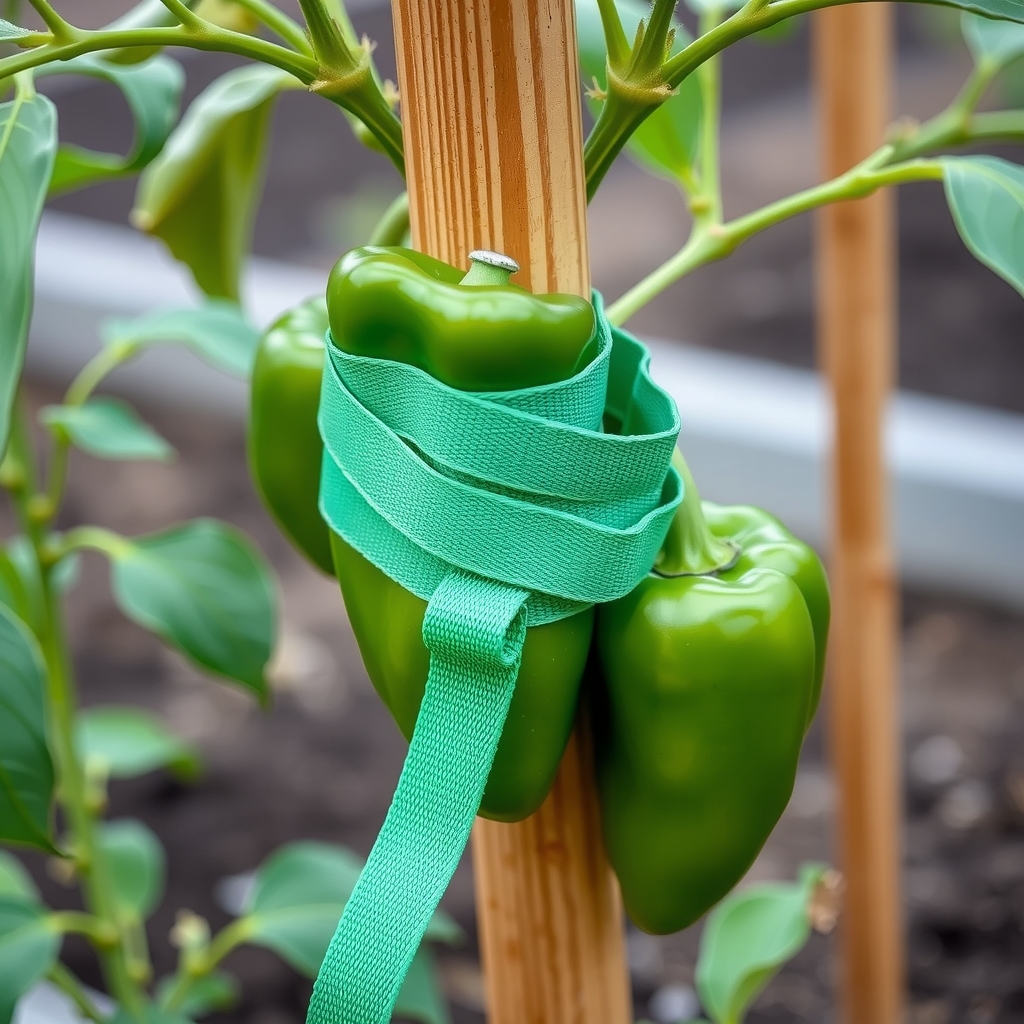
    Green garden tie holding a pepper stem to a stake, illustrative AI image

    Illustrative image (AI-generated), not the exact product.

    See current photos and price on Amazon →

    Soft, reusable ties for fastening tomatoes, peppers and cucumbers to stakes or a trellis when you grow up instead of out.

    For harvest: Fiskars Micro-Tip Snips

    Product pick

    Fiskars 6" Steel Micro-Tip Pruning Scissors

    Garden snips cutting a ripe red pepper from the plant, illustrative AI image

    Illustrative image (AI-generated), not the exact product.

    See current photos and price on Amazon →

    Narrow snips for cutting herbs, lettuce leaves and peppers without pulling on plants in a tightly planted bed.

    FAQs

    What vegetables grow best in a raised bed in Iowa?
    Compact, frequently harvested crops do best: lettuce, spinach, radishes, carrots, beets, onions, peas, bush beans, peppers, caged tomatoes and herbs.

    When can I start planting a raised bed in Iowa?
    In central Iowa, plant peas as soon as the soil can be worked, spinach and broccoli transplants in early to mid-April, and tomatoes and peppers in mid-May. Raised beds warm earlier, so cool-season crops can often go in at the start of the window.

    How many tomato plants fit in a 4×8 raised bed?
    At one tomato per square foot with cages, you can fit several, but most gardeners plant 3 to 4 tomatoes in a 4 x 8 ft bed to leave room for other crops and airflow.

    How many plants per square foot in a raised bed?
    About 1 for tomatoes, broccoli and cabbage; 4 for lettuce, chard, bush beans and trellised cucumbers; 9 for spinach, beets and peas; and 16 for onions, radishes and carrots.

    Can I plant a fall garden in an Iowa raised bed?
    Yes. ISU Extension suggests a fall planting of peas about August 1 to 10, spinach about August 10, and carrots, beets and chard by about August 1.

    What should I not plant in a small raised bed?
    Sweet corn, pumpkins, winter squash, watermelons and perennials like asparagus take too much room for a single small bed.

    Sources and review scope

    This guide was prepared on October 29, 2026 from the following sources and from the product listings on Amazon.com. Homingwell did not perform hands-on testing.

    Explore more Lawn & Garden guides.
  • How Much Soil for a Raised Bed? Calculator and Chart

    How Much Soil for a Raised Bed? Calculator and Chart

    Skip to content

    Lawn & Garden • Raised Beds • Updated October 29, 2026

    How Much Soil for a Raised Bed? Calculator and Chart

    Explore related guides: Raised garden bed size · Best raised beds for Iowa · Winterize raised beds · Soil test kits · What to plant in a raised bed in Iowa.

    Buying soil for a new raised bed is easy to get wrong: too little and you make a second trip, too much and you have a pile on the driveway. This guide shows how much soil for a raised bed you need, with a calculator, a chart of common bed sizes, and a simple soil mix based on Iowa State University Extension guidance.

    Filling new raised garden beds with soil
    New raised beds being prepared. Photo: W.carter, CC0, via Wikimedia Commons.

    How much soil for a raised bed: the short answer

    Multiply the inside length × width × depth in feet to get cubic feet. A 4 × 8 ft bed filled 12 inches deep needs 32 cubic feet, about 1.2 cubic yards. That is about 22 bags of 1.5 cubic feet before extra, or about 24 bags if you add 10% for settling.

    Raised bed soil calculator

    Enter the inside size of your bed and the soil depth you plan to fill. The calculator gives cubic feet, cubic yards, bags and a topsoil and compost split.

    Raised bed soil calculator

    Includes about 10% extra for settling. Mix split uses ISU Extension’s ~70% topsoil / ~30% compost option.

    Soil chart for common raised bed sizes

    Soil needed for common raised bed sizes (bag counts include about 10% extra)
    Bed size Depth Cubic feet Cubic yards 1.5 cu ft bags 2 cu ft bags
    4 × 8 ft 6 in 16.0 0.59 12 9
    4 × 8 ft 10 in 26.7 0.99 20 15
    4 × 8 ft 12 in 32.0 1.19 24 18
    4 × 8 ft 18 in 48.0 1.78 36 27
    4 × 4 ft 12 in 16.0 0.59 12 9
    3 × 6 ft 12 in 18.0 0.67 14 10
    2 × 8 ft 10 in 13.3 0.49 10 8
    4 × 12 ft 12 in 48.0 1.78 36 27

    Not sure what size to build? See our raised garden bed size guide.

    The formula, step by step

    1. Measure the inside of the bed, not the outside. Thick boards can take several inches off each side.
    2. Convert depth to feet: divide inches by 12. For example, 10 inches is 0.83 ft.
    3. Cubic feet = length × width × depth (ft).
    4. Cubic yards = cubic feet ÷ 27. Bulk soil is sold by the cubic yard.
    5. Bags = cubic feet ÷ bag size. Bags are often 0.75, 1, 1.5 or 2 cubic feet; 1 cubic foot is about 25.7 dry quarts.
    6. Add about 10% for settling. New soil sinks after the first few waterings.

    Example: a 3 × 6 ft bed, 12 inches deep: 3 × 6 × 1 = 18 cubic feet, or 0.67 cubic yards. With 10% extra, about 20 cubic feet, so 14 bags of 1.5 cubic feet.

    What soil mix to use

    Iowa State University Extension says raised bed soil should be light and well-drained. It suggests two simple mixes:

    • About 70% topsoil and 30% compost. This is the split the calculator uses.
    • Equal parts topsoil, organic matter and coarse sand. Organic matter can be well-rotted manure, compost or peat.

    ISU Extension also advises making sure brought-in topsoil is not contaminated with soil-borne diseases, lead or pesticides, and that compost is fully mature and not too salty. A soil test after filling tells you whether you need lime or fertilizer.

    Bagged soil or bulk soil?

    Bags vs bulk delivery
    Bagged soil Bulk soil
    Best for One or two small beds About 1 cubic yard or more
    Cost per cubic foot Usually higher Usually lower, plus delivery
    Handling Easy to carry and store Dumped in one pile; move it by cart
    Quality Consistent, labeled Ask the supplier what is in the blend

    How to fill a raised bed

    1. Remove sod where the bed will sit and loosen the soil underneath with a spade or tiller, as ISU Extension recommends.
    2. Add a few inches of the mix and work it into the existing soil, so there is no sharp layer between the two.
    3. Keep adding and mixing until the bed is full, then water well.
    4. Top up after settling. Add more mix after a week or two of watering, then add an inch or two of compost each year.

    Tools for filling a raised bed

    All four were listed as sold by Amazon.com when checked on October 29, 2026. Check the current listing before you buy.

    To measure the bed: STANLEY FATMAX 25 ft Tape

    Product pick

    STANLEY FATMAX Tape Measure, 25-Foot

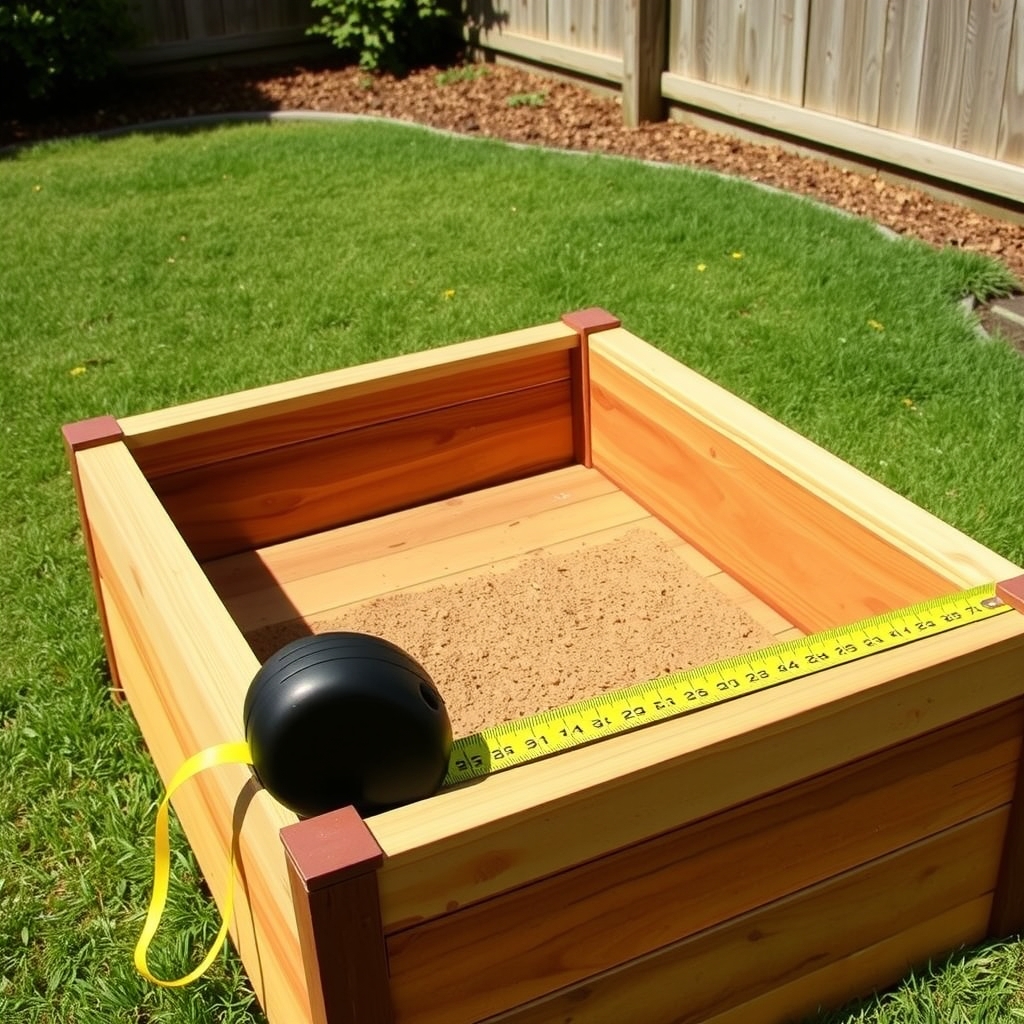
    Tape measure along the inside of a wooden raised bed, illustrative AI image

    Illustrative image (AI-generated), not the exact product.

    See current photos and price on Amazon →

    Measure the inside length, width and depth before you order. A rigid blade makes it easy to measure across a bed alone.

    To move soil: Gorilla Carts Dump Cart

    Product pick

    Gorilla Carts Poly Dump Cart, 4 Cu Ft, 300 lb Capacity

    Poly dump cart full of soil next to a raised bed, illustrative AI image

    Illustrative image (AI-generated), not the exact product.

    See current photos and price on Amazon →

    Moves bulk soil from the driveway to the bed. At 4 cubic feet a load, a 4 × 8 bed takes about eight to nine trips, and the dump feature saves shoveling.

    To load and fill: Truper Short D-Handle Shovel

    Product pick

    Truper Tru Tough 19-Inch Short D-Handle Round Point Shovel

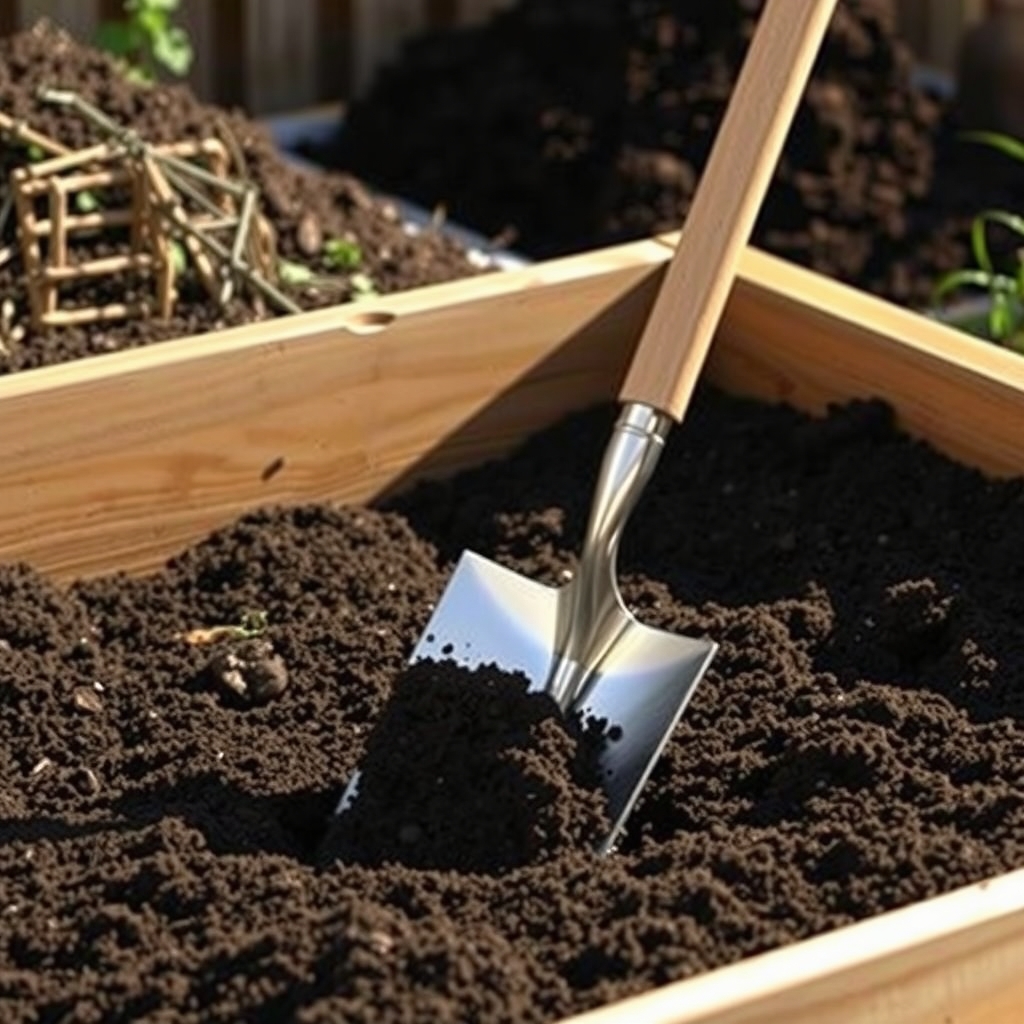
    Round point shovel filling a raised bed with soil, illustrative AI image

    Illustrative image (AI-generated), not the exact product.

    See current photos and price on Amazon →

    A short handle gives better control when you shovel soil into a bed or loosen the ground underneath.

    To mix layers: Spear & Jackson Border Fork

    Product pick

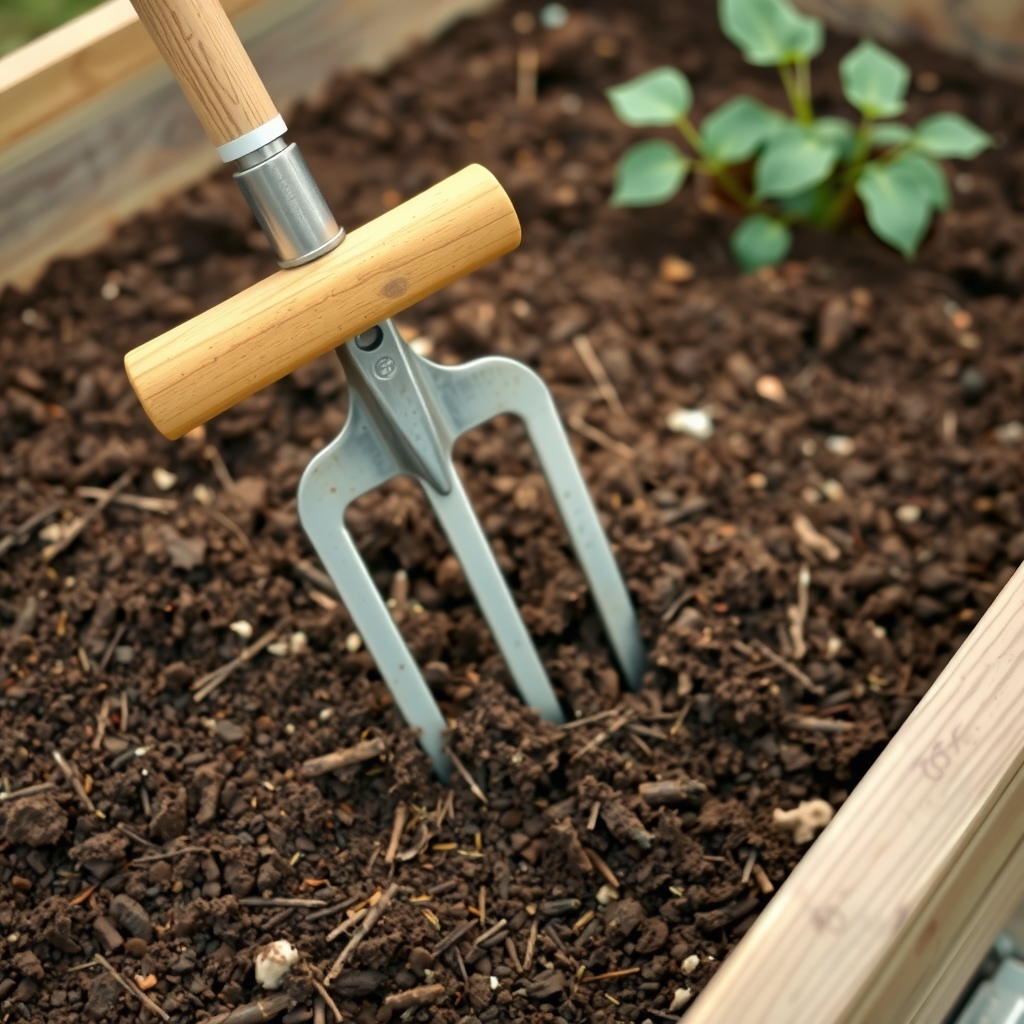
    Spear & Jackson Neverbend Carbon Steel Border Fork

    Garden fork mixing compost into raised bed soil, illustrative AI image

    Illustrative image (AI-generated), not the exact product.

    See current photos and price on Amazon →

    Mixes compost into topsoil and blends each new layer into the soil below, as ISU Extension suggests.

    FAQs

    How much soil do I need for a 4×8 raised bed?
    A 4 x 8 ft bed filled 12 inches deep holds 32 cubic feet, about 1.19 cubic yards. With about 10% extra for settling, that is roughly 24 bags of 1.5 cubic feet or 18 bags of 2 cubic feet.

    How do I calculate soil for a raised bed?
    Multiply length × width × depth, all in feet, to get cubic feet. Divide cubic feet by 27 to get cubic yards. Divide by the bag size to get the number of bags.

    How many bags of soil for a 4×4 raised bed?
    A 4 x 4 ft bed 12 inches deep needs 16 cubic feet. With about 10% extra, buy about 12 bags of 1.5 cubic feet or 9 bags of 2 cubic feet.

    What soil mix should I use in a raised bed?
    Iowa State University Extension suggests about 70% topsoil and 30% compost, or equal parts topsoil, organic matter and coarse sand. Raised bed soil should be light and well-drained.

    Is it cheaper to buy bagged or bulk soil?
    For one small bed, bags are simpler. Once you need about a cubic yard or more, bulk soil delivered by the yard is usually cheaper per cubic foot. Check local prices and delivery fees.

    Do I need to top up raised bed soil?
    Yes. Soil settles and compost breaks down, so expect to add an inch or two of compost each year.

    Sources and review scope

    This guide was prepared on October 29, 2026 from the following sources and from the product listings on Amazon.com. Homingwell did not perform hands-on testing.

    Explore more Lawn & Garden guides.
  • When to Plant Tomatoes in Nebraska: Dates, Soil Temps and Tips

    When to Plant Tomatoes in Nebraska: Dates, Soil Temps and Tips

    Skip to content

    Lawn & Garden • Nebraska Planting Dates • Updated October 29, 2026

    When to Plant Tomatoes in Nebraska: Dates, Soil Temps and Tips

    Explore related guides: When to start seeds in Nebraska · Tomatoes in Iowa · Tomatoes in Minnesota · Tomatoes in Wisconsin.

    Nebraska stretches from humid Falls City to the high, dry Panhandle, and the right week to plant tomatoes changes a lot across the state. Planting too early in cold soil stalls tomatoes for weeks. This guide explains when to plant tomatoes in Nebraska, region by region, using Nebraska Extension guidance on soil temperature and Nebraska State Climate Office frost dates.

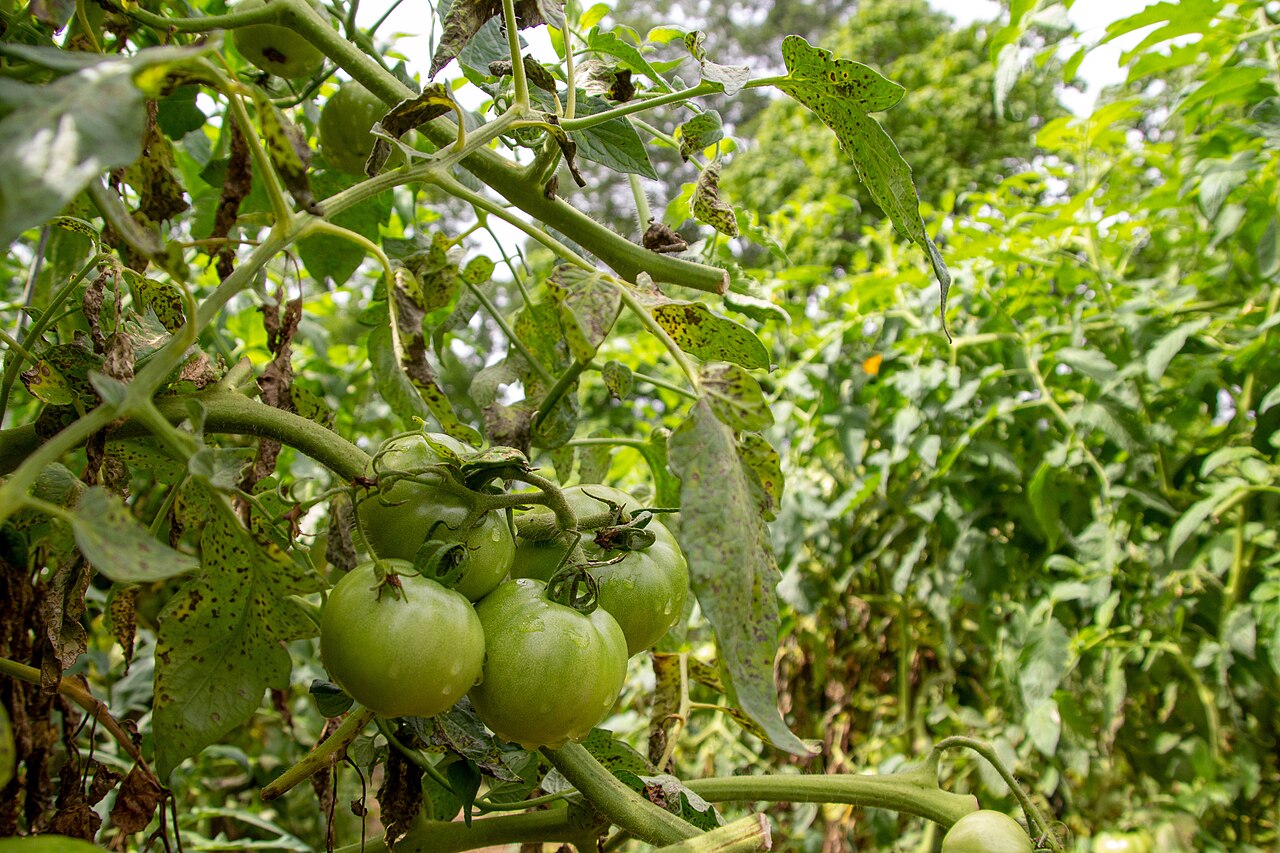
    Tomato plants growing in a home vegetable garden
    Tomato plants in a vegetable garden. Photo: Mary O’Neill, U.S. National Park Service, public domain, via Wikimedia Commons.

    When to plant tomatoes in Nebraska: the short answer

    In most of Nebraska, tomatoes should not go outdoors until the threat of frost has passed, which Nebraska Extension says is typically around Mother’s Day. In eastern Nebraska (Omaha, Lincoln) that means Mother’s Day to mid-May. Central Nebraska is usually about a week later, and the Panhandle and west-central areas two to three weeks later, into late May or early June. Everywhere, wait for soil of at least 60°F at 4 inches and nights above 50°F.

    Tomato planting dates by region

    Typical tomato transplant windows in Nebraska
    Region Average last spring frost Plant tomatoes
    Southeast and east (Falls City, Omaha, Lincoln) Falls City April 19, Omaha April 20, Lincoln April 25 Mother’s Day to mid-May
    Central and northeast (Grand Island, Norfolk) Grand Island April 26, Norfolk April 27 Mid to late May
    North-central and west-central (Valentine, North Platte) Valentine May 12, North Platte May 13 Late May to early June
    Panhandle (Scottsbluff) May 9 Late May to early June

    Frost dates are 1991 to 2020 averages (32°F) from the Nebraska State Climate Office. An average date still leaves about a 50% chance of a later frost, so planting a few weeks after it is safer. Start tomato seeds indoors 6 to 8 weeks before planting; see our Nebraska seed starting calendar.

    Soil temperature and night temperature

    • Soil at least 60°F. Nebraska Extension groups tomatoes with very tender crops that need soil of at least 60°F and daytime temperatures above 60°F. They do not tolerate cool or cold temperatures.
    • Check real soil data. Nebraska Extension posts current 1-day and 7-day soil temperatures, measured 4 inches under bare soil, through CropWatch and the Nebraska State Climate Office. A soil thermometer in your own bed is even better.
    • Nights above 50°F. Wait until night temperatures stay above 50°F before transplanting.
    • Watch central Nebraska in mid-May. Nebraska Extension notes that a killing frost can still occur in central Nebraska up to about May 15.
    • Protect from wind. Spring wind is hard on new transplants across the plains. Frost cloth or a temporary windbreak helps for the first week.

    Tomato varieties for Nebraska

    Nebraska summers swing from heavy rain to heat and drought, and those swings cause cracked fruit. Nebraska Extension lists these varieties as tolerant of fruit cracking:

    Crack-tolerant tomatoes listed by Nebraska Extension
    Variety Notes
    Celebrity Reliable determinate slicer
    Jackpot Slicer
    Mountain Fresh Slicer
    Rutgers Classic heirloom-type slicer
    Supersonic Slicer

    In the Panhandle and north-central Nebraska, where the frost-free season is shorter, choose earlier-maturing varieties too. For more choices, see Nebraska Extension NebGuide G1896, Selected Vegetable Cultivars for Nebraska.

    How to plant tomatoes in Nebraska

    1. Harden off plants for 7 to 10 days, putting them outside on mild days and bringing them in on cold nights.
    2. Check soil temperature 4 inches deep in the morning before planting.
    3. Plant on a calm, cloudy day or in the evening to reduce transplant shock.
    4. Bury the stem deep; tomatoes root along the buried stem.
    5. Add cages or stakes at planting so you don’t damage roots later.
    6. Water deeply and evenly, then mulch once the soil has warmed. Nebraska Extension recommends an even moisture supply and mulch to help prevent blossom end rot and cracking.

    Tools for planting tomatoes

    All five were listed as sold by Amazon.com when checked on October 29, 2026. Check the current listing before you buy.

    To know when soil is ready: Taylor Soil Thermometer

    Product pick

    Taylor Soil Thermometer with Silicone Bumper

    Dial soil thermometer in garden soil beside a tomato seedling, illustrative AI image

    Illustrative image (AI-generated), not the exact product.

    See current photos and price on Amazon →

    A stainless steel probe that shows when soil 4 inches down has reached the 60°F that Nebraska Extension gives as the minimum for tomatoes.

    For a late cold snap: Amazon Basics Plant Covers, 10 x 30 ft

    Product pick

    Amazon Basics Plant Covers for Frost Protection, 10 x 30 ft

    White frost cloth covering young tomato plants, illustrative AI image

    Illustrative image (AI-generated), not the exact product.

    See current photos and price on Amazon →

    A breathable frost cloth for the cold nights that can still arrive in mid to late May in central and western Nebraska. It can also shield young plants from wind.

    For support: Happygrill Adjustable Tomato Cages, 60 in, 3 Pack

    Product pick

    Happygrill 60 in Adjustable Tomato Cages, 3 Pack

    Young tomato plant inside a green metal support cage, illustrative AI image

    Illustrative image (AI-generated), not the exact product.

    See current photos and price on Amazon →

    Tall, adjustable cages to hold up indeterminate tomatoes through Nebraska summer storms and wind.

    For tying to stakes: VELCRO Brand Adjustable Plant Ties, 75 ft

    Product pick

    VELCRO Brand Adjustable Plant Ties, 75 ft x 1/2 in

    Tomato stem tied to a stake with a soft green garden tie, illustrative AI image

    Illustrative image (AI-generated), not the exact product.

    See current photos and price on Amazon →

    Soft, reusable ties that hold stems to stakes without cutting into them.

    For steady watering: Gilmour 50 ft Flat Soaker Hose

    Product pick

    Gilmour 50 ft Flat Weeper Soaker Hose

    Flat black soaker hose along tomato plants under straw mulch, illustrative AI image

    Illustrative image (AI-generated), not the exact product.

    See current photos and price on Amazon →

    A flat soaker hose that waters the roots and keeps leaves dry, helping to keep moisture even through hot Nebraska summers, which reduces blossom end rot and fruit cracking.

    Conclusion

    Plant tomatoes in eastern Nebraska around Mother’s Day to mid-May, in central Nebraska about a week later, and in the Panhandle and west-central areas in late May to early June. Wait for 60°F soil at 4 inches and nights above 50°F, choose crack-tolerant varieties, and keep watering even through the summer.

    FAQs

    When should I plant tomatoes in Omaha or Lincoln?
    Around Mother’s Day to mid-May, once soil 4 inches deep reaches 60°F and nights stay above 50°F. The average last frost is April 20 in Omaha and April 25 in Lincoln.

    When should I plant tomatoes in central Nebraska?
    About a week later than eastern Nebraska, usually mid to late May. A killing frost can still happen in central Nebraska up to about May 15.

    When should I plant tomatoes in western Nebraska?
    Late May to early June. Scottsbluff and North Platte average their last spring frost around May 9 to 13, so wait two to three weeks longer than Omaha.

    What soil temperature do tomatoes need in Nebraska?
    Nebraska Extension lists 60°F as the minimum soil temperature for very tender crops like tomatoes, with daytime temperatures above 60°F.

    How can I check Nebraska soil temperatures?
    Nebraska Extension posts 1-day and 7-day average soil temperatures measured 4 inches under bare soil through CropWatch and the Nebraska State Climate Office.

    Which tomatoes resist cracking in Nebraska?
    Nebraska Extension lists Celebrity, Jackpot, Mountain Fresh, Rutgers and Supersonic as tolerant of fruit cracking.

    Sources and review scope

    This guide was prepared on October 29, 2026 from the following sources and from the product listings on Amazon.com. Homingwell did not perform hands-on testing.

    Explore more Lawn & Garden guides.
  • When to Plant Peppers in Iowa: Dates by Region and Tips

    When to Plant Peppers in Iowa: Dates by Region and Tips

    Skip to content

    Lawn & Garden • Iowa Planting Dates • Updated October 29, 2026

    When to Plant Peppers in Iowa: Dates by Region and Tips

    Explore related guides: When to plant tomatoes in Iowa · When to start seeds in Iowa · Last frost date in Iowa · When to plant potatoes in Iowa.

    Sweet or hot, peppers grow well in Iowa gardens, but they are even more sensitive to cold than tomatoes. Plant them too early and they sit and sulk for weeks. This guide explains when to plant peppers in Iowa by region, what soil and night temperatures to wait for, which varieties do well here, and how to plant and care for them, based on Iowa State University Extension and Outreach guidance.

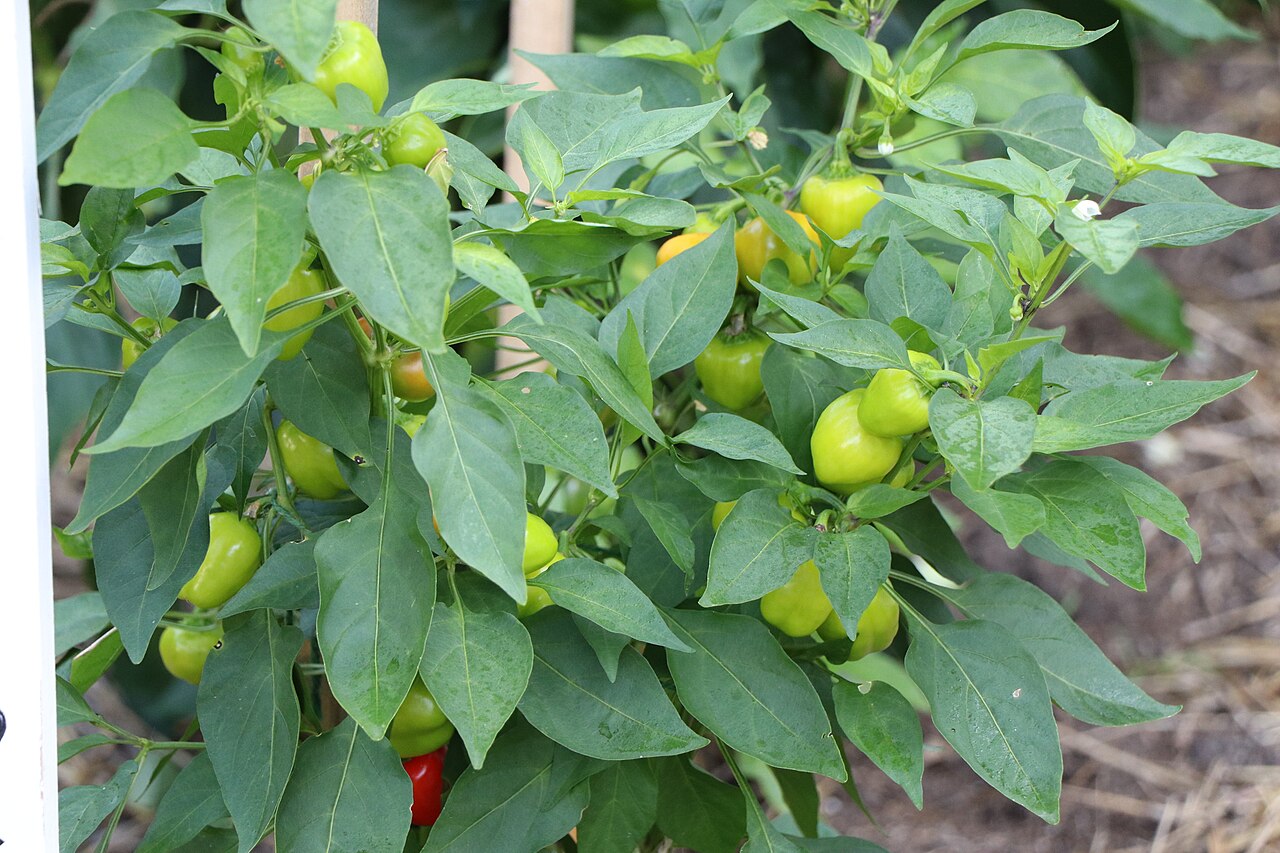
    Green and red bell peppers growing on a pepper plant in a garden
    Green and red bell peppers on the plant. Photo: U.S. National Park Service, public domain, via Wikimedia Commons.

    When to plant peppers in Iowa: the short answer

    Peppers are a warm-season crop, so plant them outdoors only after the danger of frost has passed. Iowa State University Extension says peppers can go in around mid-May in central Iowa, about one week earlier in southern Iowa and about one week later in northern Iowa. The last practical planting date is about June 20.

    Pepper planting dates by region

    Pepper transplant windows in Iowa (ISU Extension)
    Region Example cities Plant peppers
    Southern Iowa Ottumwa, Burlington, Creston, Council Bluffs Early to mid-May
    Central Iowa Des Moines, Ames, Cedar Rapids, Marshalltown Mid-May
    Northern Iowa Mason City, Spencer, Decorah Late May
    Everywhere Last practical date About June 20

    Start pepper seeds indoors about 8 weeks before your planting date; see our Iowa seed starting calendar. For your town’s average last frost, see the Iowa last frost date guide.

    Soil temperature and night temperature

    • Soil at least 60°F. Cold soil stunts pepper transplants. Check a few inches deep in the morning with a soil thermometer.
    • Warm nights. Peppers can be injured by temperatures below about 50°F even without a frost, and cool nights can make plants drop their first flowers.
    • Full sun. ISU Extension says peppers do best in well-drained soil and full sun, with at least six hours of direct sun a day.
    • Have a cover ready. If a late cold night is forecast after planting, cover the plants with frost cloth in the evening and remove it the next morning.

    Pepper varieties for Iowa gardens

    ISU Extension names several bell and hot peppers that grow well in Iowa:

    Peppers mentioned by ISU Extension
    Type Varieties
    Bell, green to red Alliance, Big Bertha, King Arthur, California Wonder
    Bell, green to yellow Early Sunsation
    Hot Jalapeño, cayenne, Anaheim, cherry, Hungarian wax, habanero

    Most bell peppers are picked green and turn red, yellow or orange if left on the plant longer. Leaving them to color up adds sweetness but takes extra weeks, so in northern Iowa choose earlier varieties.

    How to plant peppers in Iowa

    1. Harden off transplants for 7 to 10 days, setting them outside on mild days and bringing them in before cold nights.
    2. Check the soil temperature and the 10-day forecast before planting.
    3. Plant on a calm, cloudy day or in late afternoon to reduce transplant shock.
    4. Space plants 18 inches apart in the row, with rows 24 to 30 inches apart.
    5. Set plants at the same depth they grew in the pot. Unlike tomatoes, peppers do not root along a buried stem.
    6. Water in well, then mulch once the soil has warmed.

    Care and harvest

    • Water evenly. About an inch a week from rain or watering keeps fruit developing well; uneven moisture can lead to blossom-end rot.
    • Stake heavy plants. Large bell and loaded hot pepper plants can tip over in wind or rain. A stake and a soft tie help.
    • Harvest with snips. Cut peppers off with a short piece of stem instead of pulling, which can break branches.
    • Pick before frost. Harvest all usable peppers before the first fall freeze.

    Tools for planting peppers

    All five were listed as sold by Amazon.com when checked on October 29, 2026. Check the current listing before you buy.

    To know when soil is warm: Taylor Soil Thermometer

    Product pick

    Taylor Soil Thermometer with Silicone Bumper

    Dial soil thermometer in garden soil, illustrative AI image

    Illustrative image (AI-generated), not the exact product.

    See current photos and price on Amazon →

    The easiest way to know when soil has reached the 60°F peppers need. Check in the morning, when soil is coolest.

    For cold nights: Amazon Basics Frost Cover

    Product pick

    Amazon Basics Plant Covers for Frost Protection, 10 x 30 ft

    White frost cloth covering garden plants, illustrative AI image

    Illustrative image (AI-generated), not the exact product.

    See current photos and price on Amazon →

    A light fabric cover for cold May nights after you plant. Drape it over the plants in the evening and remove it in the morning.

    To keep plants upright: SuperMoss Bamboo Stakes

    Product pick

    SuperMoss Bamboo Plant Stakes

    Bamboo stake supporting a pepper plant, illustrative AI image

    Illustrative image (AI-generated), not the exact product.

    See current photos and price on Amazon →

    Simple bamboo stakes keep heavy bell and hot pepper plants upright. Put them in at planting time so you don’t damage roots later.

    To tie stems to stakes: VELCRO Plant Ties

    Product pick

    VELCRO Brand Adjustable Plant Ties, 75 ft x 1/2 in

    Green garden tie holding a pepper stem to a stake, illustrative AI image

    Illustrative image (AI-generated), not the exact product.

    See current photos and price on Amazon →

    Soft, reusable ties that you cut to length. Tie loosely so the stem has room to grow.

    For harvest: Fiskars Micro-Tip Snips

    Product pick

    Fiskars 6" Steel Micro-Tip Pruning Scissors

    Garden snips cutting a ripe red pepper from the plant, illustrative AI image

    Illustrative image (AI-generated), not the exact product.

    See current photos and price on Amazon →

    Sharp, narrow snips for cutting peppers off cleanly with a short stem, without breaking the brittle branches.

    FAQs

    When should I plant peppers in central Iowa?
    Around mid-May, after the danger of frost has passed, according to Iowa State University Extension.

    When should I plant peppers in southern Iowa?
    About one week earlier than central Iowa, so early to mid-May.

    When should I plant peppers in northern Iowa?
    About one week later than central Iowa, usually late May.

    What is the latest I can plant peppers in Iowa?
    ISU Extension gives about June 20 as the last practical date for planting peppers.

    How far apart should I plant peppers?
    Space plants 18 inches apart in the row, with rows 24 to 30 inches apart.

    What soil temperature do peppers need?
    Wait until soil is at least 60°F. Peppers set out in cold soil sit still and can be stunted, so a few days of patience usually pays off.

    What pepper varieties grow well in Iowa?
    ISU Extension mentions bell peppers such as Alliance, Big Bertha, King Arthur and California Wonder, plus Early Sunsation, and hot types such as jalapeño, cayenne, Anaheim, cherry, Hungarian wax and habanero.

    Sources and review scope

    This guide was prepared on October 29, 2026 from the following sources and from the product listings on Amazon.com. Homingwell did not perform hands-on testing.

    Explore more Lawn & Garden guides.
  • When to Plant Potatoes in Iowa: Dates by Region and How-To

    When to Plant Potatoes in Iowa: Dates by Region and How-To

    Skip to content

    Lawn & Garden • Iowa Planting Dates • Updated October 29, 2026

    When to Plant Potatoes in Iowa: Dates by Region and How-To

    Explore related guides: Last frost date in Iowa · When to start seeds in Iowa · When to plant tomatoes in Iowa · When to plant peppers in Iowa.

    Potatoes are one of the first crops Iowa gardeners plant each spring. They are a cool-season crop, so unlike tomatoes they go in weeks before the last frost. This guide explains when to plant potatoes in Iowa by region, how to prepare seed potatoes, and how to plant, hill and harvest them, based on Iowa State University Extension and Outreach guidance.

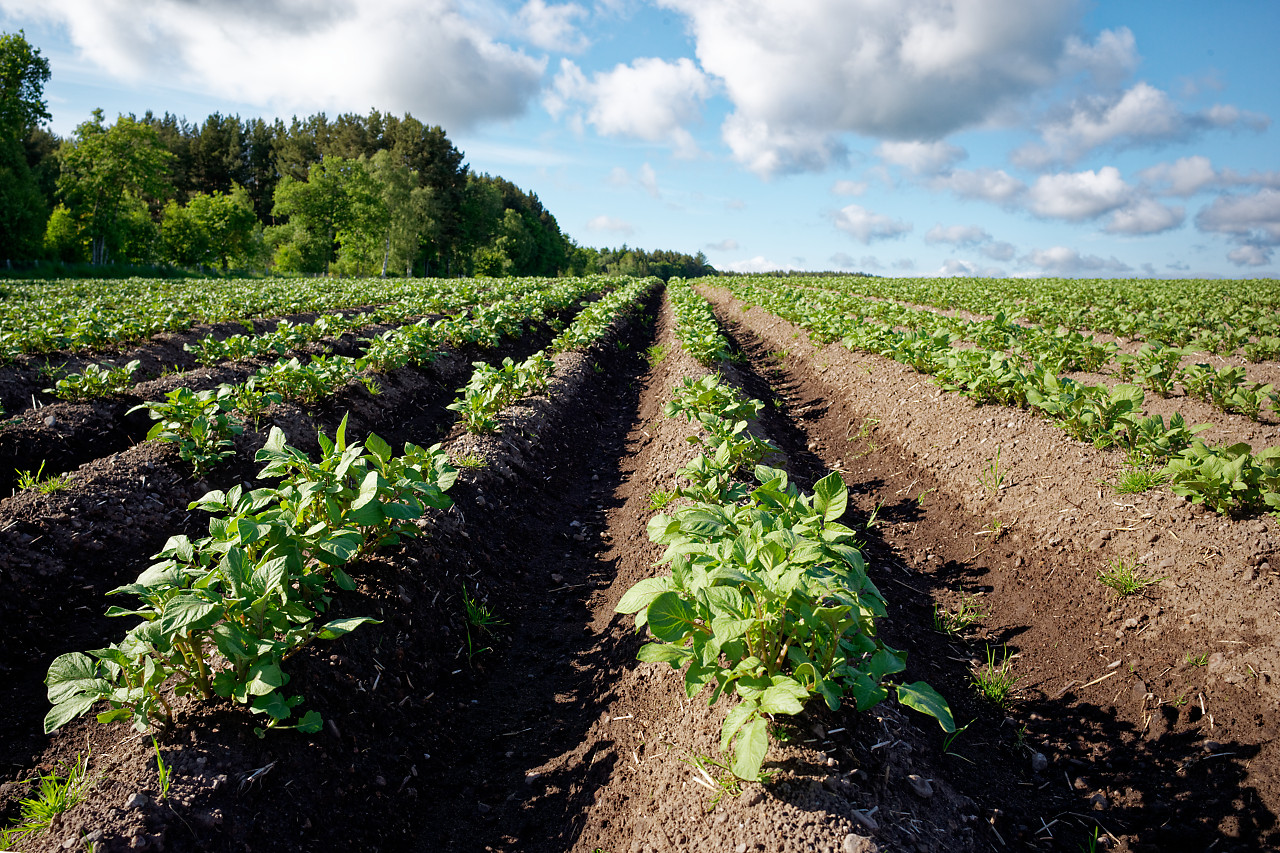
    Rows of young potato plants growing in trenches in a vegetable garden
    Potato rows seven weeks after planting. Photo: Julian Paren, CC BY-SA 2.0, via Wikimedia Commons.

    When to plant potatoes in Iowa: the short answer

    Iowa State University Extension recommends planting potatoes in early spring: late March or early April in southern Iowa, early to mid-April in central Iowa, and mid to late April in northern Iowa. Plant once the soil can be worked and is no longer soggy. Potatoes tolerate cool weather, so you do not need to wait for the last frost.

    Potato planting dates by region

    Potato planting windows in Iowa (ISU Extension)
    Region Example cities Plant potatoes
    Southern Iowa Ottumwa, Burlington, Creston, Council Bluffs Late March to early April
    Central Iowa Des Moines, Ames, Cedar Rapids, Marshalltown Early to mid-April
    Northern Iowa Mason City, Spencer, Decorah Mid to late April

    Not sure where your town falls? Check the freeze dates in our Iowa last frost date guide; counties with later last frosts usually belong in the later potato window.

    Soil and weather: when the ground is ready

    • Workable soil. Squeeze a handful: if it crumbles, it is ready. If it forms a sticky ball, wait a few dry days. Working wet soil damages its structure.
    • Cool but not frozen. A common rule of thumb is soil of about 45°F at planting depth. Seed pieces in cold, wet soil sit idle and are more likely to rot.
    • Full sun. ISU Extension says the site should get at least six hours of direct sun a day.
    • Loose, slightly acid soil. Potatoes like loose, well-drained, fertile soil. Avoid adding lots of manure where potatoes will grow, since heavy organic matter can increase potato scab.
    • Late frost after sprouting? If shoots are up and a hard frost is forecast, pull a little soil over them or cover the row. Potatoes usually regrow from below ground.

    Choosing and preparing seed potatoes

    • Buy certified, disease-free seed potatoes from a garden center or mail-order nursery. Potatoes saved from last year may carry undetectable diseases, and supermarket potatoes may have been treated to prevent sprouting.
    • Plant small tubers whole. Cut large ones into pieces of about 1.5 to 2 ounces, each with 1 or 2 eyes (buds).
    • Let cut pieces heal. Keep freshly cut seed pieces in a humid spot at 60 to 70°F for 1 or 2 days. The cut surfaces callus over, which helps prevent rot in cool, wet spring soil.

    How to plant potatoes in Iowa

    1. Fertilize. Without a soil test, ISU Extension suggests 1 to 2 pounds of an all-purpose fertilizer such as 10-10-10 per 100 square feet, worked in shortly before planting.
    2. Open a furrow about 4 inches deep.
    3. Set seed pieces cut side down, 3 to 4 inches deep and about 1 foot apart.
    4. Space rows 2½ to 3 feet apart so there is room to hill soil later.
    5. Cover and firm the soil, then water if the ground is dry.
    6. Short on space? Plant 3 or 4 seed pieces in a 10-gallon grow bag and add soil as the plants grow.

    Hilling and harvest

    As plants grow, hill soil around the base of the stems so the developing tubers stay covered. Tubers exposed to light turn green, and largely green potatoes should be thrown away. Many gardeners start hilling when plants are 6 to 8 inches tall and repeat once or twice more.

    For new potatoes, dig while plants are still green and the tubers are over 1 inch across, and eat them soon because they do not store well. For storage potatoes, wait until the vines have died. Dig one or two hills to check: if the skins are thin and rub off easily, give the crop more time. Store harvested potatoes in a dark place.

    Tools for planting potatoes

    All four were listed as sold by Amazon.com when checked on October 29, 2026. Check the current listing before you buy.

    For small spaces: iPower Potato Grow Bags

    Product pick

    iPower 10 Gallon Potato Grow Bags with Flap, 5-Pack

    Fabric potato grow bags with a harvest flap on a patio, illustrative AI image

    Illustrative image (AI-generated), not the exact product.

    See current photos and price on Amazon →

    A good fit for patios and small yards. The side flap lets you check for and pick new potatoes without dumping the whole bag. Fabric bags dry out faster than garden soil, so check moisture often in summer.

    To check soil temperature: Taylor Soil Thermometer

    Product pick

    Taylor Soil Thermometer with Silicone Bumper

    Dial soil thermometer in garden soil, illustrative AI image

    Illustrative image (AI-generated), not the exact product.

    See current photos and price on Amazon →

    Takes the guesswork out of early-spring planting. Push the probe in 4 inches in the morning to see whether your soil has warmed enough for seed pieces.

    For furrows and hilling: Kings County Tools Hoe

    Product pick

    Kings County Tools Leaf-Shaped Steel Garden Hoe

    Garden hoe pulling soil around potato plants, illustrative AI image

    Illustrative image (AI-generated), not the exact product.

    See current photos and price on Amazon →

    Useful for opening furrows at planting time and for pulling soil up around the stems when you hill. The pointed leaf-shaped blade also works well for weeding between rows.

    For harvest: Spear & Jackson Border Fork

    Product pick

    Spear & Jackson Neverbend Carbon Steel Border Fork

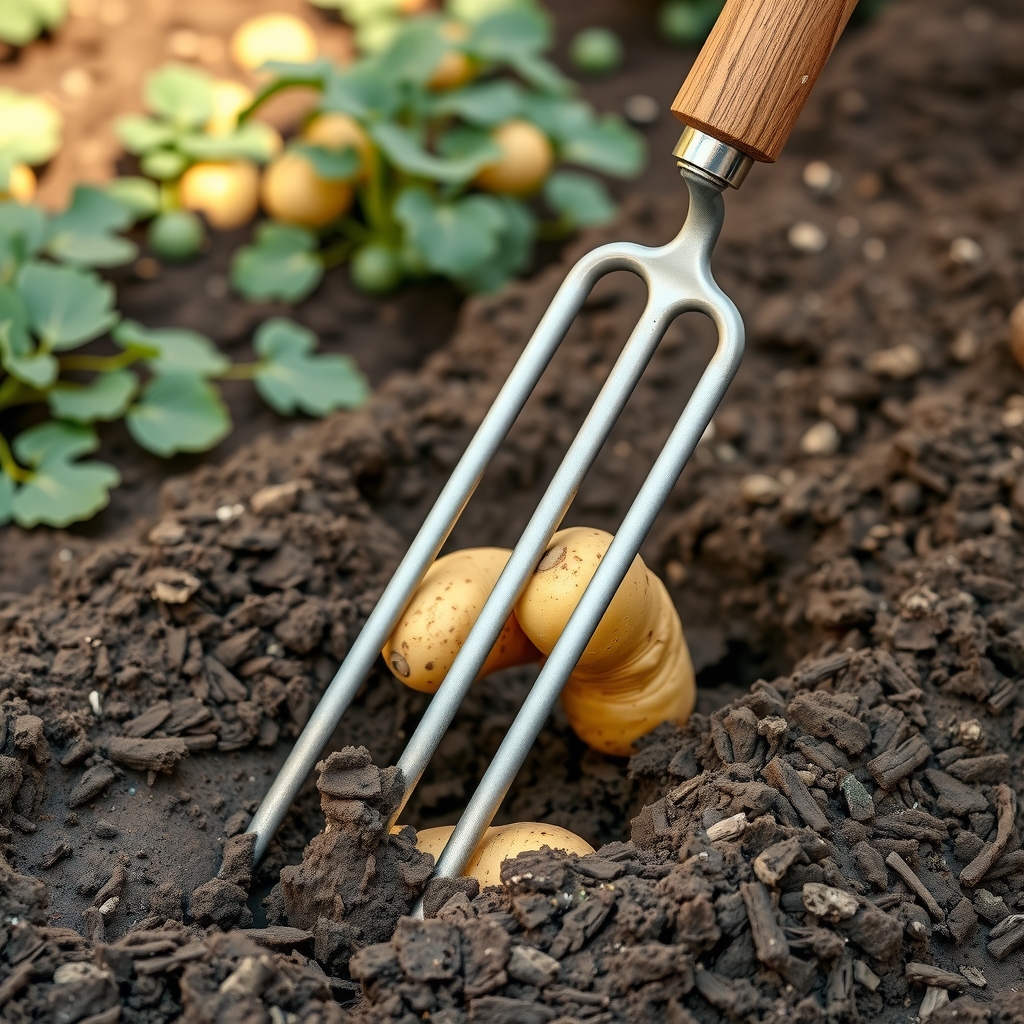
    Garden fork lifting potatoes from loose soil, illustrative AI image

    Illustrative image (AI-generated), not the exact product.

    See current photos and price on Amazon →

    A fork is gentler than a spade at harvest, because it lifts tubers instead of slicing through them. Start digging well to the side of the plant to avoid spearing potatoes.

    FAQs

    When should I plant potatoes in central Iowa?
    Early to mid-April, according to Iowa State University Extension, once the soil can be worked and is not waterlogged.

    When should I plant potatoes in northern Iowa?
    Mid to late April. Northern Iowa warms later, so ISU Extension places the window about a week or two after central Iowa.

    Can I plant potatoes in March in Iowa?
    In southern Iowa, yes: ISU Extension lists late March or early April as the planting window there. Farther north, wait until April.

    How deep should I plant seed potatoes?
    Plant seed pieces cut side down, 3 to 4 inches deep and about 1 foot apart, in rows 2½ to 3 feet apart.

    Should I cut seed potatoes before planting?
    Small tubers can go in whole. Cut large ones into 1.5 to 2 ounce pieces with 1 or 2 eyes each, then let them heal for 1 or 2 days at 60 to 70°F so they callus and resist rot.

    Can I plant potatoes from the grocery store?
    ISU Extension recommends certified disease-free seed potatoes. Supermarket potatoes may have been treated to prevent sprouting, and saved potatoes can carry disease.

    When do I harvest potatoes in Iowa?
    Dig new potatoes while plants are still green and tubers are over 1 inch across. For storage potatoes, wait until the vines have died and the skins no longer rub off easily.

    Sources and review scope

    This guide was prepared on October 29, 2026 from the following sources and from the product listings on Amazon.com. Homingwell did not perform hands-on testing.

    Explore more Lawn & Garden guides.
  • When to Plant Tomatoes in Wisconsin: Dates, Soil Temps and Tips

    When to Plant Tomatoes in Wisconsin: Dates, Soil Temps and Tips

    Skip to content

    Lawn & Garden • Wisconsin Planting Dates • Updated October 29, 2026

    When to Plant Tomatoes in Wisconsin: Dates, Soil Temps and Tips

    Explore related guides: When to start seeds in Wisconsin · Tomatoes in Minnesota · Tomatoes in Illinois · Tomatoes in Iowa · Tomatoes in Nebraska.

    Tomatoes are the most common crop in Wisconsin gardens, and the biggest mistake is planting them too soon. Even without a frost, nights below 50°F can injure heat-loving tomatoes and stall them for weeks. This guide explains when to plant tomatoes in Wisconsin, region by region, using UW–Madison Extension guidance on dates, soil temperature and the best early varieties for a short season.

    Young tomato plant in a garden, planted after the last frost in Wisconsin
    A young tomato plant in a raised bed. Photo: U.S. Department of Agriculture, public domain, via Wikimedia Commons.

    When to plant tomatoes in Wisconsin: the short answer

    In southern Wisconsin, UW Extension suggests planting tomatoes out around May 15 to 20. In west-central Wisconsin, Memorial Day is the usual target. Central Wisconsin and the lower Lake Michigan shore typically plant one to two weeks after Madison, northern counties two to three weeks later, and the Lake Superior clay plain as late as the last week of June. In every region, wait for soil of at least 60°F and nights that stay above 50°F.

    Tomato planting dates by region

    Typical tomato transplant windows in Wisconsin (UW Extension)
    Region Average last spring freeze Plant tomatoes
    Southern Wisconsin (Madison, Milwaukee, Kenosha) Milwaukee April 22, Madison May 3 May 15 to 20
    West-central (La Crosse, Eau Claire) La Crosse April 26, Eau Claire May 9 Around Memorial Day
    Central and lower Lake Michigan shore (Green Bay, Wausau) Green Bay May 3, Wausau May 7 Late May to early June
    Northern Wisconsin Mid to late May Early to mid-June
    Lake Superior clay plain Late Last week of June

    Freeze dates are 1991 to 2020 averages from the Wisconsin State Climatology Office. Start seeds indoors 6 to 8 weeks before your planting date; see our Wisconsin seed starting calendar.

    Soil temperature and night temperature

    • Soil at least 60°F. UW Extension advises not planting tomatoes and peppers until soil reaches at least 60°F; cold soil stunts transplants. An inexpensive soil thermometer helps.
    • Nights above 50°F. Temperatures below 50°F can cause cold injury to heat-loving crops even when nights never reach freezing.
    • Use season extenders. Water-filled plant protectors, cold frames and frost cloth let you plant a little earlier and protect plants on cold nights.
    • Watch the forecast for the 10 days after planting; spring weather in Wisconsin is fickle.

    Early tomato varieties for Wisconsin’s short season

    UW Extension notes that tomatoes are a long-season crop, so gardeners in northern Wisconsin should choose cultivars that mature in fewer days. Its Homegrown Tomatoes for Wisconsin publication lists these early options:

    Early tomatoes recommended by UW Extension
    Variety Days to maturity
    Sub-Arctic Plenty 45
    Early Girl 54
    Quick Pick 60
    Early Cascade 60
    Mountain Spring 65

    Growing several varieties with different maturity dates spreads out the harvest and protects against disease.

    How to plant tomatoes in Wisconsin

    1. Harden off plants for 7 to 10 days, wheeling them outside on mild days and back in before cold nights.
    2. Check soil temperature a few inches deep in the morning before planting.
    3. Plant on a calm, cloudy day or in late afternoon.
    4. Bury the stem deep; tomatoes root along the buried stem.
    5. Stake, cage or trellis now. UW Extension strongly recommends support for indeterminate tomatoes to maximize harvest and reduce disease.
    6. Water deeply and evenly, and mulch once the soil has warmed.

    Tools for planting tomatoes

    All five were listed as sold by Amazon.com when checked on October 29, 2026. Check the current listing before you buy.

    To know when soil is ready: Taylor Soil Thermometer

    Product pick

    Taylor Soil Thermometer with Silicone Bumper

    Dial soil thermometer in garden soil beside a tomato seedling, illustrative AI image

    Illustrative image (AI-generated), not the exact product.

    See current photos and price on Amazon →

    The simple tool UW Extension suggests for timing warm-season planting: a stainless steel probe that shows when soil reaches the 60°F tomatoes need.

    For a late cold snap: Amazon Basics Plant Covers, 10 x 30 ft

    Product pick

    Amazon Basics Plant Covers for Frost Protection, 10 x 30 ft

    White frost cloth covering young tomato plants, illustrative AI image

    Illustrative image (AI-generated), not the exact product.

    See current photos and price on Amazon →

    A breathable frost cloth for the cold nights that can still arrive in late May and June in central and northern Wisconsin.

    For support: Happygrill Adjustable Tomato Cages, 60 in, 3 Pack

    Product pick

    Happygrill 60 in Adjustable Tomato Cages, 3 Pack

    Young tomato plant inside a green metal support cage, illustrative AI image

    Illustrative image (AI-generated), not the exact product.

    See current photos and price on Amazon →

    Tall, adjustable cages for the support UW Extension strongly recommends for indeterminate tomatoes.

    For tying to stakes: VELCRO Brand Adjustable Plant Ties, 75 ft

    Product pick

    VELCRO Brand Adjustable Plant Ties, 75 ft x 1/2 in

    Tomato stem tied to a stake with a soft green garden tie, illustrative AI image

    Illustrative image (AI-generated), not the exact product.

    See current photos and price on Amazon →

    Soft, reusable ties that hold stems to stakes without cutting into them.

    For steady watering: Gilmour 50 ft Flat Soaker Hose

    Product pick

    Gilmour 50 ft Flat Weeper Soaker Hose

    Flat black soaker hose along tomato plants under straw mulch, illustrative AI image

    Illustrative image (AI-generated), not the exact product.

    See current photos and price on Amazon →

    A flat soaker hose that waters the roots and keeps leaves dry, helping to reduce leaf disease and blossom end rot.

    Conclusion

    Plant tomatoes in Wisconsin around May 15 to 20 in the south, Memorial Day in west-central Wisconsin, late May to mid-June in central and northern counties, and as late as the end of June near Lake Superior. Wait for 60°F soil and nights above 50°F, pick early varieties up north, and support plants from day one.

    FAQs

    When should I plant tomatoes in Madison?
    Around May 15 to 20, once soil has reached about 60°F and nights stay above 50°F.

    When should I plant tomatoes in Green Bay?
    Typically late May to early June, one to two weeks later than Madison, as UW Extension suggests for central Wisconsin and the lower Lake Michigan shore.

    When should I plant tomatoes in northern Wisconsin?
    Two to three weeks later than southern Wisconsin, usually early to mid-June, and as late as the last week of June along the Lake Superior clay plain.

    What soil temperature do tomatoes need?
    At least 60°F. Cold soil can stunt plants and slow their growth for weeks.

    What are the best early tomatoes for Wisconsin?
    UW Extension lists Sub-Arctic Plenty (45 days), Early Girl (54 days), Quick Pick and Early Cascade (60 days) and Mountain Spring (65 days).

    Can cold nights hurt tomatoes without a frost?
    Yes. Temperatures below 50°F can cause cold injury to heat-loving crops like tomatoes even if it never freezes.

    Sources and review scope

    This guide was prepared on October 29, 2026 from the following sources and from the product listings on Amazon.com. Homingwell did not perform hands-on testing.

    Explore more Lawn & Garden guides.

  • When to Plant Tomatoes in Illinois: Dates, Soil Temps and Tips

    When to Plant Tomatoes in Illinois: Dates, Soil Temps and Tips

    Skip to content

    Lawn & Garden • Illinois Planting Dates • Updated October 29, 2026

    When to Plant Tomatoes in Illinois: Dates, Soil Temps and Tips

    Explore related guides: When to start seeds in Illinois · When to plant tomatoes in Minnesota · When to plant tomatoes in Iowa · Soil test kits · When to plant tomatoes in Wisconsin.

    A warm week in late April makes every Illinois gardener want to plant tomatoes, but cold nights and chilly soil can stunt young plants even without a frost. This guide explains when to plant tomatoes in Illinois for the north, central and southern parts of the state, the soil and air temperatures University of Illinois Extension recommends waiting for, and how to give transplants a strong start.

    Tomato seedlings ready to transplant, showing when to plant tomatoes in Illinois
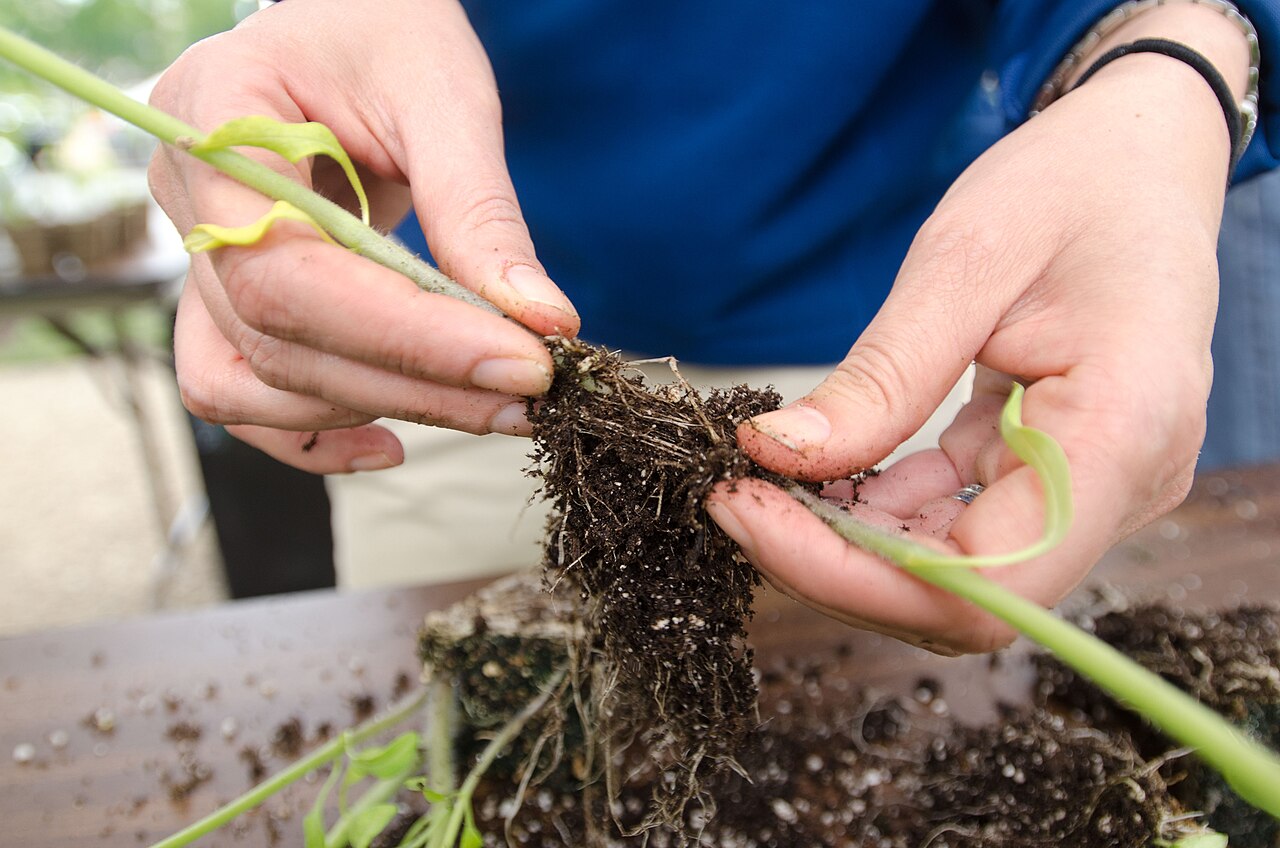
    Separating tomato seedlings for planting in mid-May. Photo: U.S. Department of Agriculture, public domain, via Wikimedia Commons.

    When to plant tomatoes in Illinois: the short answer

    In central Illinois, plant tomatoes on or after Mother’s Day, around mid-May, the rule of thumb Illinois Extension educators use. Southern Illinois can plant about two weeks earlier, in early May, and northern Illinois, including the Chicago area, about two weeks later, in mid to late May. Before planting, wait until nights are consistently in the 50s°F and soil has warmed to at least the mid-50s, ideally 60°F.

    Tomato planting dates by region

    Typical tomato transplant windows in Illinois
    Region Median last 32°F freeze (Illinois Extension) Plant tomatoes
    Southern Illinois (Carbondale) April 1 to 8 Late April to early May
    Central Illinois (Springfield, Peoria, Champaign) April 8 to 15 On or after Mother’s Day, mid-May
    Northern Illinois (Chicago, Rockford) April 8 to 29 Mid to late May

    Why so much later than the median freeze? Illinois Extension notes that in central Illinois a frost can still happen until about May 7 to 12, and one Extension educator points out there is still about a 10 percent chance of frost on May 15. The Illinois State Climatologist recommends adding about two weeks to the average date for tender plants. Start seeds indoors 6 to 8 weeks before your planting date; see our Illinois seed starting calendar.

    Why waiting pays off

    • Tomatoes need warm soil and nights. Illinois Extension says tomatoes need soil temperatures in the mid-50s°F and minimum air temperatures above 45°F; another Extension educator recommends nighttime temperatures consistently in the 50s before warm-season plants go out.
    • Cold above freezing still hurts. Temperatures well above freezing can still stunt transplants and slow them for weeks.
    • Later can be faster. An Illinois Extension educator planted tomatoes and peppers on May 15, May 22 and May 31 and watched the May 31 planting outgrow the earlier ones, because it went into warmer conditions.

    How to plant tomatoes in Illinois

    1. Check the soil with a thermometer 2 to 4 inches deep in the morning. Dark soils and raised beds warm faster than light soils, as Illinois Extension notes.
    2. Harden off transplants for 7 to 10 days, starting in shade and wind shelter.
    3. Plant on a cloudy day or in the evening to reduce transplant stress.
    4. Bury the stem deep, up to the first set of leaves; tomatoes root along the buried stem.
    5. Add cages or stakes now so you do not damage roots later.
    6. Water deeply, then mulch once soil is warm, and water evenly through summer to reduce blossom end rot.
    7. Keep frost cloth ready through mid-May, especially in northern Illinois.

    Tools for planting tomatoes

    All five were listed as sold by Amazon.com when checked on October 29, 2026. Check the current listing before you buy.

    To know when soil is ready: Taylor Soil Thermometer

    Product pick

    Taylor Soil Thermometer with Silicone Bumper

    Dial soil thermometer in garden soil beside a tomato seedling, illustrative AI image

    Illustrative image (AI-generated), not the exact product.

    See current photos and price on Amazon →

    A stainless steel probe that reads below the surface, with a dial that shows optimal planting ranges. It tells you when your soil has reached the temperatures Illinois Extension recommends.

    For a late cold snap: Amazon Basics Plant Covers, 10 x 30 ft

    Product pick

    Amazon Basics Plant Covers for Frost Protection, 10 x 30 ft

    White frost cloth covering young tomato plants, illustrative AI image

    Illustrative image (AI-generated), not the exact product.

    See current photos and price on Amazon →

    A breathable frost cloth for the light frosts that can still show up in mid-May. Cover plants in the evening and uncover them the next morning.

    For support: Happygrill Adjustable Tomato Cages, 60 in, 3 Pack

    Product pick

    Happygrill 60 in Adjustable Tomato Cages, 3 Pack

    Young tomato plant inside a green metal support cage, illustrative AI image

    Illustrative image (AI-generated), not the exact product.

    See current photos and price on Amazon →

    Tall PE-coated metal cages with adjustable rings plus clips and ties. Put them in at planting time so you do not disturb roots later.

    For tying to stakes: VELCRO Brand Adjustable Plant Ties, 75 ft

    Product pick

    VELCRO Brand Adjustable Plant Ties, 75 ft x 1/2 in

    Tomato stem tied to a stake with a soft green garden tie, illustrative AI image

    Illustrative image (AI-generated), not the exact product.

    See current photos and price on Amazon →

    Soft, reusable ties that hold stems to stakes without cutting into them.

    For steady watering: Gilmour 50 ft Flat Soaker Hose

    Product pick

    Gilmour 50 ft Flat Weeper Soaker Hose

    Flat black soaker hose along tomato plants under straw mulch, illustrative AI image

    Illustrative image (AI-generated), not the exact product.

    See current photos and price on Amazon →

    A flat soaker hose that waters the roots, not the leaves, through hot Illinois summers. Steady moisture helps prevent blossom end rot.

    Conclusion

    Plant tomatoes in Illinois in early May in the south, on or after Mother’s Day in central Illinois, and in mid to late May in the north. Let the soil and nights decide: soil in the mid-50s to 60°F, nights consistently in the 50s, and no frost in the forecast. A week’s patience often gives you a faster, healthier crop.

    FAQs

    Is Mother’s Day a good time to plant tomatoes in Illinois?
    In central Illinois, yes. Illinois Extension educators often recommend planting warm-season crops on or after Mother’s Day. In northern Illinois, waiting another week or two is safer.

    When should I plant tomatoes in Chicago?
    Mid to late May, about two weeks later than central Illinois, once nights stay in the 50s°F.

    What soil temperature do tomatoes need?
    Illinois Extension says tomatoes need soil in the mid-50s°F and minimum air temperatures above 45°F; 60°F soil is even better.

    Can it still frost in May in Illinois?
    Yes. In central Illinois a frost can occur until about May 7 to 12, and there is roughly a 10 percent chance on May 15.

    When should I start tomato seeds in Illinois?
    About 6 to 8 weeks before planting out: mid to late March in central Illinois, earlier in the south and later in the north.

    Is it bad to plant tomatoes too early?
    Often, yes. Cold soil and cool nights stunt transplants, and later plantings frequently catch up and outgrow early ones.

    Sources and review scope

    This guide was prepared on October 29, 2026 from the following sources and from the product listings on Amazon.com. Homingwell did not perform hands-on testing.

    Explore more Lawn & Garden guides.
  • When to Plant Tomatoes in Minnesota: Dates, Soil Temps and Tips

    When to Plant Tomatoes in Minnesota: Dates, Soil Temps and Tips

    Skip to content

    Lawn & Garden • Minnesota Planting Dates • Updated October 29, 2026

    When to Plant Tomatoes in Minnesota: Dates, Soil Temps and Tips

    Explore related guides: When to start seeds in Minnesota · When to plant tomatoes in Iowa · Grow lights for seedlings · Soil test kits · When to plant tomatoes in Illinois.

    Planting tomatoes too early is the most common Minnesota tomato mistake: a cold night or chilly soil can stall plants for weeks, and a late frost can kill them outright. This guide explains when to plant tomatoes in Minnesota in each part of the state, the soil and night temperatures to wait for, and University of Minnesota Extension tips for getting transplants off to a fast start.

    Market garden in St. Paul, Minnesota, where tomatoes are planted after frost
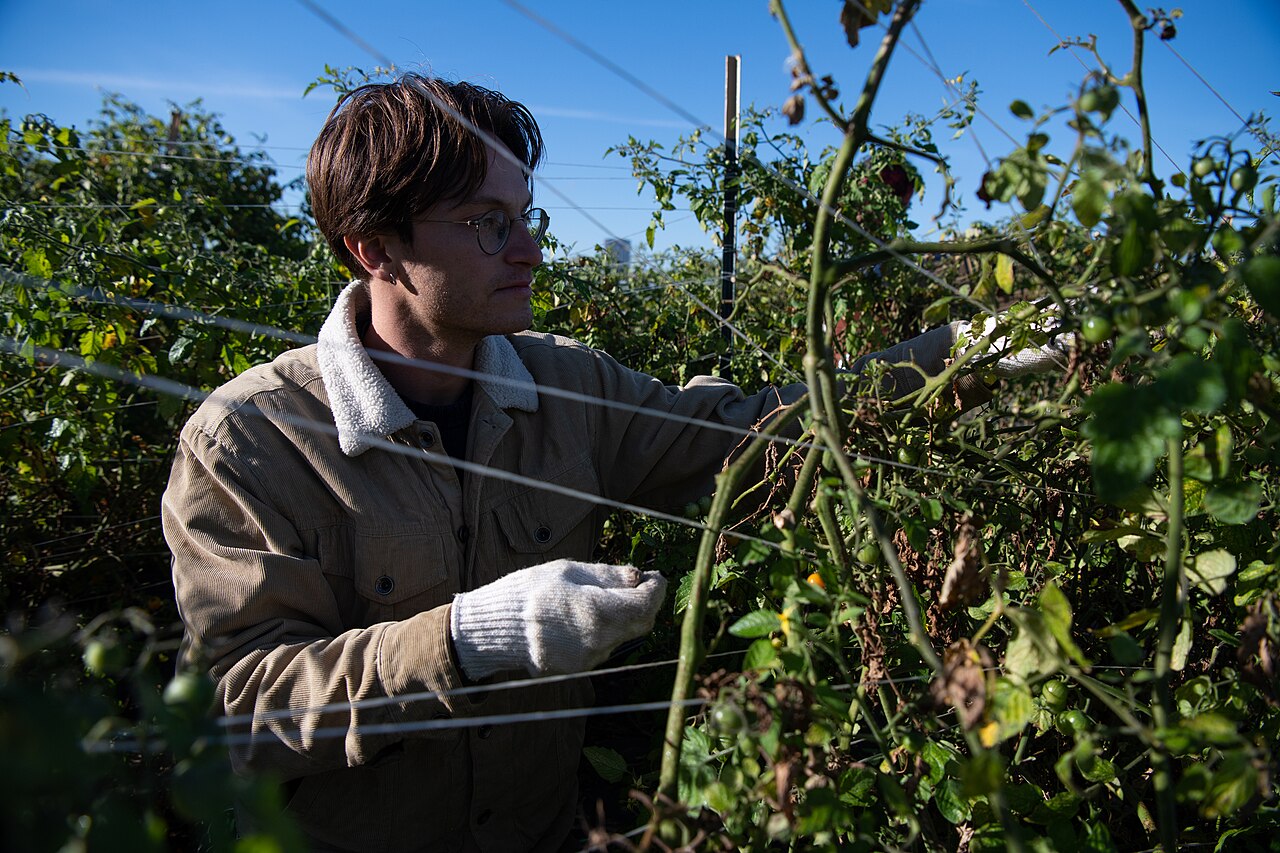
    Tending trellised plants at the Urban Roots market garden in St. Paul, Minnesota. Photo: U.S. Department of Agriculture, public domain, via Wikimedia Commons.

    When to plant tomatoes in Minnesota: the short answer

    In the Twin Cities and southern Minnesota, plant tomatoes outside in late May, with Memorial Day a safer target than Mother’s Day. In central Minnesota aim for late May to early June, and in northern Minnesota early to mid-June. Whatever the calendar says, wait until frost danger has passed, daytime soil is in the 60s°F, and nights stay at or above 50°F.

    Tomato planting dates by region

    Typical tomato transplant windows in Minnesota
    Region Median last spring freeze (MN DNR) Plant tomatoes
    Twin Cities metro April 24 to 27 Mid to late May, around Memorial Day
    Southern Minnesota (Rochester, Mankato) Late April to early May Mid to late May
    Central Minnesota (St. Cloud, Brainerd) Around mid-May Late May to early June
    Northern Minnesota (Duluth, Bemidji) May 16 to 21 Early to mid-June

    The median freeze date is only the start: in the Twin Cities, about 90 percent of years are free of 32°F nights after about May 10, and tomatoes also need warm soil, which usually takes another week or two. Start seeds indoors about 6 to 8 weeks before these dates; see our Minnesota seed starting calendar.

    Signs it is time to plant tomatoes

    • Frost danger has passed. UMN Extension says to transplant after all danger of frost has passed and the soil has warmed.
    • Soil is warm. The Minnesota State Horticultural Society suggests soil in the 60s°F during the day and not below 50°F at night. A soil thermometer takes the guesswork out.
    • The 10-day forecast is mild, with no nights in the 30s.
    • Nature agrees. A traditional phenology sign is planting tomatoes when dogwoods are in peak bloom, which in central Minnesota is usually late May or early June.

    How to plant tomatoes in Minnesota

    1. Harden off first. UMN Extension recommends setting plants outside with wind protection and a couple of hours of sun, then gradually adding sun over a week or two, bringing them in if nights approach freezing.
    2. Pick a fresh spot. Avoid places where tomatoes, potatoes, peppers, eggplant or tomatillos grew in the last three or four years.
    3. Choose the right moment: late afternoon or a cool, cloudy, calm day.
    4. Water plants well before transplanting.
    5. Plant deep. Tomatoes root along buried stems, so set them deeper than they grew in the pot.
    6. Install supports at planting time: stakes, cages, spirals or trellises, as UMN advises.
    7. Space them out: allow two to three feet around vining types; bush types can go closer.
    8. Water in and mulch once the soil has warmed, and keep watering steady through summer.

    Tips for Minnesota’s short season

    • Choose earlier varieties for northern Minnesota, with shorter days to maturity on the seed packet.
    • Keep frost cloth handy through early June for surprise cold nights.
    • Pot up instead of planting early. If weather is cold, move plants into bigger pots and wait; they will catch up quickly in warm soil.
    • Use raised beds or a sunny, south-facing spot so soil warms sooner.

    Tools for planting tomatoes

    All five were listed as sold by Amazon.com when checked on October 29, 2026. Check the current listing before you buy.

    To know when soil is ready: Taylor Soil Thermometer

    Product pick

    Taylor Soil Thermometer with Silicone Bumper

    Dial soil thermometer in garden soil beside a tomato seedling, illustrative AI image

    Illustrative image (AI-generated), not the exact product.

    See current photos and price on Amazon →

    A stainless steel probe that reads soil temperature below the surface, with a dial that shows optimal ranges for planting. The easiest way to know when your bed has reached the 60s°F tomatoes need.

    For a late cold snap: Amazon Basics Plant Covers, 10 x 30 ft

    Product pick

    Amazon Basics Plant Covers for Frost Protection, 10 x 30 ft

    White frost cloth covering young tomato plants, illustrative AI image

    Illustrative image (AI-generated), not the exact product.

    See current photos and price on Amazon →

    A lightweight, breathable frost cloth for the light frosts that can still hit Minnesota in late May and early June. Drape it over plants in the evening and remove it the next morning.

    For support: Happygrill Adjustable Tomato Cages, 60 in, 3 Pack

    Product pick

    Happygrill 60 in Adjustable Tomato Cages, 3 Pack

    Young tomato plant inside a green metal support cage, illustrative AI image

    Illustrative image (AI-generated), not the exact product.

    See current photos and price on Amazon →

    Tall PE-coated metal cages with rings you can raise as plants grow, plus clips and ties in the box. UMN recommends installing supports at planting time so you do not damage roots later.

    For tying to stakes: VELCRO Brand Adjustable Plant Ties, 75 ft

    Product pick

    VELCRO Brand Adjustable Plant Ties, 75 ft x 1/2 in

    Tomato stem tied to a stake with a soft green garden tie, illustrative AI image

    Illustrative image (AI-generated), not the exact product.

    See current photos and price on Amazon →

    Soft, reusable ties that hold tomato stems to stakes without cutting into them. Cut to length and reuse next season.

    For steady watering: Gilmour 50 ft Flat Soaker Hose

    Product pick

    Gilmour 50 ft Flat Weeper Soaker Hose

    Flat black soaker hose along tomato plants under straw mulch, illustrative AI image

    Illustrative image (AI-generated), not the exact product.

    See current photos and price on Amazon →

    A flat soaker hose that delivers water straight to the roots and keeps leaves dry, which helps reduce leaf disease. Even watering also helps prevent blossom end rot.

    Conclusion

    Plant tomatoes in Minnesota in late May for the Twin Cities and south, late May to early June in central Minnesota, and early to mid-June up north, but let the soil and the forecast make the final call: soil in the 60s, nights at or above 50°F, and no frost ahead. Harden plants off, plant them deep, support them right away, and keep frost cloth handy.

    FAQs

    Can I plant tomatoes on Mother’s Day in Minnesota?
    It is risky. The Minnesota State Horticultural Society notes that Memorial Day is a safer option, and early June is fine if you pot plants up while you wait.

    What soil temperature do tomatoes need?
    Daytime soil in the 60s°F and nights not below 50°F are good signs it is time to plant transplants.

    When should I plant tomatoes in northern Minnesota?
    Early to mid-June. The median last spring freeze in northern Minnesota is May 16 to 21, and soil warms slowly after that.

    When should I start tomato seeds in Minnesota?
    About 6 to 8 weeks before your planting date, usually early April in the Twin Cities and later farther north.

    What should I do if frost is forecast after planting?
    Cover tomatoes in the evening with frost cloth, sheets or buckets, and remove covers the next morning.

    How deep should I plant tomato transplants?
    Deeper than they grew in the pot. Tomatoes form roots along buried stems, which gives plants a stronger root system.

    Sources and review scope

    This guide was prepared on October 29, 2026 from the following sources and from the product listings on Amazon.com. Homingwell did not perform hands-on testing.

    Explore more Lawn & Garden guides.

  • When to Start Seeds in Nebraska: Indoor Seed Starting Calendar

    When to Start Seeds in Nebraska: Indoor Seed Starting Calendar

    Skip to content

    Lawn & Garden • Nebraska Planting Dates • Updated October 29, 2026

    When to Start Seeds in Nebraska: Indoor Seed Starting Calendar

    Explore related guides: When to start seeds in Iowa · Minnesota · Illinois · Wisconsin · Grow lights · When to plant tomatoes in Nebraska.

    Nebraska spring can swing from warm to freezing in the same week, which makes indoor seed starting one of the best ways to give tomatoes and peppers a safe head start. But the right date in Omaha is not the right date in Scottsbluff. Here is when to start seeds in Nebraska, with Nebraska State Climate Office frost dates and Nebraska Extension timing for eastern, central and western Nebraska.

    Tomato plants grown from seeds started indoors, in wire cages
    Tomato plants in round wire cages. Photo: Forest and Kim Starr, CC BY 3.0, via Wikimedia Commons.

    When to start seeds in Nebraska: the short answer

    In eastern Nebraska, Nebraska Extension suggests counting back from Mother’s Day for warm-season crops. That means starting peppers about 7 to 8 weeks before (mid-March) and tomatoes about 6 weeks before (late March to early April), with onions in February and broccoli and cabbage in mid to late March. Cool-season crops can go out in late April. In central Nebraska shift about a week later, and in the western Panhandle about two to three weeks later.

    Nebraska frost dates by city

    Average last spring frost (32°F), 1991 to 2020, Nebraska State Climate Office
    City Region Average last spring frost
    Falls City Southeast April 19
    Omaha East April 20
    Lincoln Southeast April 25
    Grand Island Central April 26
    Norfolk Northeast April 27
    Scottsbluff Panhandle May 9
    Valentine North-central May 12
    North Platte West-central May 13

    An average date still carries about a 50 percent chance of a later frost. The State Climate Office notes that a killing freeze after May 1 is very unlikely in southeast Nebraska but about a 4 in 10 chance at North Platte and close to a coin flip at Valentine and Scottsbluff. Plan tender crops for one to two weeks after your average date.

    Nebraska indoor seed starting calendar

    Eastern Nebraska (Omaha, Lincoln), plant-out around Mother’s Day to mid-May. Central: about 1 week later. Western: about 2 to 3 weeks later.
    Crop Weeks indoors Sow indoors Plant outside
    Onions, leeks, celery 10 to 12 Mid to late February Mid to late April
    Peppers, eggplant 8 to 10 Early to mid-March Mid-May, nights above 50°F
    Broccoli, cabbage, cauliflower 4 to 6 Mid to late March Late April
    Tomatoes 6 to 8 Late March to early April Around Mother’s Day to mid-May
    Basil, marigolds 4 to 6 Early to mid-April Mid-May
    Cucumbers, squash, melons 3 to 4 Mid to late April Mid to late May

    The Nebraska Statewide Arboretum adds that tomatoes should not go outside until nighttime temperatures stay above 50°F, and that peppers germinate slowly and appreciate bottom heat. Peas, spinach, lettuce, radishes, carrots and potatoes are planted directly in the garden.

    Eastern, central and western Nebraska

    • Eastern and southeast Nebraska (Omaha, Lincoln, Falls City): use the calendar as written. Mother’s Day is a good plant-out target for tomatoes and peppers.
    • Central and northeast Nebraska (Grand Island, Kearney, Norfolk): start about a week later and plant out in mid to late May.
    • Western Nebraska and the Panhandle (North Platte, Scottsbluff, Valentine): start about two to three weeks later and plan tender crops for late May. Higher elevations in the northern Panhandle can still freeze after May 1 in most years.
    • Wind: Nebraska wind is hard on new transplants, so harden seedlings off well and consider a temporary windbreak.

    Set up a simple seed starting station

    1. Use clean cells or trays and a sterile seed starting mix.
    2. Give peppers bottom heat with a seedling heat mat. See our heat mat guide.
    3. Turn on bright, consistent light as soon as seeds sprout, with LEDs a few inches above the plants for about 14 to 16 hours a day. See our grow lights guide.
    4. Harden off for 7 to 10 days, starting in a sheltered spot out of the wind.

    Supplies for starting seeds indoors

    All five were listed as sold by Amazon.com when checked on October 29, 2026. Check the current listing before you buy.

    For seeds: Burpee SuperSeed 36-Cell Seed Starting Tray

    Product pick

    Burpee SuperSeed 36-Cell Reusable Seed Starting Tray

    Seed starting tray with sprouts, illustrative AI image

    Illustrative image (AI-generated), not the exact product.

    See current photos and price on Amazon →

    A reusable 36-cell tray with roomy cells for tomatoes, peppers and brassicas that washes clean for next season.

    For light: iPower LED Grow Light Stand

    Product pick

    iPower LED Grow Light Stand, Full Spectrum

    Grow light stand over seedlings, illustrative AI image

    Illustrative image (AI-generated), not the exact product.

    See current photos and price on Amazon →

    An adjustable full-spectrum LED stand that delivers the bright, consistent light tomatoes and peppers need to stay compact.

    For warmth: iPower 10 x 20 in Seedling Heat Mat

    Product pick

    iPower 10 x 20 in Waterproof Seedling Heat Mat

    Seedling heat mat under a tray, illustrative AI image

    Illustrative image (AI-generated), not the exact product.

    See current photos and price on Amazon →

    The bottom heat that slow-sprouting peppers appreciate. It fits under a standard 10 by 20 inch flat.

    For control: JumpStart Digital Thermostat for Heat Mats

    Product pick

    JumpStart Digital Thermostat Controller for Heat Mats

    Thermostat probe in a seed tray, illustrative AI image

    Illustrative image (AI-generated), not the exact product.

    See current photos and price on Amazon →

    A probe thermostat that keeps the heat mat at the temperature you set, so trays never overheat.

    For timing: GE 24-Hour Plug-in Mechanical Timer

    Product pick

    GE 24-Hour Plug-in Mechanical Timer

    Outlet timer for grow lights, illustrative AI image

    Illustrative image (AI-generated), not the exact product.

    See current photos and price on Amazon →

    A simple plug-in timer that keeps grow lights on a steady daily schedule.

    Conclusion

    Start seeds in Nebraska by counting back from your plant-out date: around Mother’s Day in Omaha and Lincoln, mid to late May in central Nebraska, and late May in the Panhandle. Peppers go in first among the warm-season crops, about 7 to 10 weeks ahead, then tomatoes about 6 weeks ahead. Wait for nights above 50°F, and protect young transplants from Nebraska wind.

    FAQs

    When should I start tomato seeds in Nebraska?
    About 6 weeks before your plant-out date. In eastern Nebraska that is late March to early April for planting around Mother’s Day; in western Nebraska, two to three weeks later.

    When is the last frost in Nebraska?
    Nebraska State Climate Office averages for 1991 to 2020 range from April 19 in Falls City and April 20 in Omaha to May 9 in Scottsbluff and May 13 in North Platte.

    When should I start pepper seeds in Nebraska?
    About 7 to 10 weeks before planting out, roughly early to mid-March in eastern Nebraska. Peppers sprout slowly and benefit from a heat mat.

    Is Mother’s Day a safe planting date in Nebraska?
    In eastern Nebraska, it is a common and reasonable target for tomatoes and peppers. Farther west, wait one to three weeks longer and watch the forecast.

    When can I plant cool-season crops in Nebraska?
    Cool-season crops like broccoli and cabbage can usually go in the ground in late April in eastern Nebraska.

    When is the first fall frost in Nebraska?
    Average first fall 32°F dates run from late September in the Panhandle to mid-October in Omaha.

    Sources and review scope

    This guide was prepared on October 29, 2026 from the following sources and from the product listings on Amazon.com. Homingwell did not perform hands-on testing.

    Explore more Lawn & Garden guides.
  • When to Start Seeds in Wisconsin: Indoor Seed Starting Calendar

    When to Start Seeds in Wisconsin: Indoor Seed Starting Calendar

    Skip to content

    Lawn & Garden • Wisconsin Planting Dates • Updated October 29, 2026

    When to Start Seeds in Wisconsin: Indoor Seed Starting Calendar

    Explore related guides: When to start seeds in Minnesota · When to start seeds in Illinois · When to start seeds in Iowa · Grow lights for seedlings · When to start seeds in Nebraska · When to plant tomatoes in Wisconsin.

    With a growing season that can top out around 120 to 130 days, Wisconsin gardeners have good reason to start tomatoes, peppers and eggplant indoors. The trick is timing: too early and seedlings get leggy waiting for warm soil, too late and they never catch up. Here is when to start seeds in Wisconsin, using UW Extension plant-out dates and State Climatology Office frost data for southern, west-central and northern Wisconsin.

    Trays of young seedlings started indoors in Wisconsin
    Trays of young seedlings ready for the garden. Photo: Apapac, public domain, via Wikimedia Commons.

    When to start seeds in Wisconsin: the short answer

    In southern Wisconsin, where UW Extension suggests planting tomatoes and peppers out around May 15 to 20, start onions and celery in mid to late February, peppers and eggplant in early to mid-March, broccoli and cabbage in mid-March, tomatoes in late March to early April, and cucumbers and squash in early May. In west-central Wisconsin, plan for a Memorial Day plant-out, about a week later. In the far north, warm-season transplants may not go out until late June.

    Wisconsin frost dates

    Average last spring 32°F freeze, 1991 to 2020 (Wisconsin State Climatology Office)
    City Average last spring freeze
    Milwaukee April 22
    La Crosse April 26
    Madison May 3
    Green Bay May 3
    Wausau May 7
    Eau Claire May 9

    The State Climatology Office notes that most of Wisconsin usually sees its final spring freeze around the first week of May, with lakeshore areas like Milwaukee often done by the end of April. An average date still carries a 50 percent chance of a later freeze, so UW Extension plant-out dates for tender crops fall one to three weeks later. Northern Wisconsin, away from the Great Lakes, can freeze into late May or June.

    Wisconsin indoor seed starting calendar

    Southern Wisconsin, plant-out for tomatoes around May 15 to 20 (add about 1 week for west-central, 3 to 5 weeks for the far north)
    Crop Weeks indoors Sow indoors Plant outside
    Onions, leeks, celery 10 to 12 Mid to late February Early May
    Peppers, eggplant 8 to 10 Early to mid-March Around May 20, when soil reaches 60°F
    Broccoli, cabbage, cauliflower 6 to 7 Mid-March Late April to early May
    Tomatoes 6 to 8 Late March to early April May 15 to 20
    Basil, marigolds 4 to 6 Mid-April Late May
    Cucumbers, squash, melons 3 to 4 Early May First week of June, or direct seed then

    UW Extension adds a useful soil rule: tomatoes and peppers are best not planted until soil is at least 60°F, and cold soil can stunt transplants or keep direct-sown seeds from sprouting. Peas, onion sets and seed potatoes go straight into the garden early, around April.

    Southern, west-central and northern Wisconsin

    • Southern Wisconsin (Madison, Milwaukee, Kenosha): cole crops out in late April to early May, tomatoes and peppers May 15 to 20, cucurbits the first week of June. Use the calendar as written.
    • West-central Wisconsin (La Crosse, Eau Claire): UW Extension suggests Memorial Day as the plant-out date for tomatoes and peppers, with seeds started at the end of March or beginning of April, and cool-season crops started around mid-March.
    • Northern and northeast Wisconsin: along the Lake Superior clay plain, warm-season transplants go out the last week of June, and cole crops in late May or early June. Many gardeners there use raised beds for warmer soil.

    Set up a simple seed starting station

    1. Use clean trays and a sterile seed starting mix.
    2. Add bottom heat for peppers, eggplant and tomatoes in a cool basement. See our heat mat guide.
    3. Turn on strong light the day seeds sprout, keeping LEDs a few inches above the plants for about 14 to 16 hours a day. See our grow lights guide.
    4. Check soil temperature before planting out; an inexpensive soil thermometer helps, as UW Extension suggests.
    5. Harden off seedlings for 7 to 10 days before transplanting.

    Supplies for starting seeds indoors

    All five were listed as sold by Amazon.com when checked on October 29, 2026. Check the current listing before you buy.

    For seeds: Burpee SuperSeed 36-Cell Seed Starting Tray

    Product pick

    Burpee SuperSeed 36-Cell Reusable Seed Starting Tray

    Seed starting tray with sprouts, illustrative AI image

    Illustrative image (AI-generated), not the exact product.

    See current photos and price on Amazon →

    A reusable 36-cell tray with roomy cells for tomatoes, peppers and brassicas that washes clean for next spring.

    For light: iPower LED Grow Light Stand

    Product pick

    iPower LED Grow Light Stand, Full Spectrum

    Grow light stand over seedlings, illustrative AI image

    Illustrative image (AI-generated), not the exact product.

    See current photos and price on Amazon →

    An adjustable LED stand that keeps light close to seedlings and rises as they grow, the best fix for leggy plants in dim Wisconsin late winter.

    For warmth: iPower 10 x 20 in Seedling Heat Mat

    Product pick

    iPower 10 x 20 in Waterproof Seedling Heat Mat

    Seedling heat mat under a tray, illustrative AI image

    Illustrative image (AI-generated), not the exact product.

    See current photos and price on Amazon →

    Warms the root zone of a standard 10 by 20 inch flat so warm-season seeds sprout faster in a cool house. Move trays off once most seeds are up.

    For control: JumpStart Digital Thermostat for Heat Mats

    Product pick

    JumpStart Digital Thermostat Controller for Heat Mats

    Thermostat probe in a seed tray, illustrative AI image

    Illustrative image (AI-generated), not the exact product.

    See current photos and price on Amazon →

    A probe thermostat that holds the mat at the temperature you set, so trays never overheat on a warm day.

    For timing: GE 24-Hour Plug-in Mechanical Timer

    Product pick

    GE 24-Hour Plug-in Mechanical Timer

    Outlet timer for grow lights, illustrative AI image

    Illustrative image (AI-generated), not the exact product.

    See current photos and price on Amazon →

    A simple timer that runs grow lights on the same schedule every day.

    Conclusion

    Start seeds in Wisconsin by counting back from your region’s plant-out date: around May 15 to 20 in the south, Memorial Day in west-central Wisconsin, and as late as the end of June in the far north. Onions and celery go first, then peppers and brassicas in March, tomatoes in late March or early April, and cucurbits in May. Wait for 60°F soil before planting tomatoes and peppers.

    FAQs

    When should I start tomato seeds in Wisconsin?
    In late March to early April for southern Wisconsin, aiming to plant out around May 15 to 20. In west-central Wisconsin, UW Extension suggests the end of March or beginning of April for a Memorial Day planting.

    When is the last frost in Wisconsin?
    The Wisconsin State Climatology Office lists average last spring freezes of April 22 in Milwaukee, April 26 in La Crosse, May 3 in Madison and Green Bay, May 7 in Wausau and May 9 in Eau Claire.

    When should I start pepper seeds in Wisconsin?
    Early to mid-March in southern Wisconsin. Peppers need 8 to 10 weeks indoors and warm soil, at least 60°F, before planting out.

    When can I plant tomatoes outside in Madison?
    Around May 15 to 20, once soil has warmed to about 60°F and nights are mild.

    When should northern Wisconsin gardeners start seeds?
    Several weeks later than the south. Along the Lake Superior clay plain, warm-season transplants often go out in the last week of June, so tomato seeds can be started in late April to early May.

    Do I need a heat mat to start seeds in Wisconsin?
    Not for everything, but it helps peppers, eggplant and tomatoes sprout quickly in cool basements and homes.

    Sources and review scope

    This guide was prepared on October 29, 2026 from the following sources and from the product listings on Amazon.com. Homingwell did not perform hands-on testing.

    Explore more Lawn & Garden guides.