
Lawn & Garden • Iowa guide • Updated October 27, 2026
Best Raised Garden Beds for Iowa Gardens (Zone 5b–6a)
Explore related guides: Gardening in Iowa: all guides · When to plant garlic in Iowa · When to plant tomatoes in Iowa · Raised garden bed size · Winterize raised beds · When to start seeds in Iowa · Best garden cart · Gifts for gardeners · How much soil for a raised bed · What to plant in a raised bed in Iowa.
Heavy, slow-draining soil and a short spring are two good reasons Iowa gardeners love raised garden beds. Iowa State University Extension says a raised bed drains better and warms up earlier in spring, so you can plant sooner. This guide to the best raised garden beds for Iowa explains what size, height and material work best, how to fill a bed, and which beds sold by Amazon.com are worth a look.

Quick picks
| Pick | Size (L x W x H) | Material | Best for |
|---|---|---|---|
| Amazon Basics | 4 x 2 x 1 ft | Galvanized steel | A first bed |
| YITAHOME 24 in | 8 x 2 x 2 ft | Galvanized metal | Less bending |
| GIANTEX | 6 x 3 x 2 ft | Powder-coated metal | One big bed |
| Eclaron oval | 4 x 2 x 1 ft | Galvanized steel | Patio or path edges |
| Back to the Roots | 3 cu ft | Fabric | Decks and trying it out |
Why raised beds suit Iowa gardens
ISU Extension lists the main benefits clearly:
- Better drainage. A properly prepared raised bed improves wet, poorly drained sites, which helps plants grow and raises yields.
- An earlier start. Raised beds dry out and warm up earlier in spring, so you can plant sooner. In a state where the frost-free date is in early to mid-May, a week or two matters.
- Easier on your back. ISU notes that raised beds help older gardeners and anyone who has trouble bending to the ground.
- Clean soil. You fill the bed yourself, which helps where the yard soil is poor, compacted or possibly contaminated.
There are trade-offs. ISU says raised beds dry out faster and need watering more often in dry weather, and building them takes more effort and money than tilling a plot.
What size and height to choose
Width matters more than length. ISU’s guidance:
- Reached from one side (against a fence or wall): 1.5 to 2 feet wide.
- Reached from both sides: 3 to 4 feet wide, so you never step on the soil.
- Height: usually 6 to 20 inches or more. About 11 inches is common because it matches two stacked 2×6 boards. Gardeners in wheelchairs do best with beds about 2 to 3 feet high.
- Paths: about 3 feet between beds so a wheelbarrow or garden cart fits.
- Headroom: leave 1 to 2 inches between the soil and the top edge for mulch.
Not sure how many beds you need? Our raised garden bed size guide walks through layouts and soil volume.
Metal, cedar or treated wood?
ISU lists decay-resistant wood such as cedar or redwood, composite lumber, metal, concrete block, rock and brick as good wall materials. Here is how the common choices compare:
| Material | Pros | Watch out for |
|---|---|---|
| Galvanized or coated metal | Long-lasting, no rot, easy kits | Sharp edges on cheap kits; ISU suggests a barrier liner for galvanized metal |
| Cedar or redwood | Natural look, rot-resistant, safe for food | Costs more; even cedar eventually breaks down |
| Modern treated lumber | Cheap, lasts years | ISU suggests lining the inside with woven geotextile fabric; never use old railroad ties or creosote |
| Block, brick or stone | Permanent, salvaged pieces are fine | Heavy, more work to build |
About galvanized metal: ISU’s raised bed guide says galvanized metal may leach small amounts of lead or cadmium, so it recommends a barrier between the soil and the walls. A woven landscape fabric along the inside walls does the job while still letting water drain. Keeping your soil pH near 6.0 to 6.5, as ISU recommends anyway, also limits zinc leaching, which increases in acidic soil.
About cedar: when this guide was written, we could not find a cedar raised bed kit sold directly by Amazon.com, so none is listed below. If you prefer wood, local lumberyards in Iowa often sell rough-cut cedar boards, and ISU’s 11-inch, two-board design is an easy weekend build.
How to fill a raised bed
ISU recommends a light, well-drained soil and gives two simple recipes:
- Option 1: equal parts topsoil, organic matter (well-rotted manure, compost or peat) and coarse sand.
- Option 2: about 70 percent topsoil and 30 percent compost.
Steps that make a difference:
- Remove the sod and loosen the soil underneath.
- Add a few inches of mix at a time and work it into the native soil, so there is no sharp layer that blocks water.
- Work out how much you need by multiplying length x width x height. A 4 x 2 x 1 ft bed takes 8 cubic feet; an 8 x 2 x 2 ft bed takes 32.
- Have the soil tested. Aim for a pH of about 6.0 to 6.5, adding lime or sulfur as the test suggests, and a slow-release fertilizer if needed.
Buying soil by the cubic yard from a local landscape supplier is usually much cheaper than bags, says the University of Minnesota Extension.
Where to put your bed
- Sun: at least six hours of full sun. Tomatoes, peppers and squash do better with 6 to 8.
- Level ground: a flat site keeps water from running to one end.
- Direction: ISU suggests running beds north to south for low-growing crops.
- Close to water: raised beds dry out faster, so a nearby hose, or a drip line on a timer, saves a lot of trips.
The best raised garden beds for Iowa gardens
All five were listed as sold by Amazon.com at the time of writing. Check the size and photos on Amazon before you order.
Best starter bed: Amazon Basics Galvanized Raised Garden Bed, 4 x 2 x 1 ft
Product pick
Amazon Basics Galvanized Raised Garden Bed, 4 x 2 x 1 ft

Illustrative image (AI-generated), not the exact product.
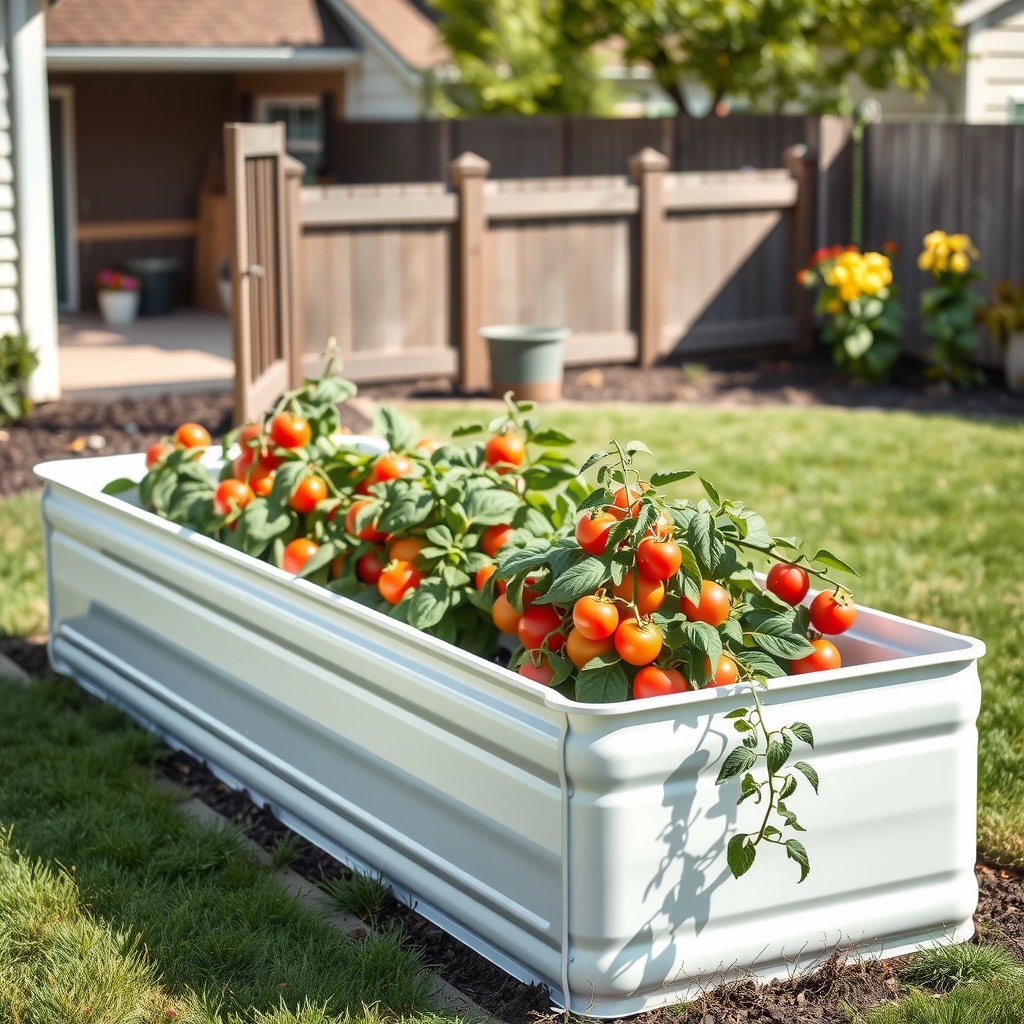
A simple open-bottom galvanized steel box, about 48 x 24 x 12 inches. Two feet wide means you can reach across it from one side, which fits ISU’s guidance for beds worked from a single side, and 12 inches of depth is plenty for lettuce, onions, herbs, peppers and bush beans. It is a good first bed if you want to see how raised-bed gardening works in your yard before you build more.
Good to know: at 12 inches it is a low bed, so you still bend to work it. Set it on loosened soil so roots can grow down through the open base.
Best for easy reach: YITAHOME 8 x 2 x 2 ft Metal Raised Bed, 24 in tall
Product pick
YITAHOME 8 x 2 x 2 ft Metal Raised Bed, 24 in tall
Illustrative image (AI-generated), not the exact product.
If bending is the problem, height is the answer. This galvanized metal kit is 2 feet tall and 8 feet long, holds about 239 gallons of soil according to the listing, and can be set up in 9 different shapes. It has rolled edges with a rubber strip on top and cross bars to stop the long sides from bowing out. At 2 feet wide, it is reachable from one side.
Good to know: a 24 inch bed takes a lot of soil. You can fill the bottom third with logs, branches or leaves, then top it with good soil. Taller beds also dry out faster, so plan on a soaker hose or drip line.
Best large bed: GIANTEX 6 x 3 x 2 ft Metal Raised Garden Bed
Product pick
GIANTEX 6 x 3 x 2 ft Metal Raised Garden Bed

Illustrative image (AI-generated), not the exact product.
A powder-coated metal bed, 72 x 36 x 24 inches, with two support bars across the middle, an open base, a rubber edge guard and four ground stakes. Three feet wide sits inside ISU’s 3 to 4 foot range for a bed you can reach from both sides, and the 2 foot depth gives tomatoes, potatoes and carrots plenty of room.
Good to know: leave space to walk all the way around it. The ground stakes help in Iowa’s spring storms, so use them.
Best oval bed: Eclaron Galvanized Raised Garden Bed, 4 x 2 x 1 ft
Product pick
Eclaron Galvanized Raised Garden Bed, 4 x 2 x 1 ft

Illustrative image (AI-generated), not the exact product.
An oval galvanized steel bed that holds about 7 cubic feet of soil, assembled with clamps and bolts. Rounded ends have no sharp corners to catch a hose or a leg, and the oval shape looks tidy near a patio or along a path. Like the other metal beds here it is open at the bottom for drainage.
Good to know: the listing describes it as thicker than standard beds, but check the current photos and size before you buy, because similar oval beds are sold under many names.
Best for a patio or first year: Back to the Roots Fabric Raised Bed, 3 cu ft
Product pick
Back to the Roots Fabric Raised Bed, 3 cu ft

Illustrative image (AI-generated), not the exact product.
No tools, no assembly. This fabric bed holds 3 cubic feet of soil and folds flat for storage. Fabric walls breathe, so roots get air, and you can set it on a deck or driveway where you cannot dig. It is a cheap way to try a few salad greens, herbs or a pepper plant before you commit to a permanent bed.
Good to know: fabric dries out faster than metal or wood. In a hot Iowa July, expect to water it often. The University of Minnesota also suggests treating grow bags more like containers than like raised beds.
Raised beds and Iowa winters
Soil in raised beds freezes faster and harder than soil in the ground. That does not matter for annual vegetables, but ISU warns it can stress the roots of perennials such as strawberries, asparagus and herbs. Its advice is to add an insulating layer of mulch in early to mid-November, when the ground starts to freeze, and remove it in mid to late March. Our guide on how to winterize raised garden beds in Iowa covers the full fall routine.
The flip side comes in spring. Raised beds warm up first, so they are the place for your earliest crops. Start transplants indoors on time using our Iowa seed starting calendar, and they will be ready when the beds are.
Conclusion
When choosing raised garden beds for Iowa, the best one for most yards is one you can reach across without stepping in: 2 feet wide against a fence, or 3 to 4 feet wide in the open. Metal kits are the easiest to buy and last a long time; line galvanized walls with landscape fabric and keep the soil pH near 6.0 to 6.5. Choose a 2 foot tall bed if bending is hard, fill it with a topsoil and compost mix, and put it in full sun near water. You will be planting earlier in spring than your in-ground neighbors.
FAQs
How deep should a raised garden bed be in Iowa?
ISU says typical beds are 6 to 20 inches or more, and about 11 inches is common. Twelve inches is enough for most vegetables. Go to 18 to 24 inches for deep crops or if you want less bending.
Are galvanized raised beds safe for vegetables?
They are widely used for vegetables. ISU’s raised bed guide notes galvanized metal may leach small amounts of lead or cadmium and suggests a barrier liner, plus a soil test. Keeping the pH near 6.0 to 6.5 also reduces leaching.
Can I use pressure-treated wood?
Modern treated lumber no longer uses the old CCA or creosote treatments. ISU suggests lining the inside with woven geotextile fabric so roots do not touch the wood. Never use old railroad ties.
What soil should I put in a raised bed?
ISU suggests equal parts topsoil, compost and coarse sand, or about 70 percent topsoil and 30 percent compost. Test the soil and adjust the pH to about 6.0 to 6.5.
When can I plant in a raised bed in Iowa?
Raised beds warm earlier, so cool-season crops like lettuce, peas and onions can often go in from early to mid-April. Wait until after the frost-free date, usually the first or second week of May, for tomatoes and peppers.
Do raised beds need a bottom?
No. An open bottom lets roots grow into the ground and lets water drain. Hardware cloth under the bed can keep voles and moles out.
Sources and review scope
This guide was prepared on October 27, 2026 from the following sources. Homingwell did not perform hands-on testing. Sellers were checked on Amazon.com on the same date.
- Iowa State University Extension – Creating raised bed planters
- Iowa State University Extension – Vegetables and herbs
- High Plains Journal – ISU Yard and Garden: raised beds can elevate your gardening project
- ISU Extension / Reiman Gardens – Therapeutic gardening: creating raised bed planters (RG 111, PDF)
- University of Minnesota Extension – Raised bed gardens
- Ask Extension – Galvanized raised beds
- Kansas State University – Raised bed gardening (MF2134, PDF)
Explore more Lawn & Garden buying guides.