Category: Buying Guides

Practical buying guides, comparisons and how-to articles to help US homeowners and pet owners choose with confidence.

  • Best Pruning Shears for Shrubs, Roses and Fruit Trees (2026)

    Best Pruning Shears for Shrubs, Roses and Fruit Trees (2026)

    Skip to content

    Lawn & Garden • Pruning Tools • Updated October 30, 2026

    Best Pruning Shears for Shrubs, Roses and Fruit Trees (2026)

    Explore related guides: Best loppers · When to prune fruit trees in Iowa · Bypass vs anvil pruners · Gifts for gardeners under $50.

    A good pair of hand pruners is the garden tool you will reach for most: deadheading, shaping shrubs, cutting back perennials and pruning fruit trees. The best pruning shears for you depend on the blade type, the stem size you cut and how the tool fits your hand. This guide explains each choice using university extension advice, then lists seven pruners that were sold by Amazon.com when we checked.
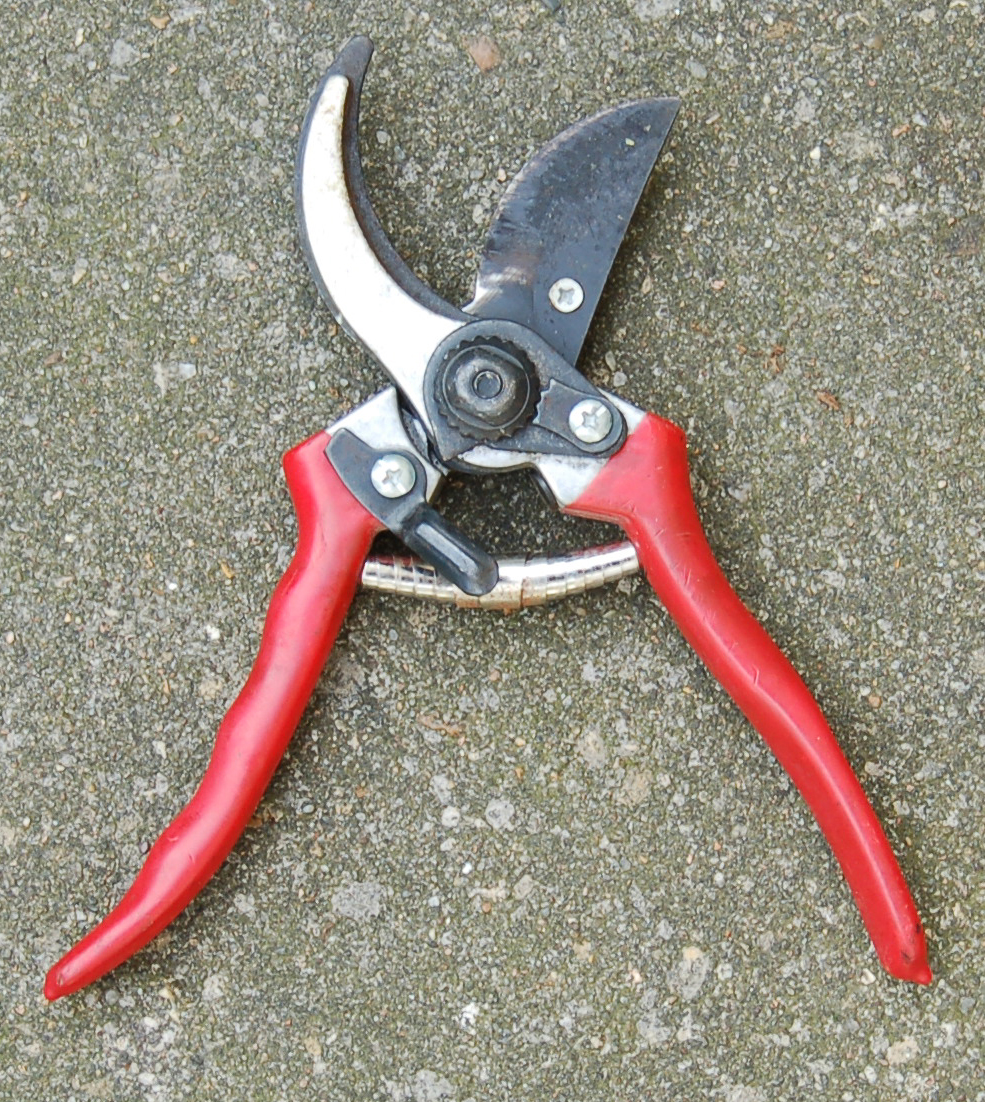
    Open bypass pruning shears with red handles
    Classic bypass pruning shears: a sharp curved blade slides past a hooked jaw. Photo: KoS, public domain, via Wikimedia Commons.

    Quick picks

    Best pruning shears by job
    Best for Pruner Type Listed capacity
    Best overall Fiskars PowerGear2 Geared bypass 3/4 in
    Budget, left or right hand Fiskars SoftGrip Bypass, ambidextrous 5/8 in
    Heavy-duty Fiskars Forged Steel Forged bypass, replaceable blade 1 in
    Classic forged Corona BP 3180D Forged bypass, sap groove 1 in
    Small hands Felco F14 Compact, forged aluminum See listing
    Weak grip, arthritis Corona Ratchet Pruner Ratchet 3/4 in
    Dead wood Fiskars Power-Lever Anvil Anvil 5/8 in

    Bypass, anvil or ratchet?

    • Bypass pruners cut like scissors: a curved, sharpened blade slides past a hooked jaw. University of Maryland Extension calls them superior to anvil pruners because they reduce tearing and crushing of plant tissue, and NC State Extension notes they make clean cuts and fit into tight branch angles. Choose bypass for live stems: roses, shrubs, perennials, fruit trees.
    • Anvil pruners press a straight blade onto a flat anvil. They need less effort on hard, dry wood but can crush live stems, so keep them for dead growth.
    • Ratchet pruners latch between squeezes, so you can cut a thicker stem in several small steps. NC State Extension points out that this means less hand strain, which helps if you have limited grip strength.

    Match the pruner to the stem size

    NC State Extension recommends hand pruners for small limbs, typically under 1/2 inch. Many pruners are listed at 5/8 to 1 inch, but that is a maximum. A simple test from NC State: if you have to squeeze hard, the stem is too big, and forcing the cut can damage both the plant and the tool. Move up to loppers for 1/2 to 1-1/2 inch branches and to a pruning saw beyond that.

    Which tool for which stem
    Stem or branch Tool
    Flower stems, deadheading, herbs Snips or light bypass pruners
    Up to about 1/2 inch Bypass hand pruners
    1/2 to 3/4 inch Geared, forged or ratchet pruners
    Over 3/4 inch Loppers or a pruning saw

    Fit and features that matter

    • Fit your hand. NC State Extension advises choosing a pruner that fits your hand and has a slim cutting head. If the handles open wider than your hand can comfortably close, you will tire fast. Smaller and lighter models suit smaller hands.
    • Blade steel and replaceable parts. Hardened steel holds an edge longer. Forged pruners like the Corona BP 3180D and the Fiskars Forged model are built to be sharpened, and the Fiskars blade can be replaced.
    • Coatings and sap grooves. Low-friction coatings and sap grooves reduce sticky buildup when you cut green wood.
    • Left-handed? Look for an ambidextrous design like the Fiskars SoftGrip.
    • Safety lock. A lock you can work with one hand keeps the blades closed in a pocket or tool belt.

    The 7 best pruning shears (sold by Amazon.com)

    1. Best overall: Fiskars PowerGear2 Bypass Pruning Shears

    Best overall

    Fiskars PowerGear2 Bypass Pruning Shears, 3/4-Inch Cut
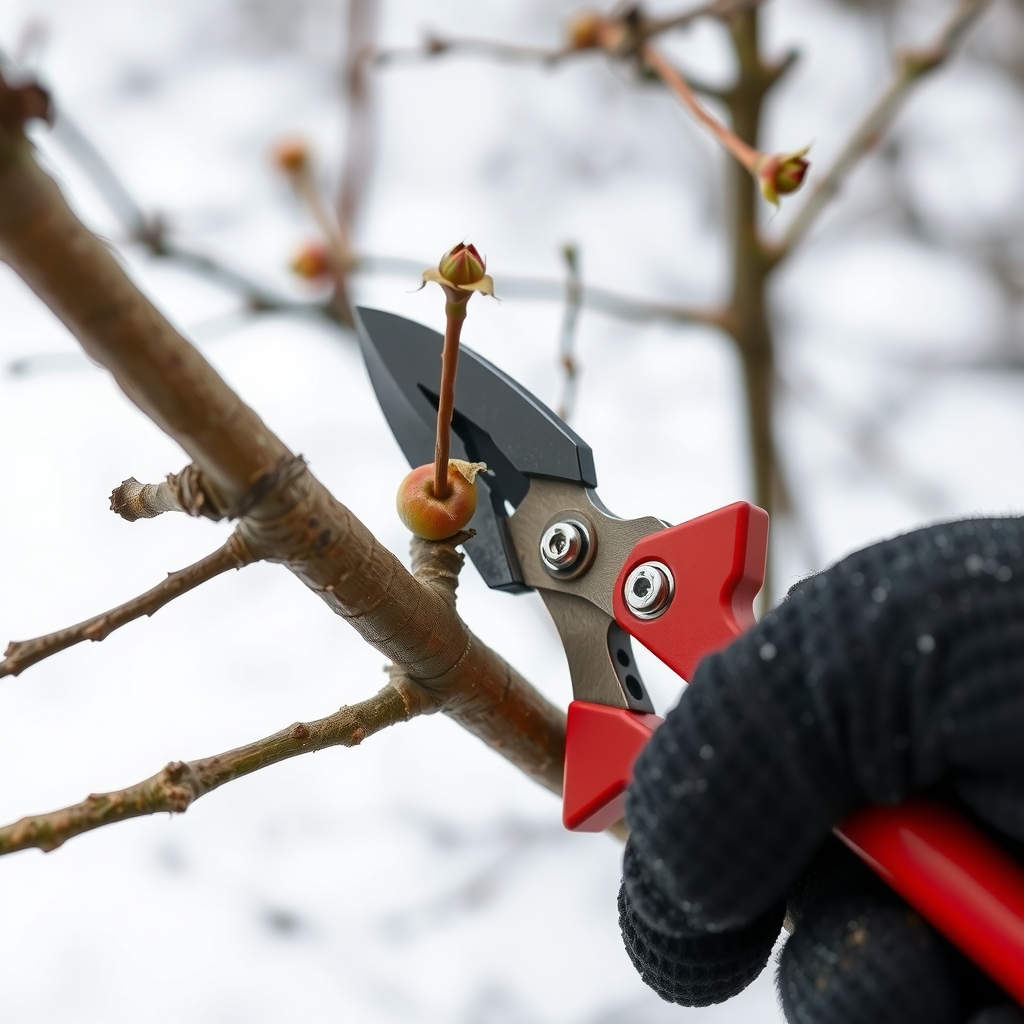
    Bypass hand pruners cutting a dormant apple shoot above a bud, illustrative AI image

    Illustrative image (AI-generated), not the exact product.

    See current photos and price on Amazon →

    Fiskars’ PowerGear2 mechanism multiplies cutting power, so 1/2 to 3/4 inch stems take noticeably less squeeze than with a basic pruner. Fiskars lists fully hardened bypass steel blades and a contoured rolling handle that moves with your hand to reduce fatigue.

    Good for: fruit trees, shrubs, most yard pruning. Skip if: you mostly deadhead flowers.

    2. Best budget: Fiskars SoftGrip Bypass Pruning Shears

    Best budget

    Fiskars SoftGrip Bypass Pruning Shears, 5/8-Inch Cut

    Bypass hand pruners trimming a rose stem, illustrative AI image

    Illustrative image (AI-generated), not the exact product.

    See current photos and price on Amazon →

    A light, simple bypass pruner for live stems up to 5/8 inch. Fiskars lists an ambidextrous shape that works for left- and right-handed gardeners, a hardened precision-ground blade and a low-friction, rust-resistant coating.

    Good for: roses, perennials, deadheading, left-handed gardeners. Skip if: you cut a lot of woody stems.

    3. Best heavy-duty: Fiskars Forged Steel Bypass Pruning Shears

    Heavy-duty

    Fiskars Forged Steel Bypass Pruning Shears, 1-Inch Cut
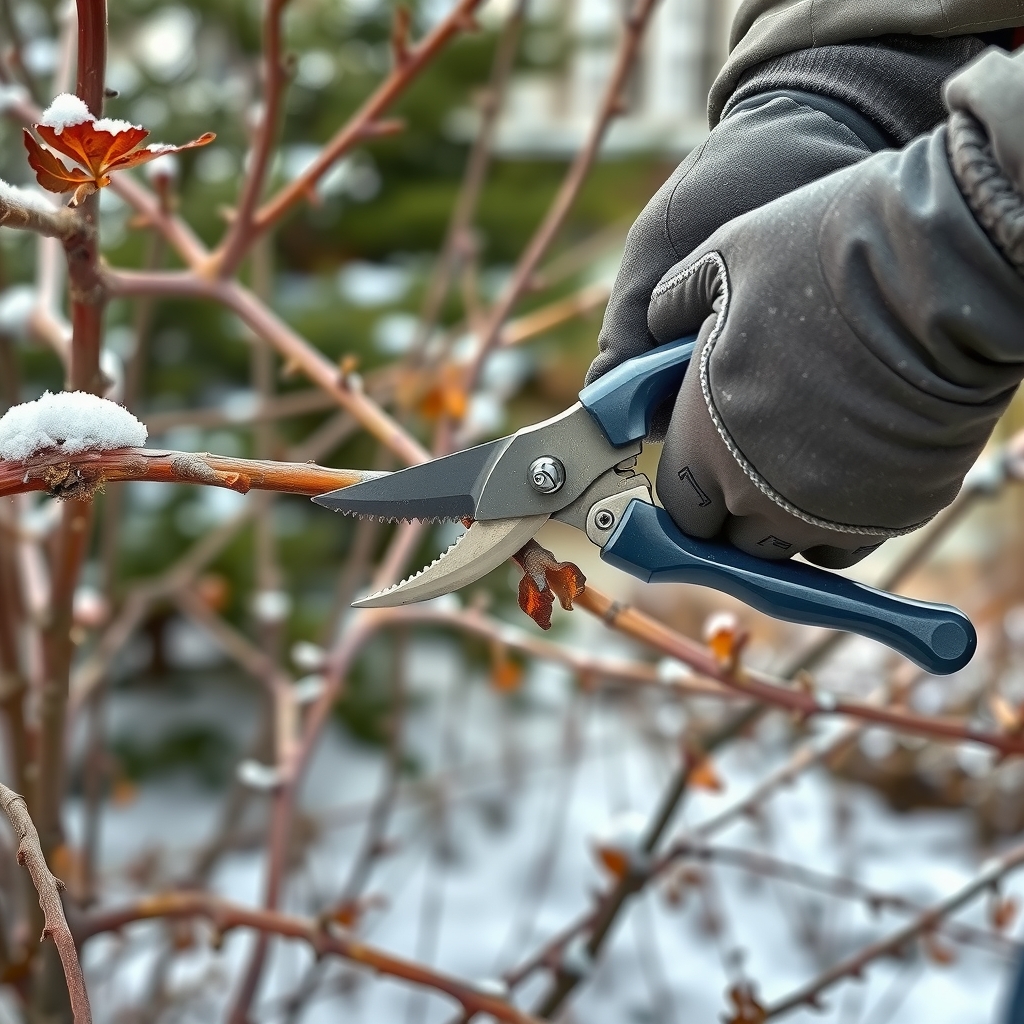
    Forged bypass hand pruners cutting a woody stem, illustrative AI image

    Illustrative image (AI-generated), not the exact product.

    See current photos and price on Amazon →

    Forged steel construction and a 1-inch listed capacity for tougher, more frequent pruning. Fiskars lists a hardened blade that can be sharpened or replaced, which makes this a long-term tool rather than a disposable one.

    Good for: heavy shrub work, orchards, frequent pruning. Skip if: you have small hands or a weak grip.

    4. Best classic forged: Corona BP 3180D Forged Bypass Pruner

    Classic forged

    Corona BP 3180D Forged Classic Bypass Pruner, 1-Inch Cut
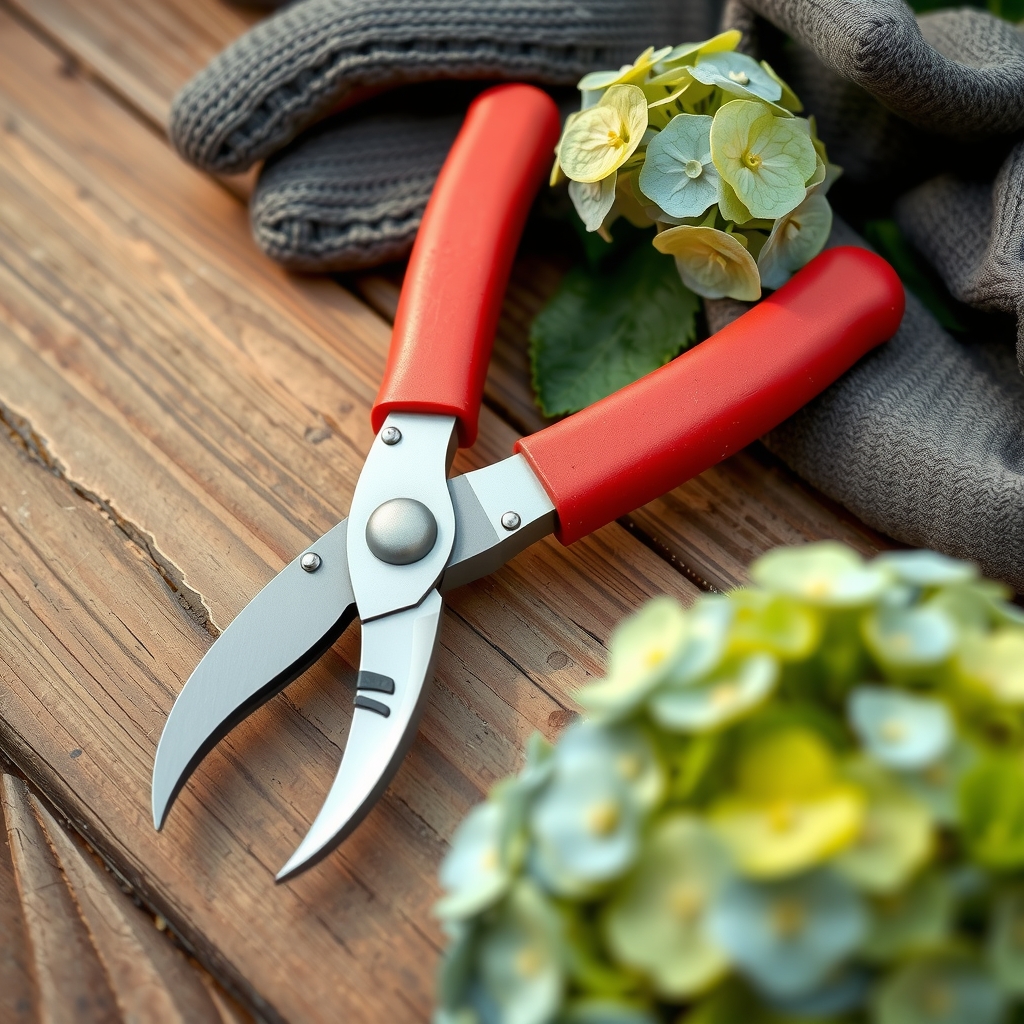
    Classic red bypass pruners on a garden table, illustrative AI image

    Illustrative image (AI-generated), not the exact product.

    See current photos and price on Amazon →

    A traditional forged bypass pruner with a listed 1-inch capacity. Corona lists a forged steel blade, contoured non-slip handles and a sap groove that helps stop sticky buildup when cutting green wood.

    Good for: everyday pruning, gardeners who sharpen their tools. Skip if: you want a geared or ratchet assist.

    5. Best for small hands: Felco F14 Pruning Shears

    Small hands

    Felco F14 Pruning Shears, 7.1-Inch, for Small Hands

    Compact hand pruners held in a small hand, illustrative AI image

    Illustrative image (AI-generated), not the exact product.

    See current photos and price on Amazon →

    Felco is known for long-lasting Swiss pruners, and the F14 is its compact 7.1-inch model for small hands. Felco lists forged aluminum handles with a lifetime warranty, carbon steel blades, replaceable parts and a rubber bumper. It costs more than the others here.

    Good for: small hands, gardeners who want a tool for decades. Skip if: you are on a tight budget.

    6. Best for a weak grip: Corona Ratchet Hand Pruner

    Ratchet

    Corona Tools Ratchet Hand Pruner, 3/4-Inch Cut
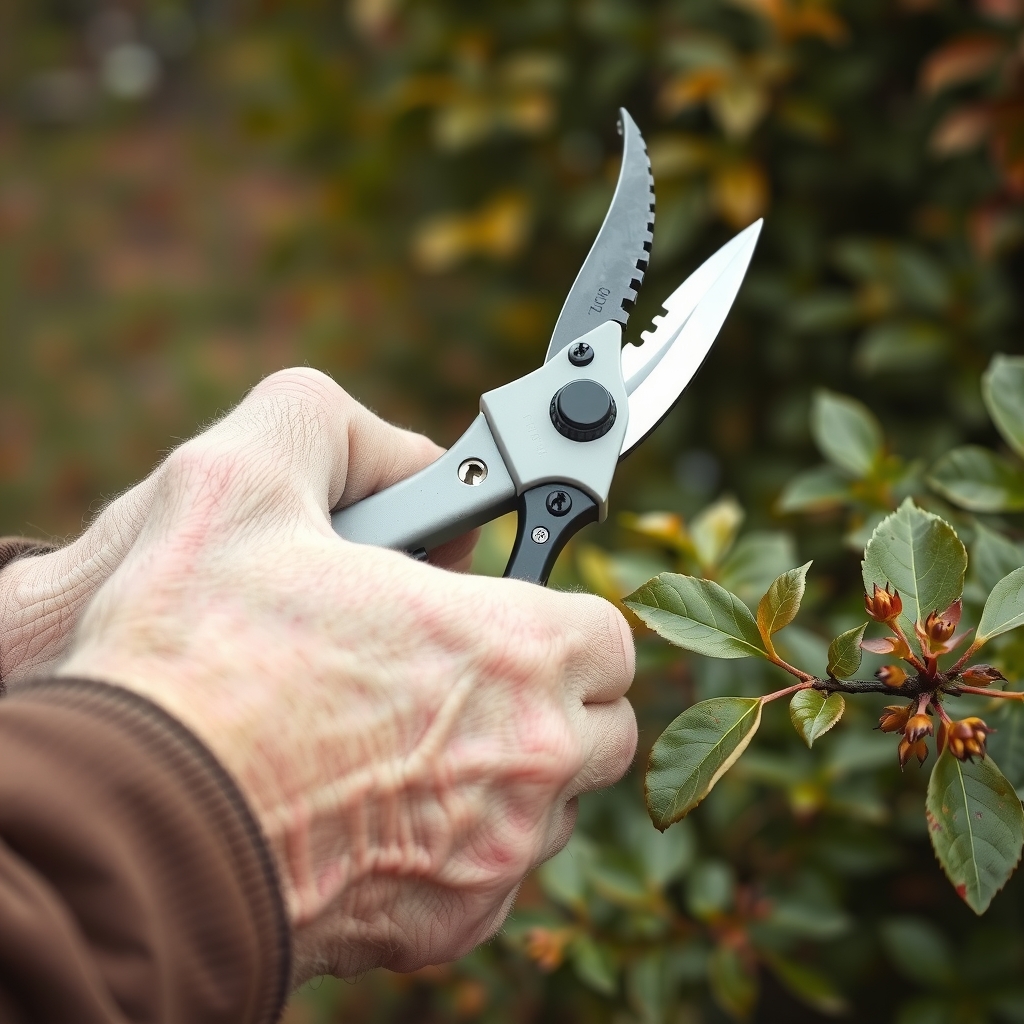
    Ratchet hand pruners cutting a woody branch, illustrative AI image

    Illustrative image (AI-generated), not the exact product.

    See current photos and price on Amazon →

    The ratchet cuts in stages, so a thick stem takes several light squeezes instead of one hard one. Corona lists a 3/4-inch capacity, a steel blade and cushioned non-slip handles. It is slower than a standard pruner, but much easier on sore hands.

    Good for: arthritis, weak grip, thicker stems. Skip if: you want fast cuts on soft stems.

    7. Best for dead wood: Fiskars Power-Lever Anvil Pruning Shears

    Dead wood

    Fiskars Power-Lever Anvil Pruning Shears, 5/8-Inch Cut
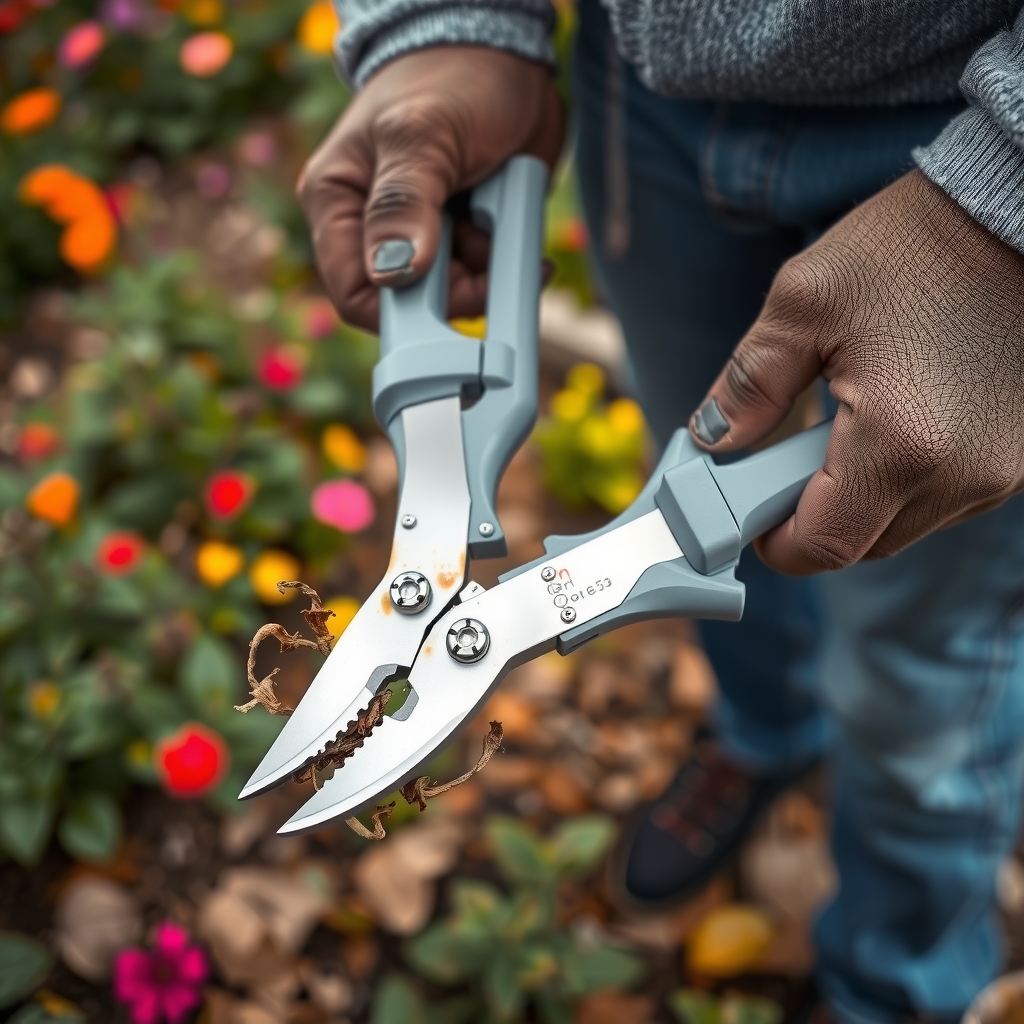
    Anvil hand pruners cutting back dead stems, illustrative AI image

    Illustrative image (AI-generated), not the exact product.

    See current photos and price on Amazon →

    An anvil pruner for dry, dead growth: cutting back old perennial stems, clearing dead twigs and fall cleanup. Fiskars lists a Power-Lever design for more leverage and a precision-ground steel blade.

    Good for: dead stems, fall cleanup. Skip if: this would be your only pruner.

    How to use and care for pruning shears

    • Blade side toward the plant. Keep the sharp blade on the side of the stem you are keeping, so the cut is clean right where the plant will heal. University of Maryland Extension also advises cutting with the blade side moving up and through or across the branch, not down through it, which can tear.
    • Cut just above a bud or just outside the branch collar, and don’t leave stubs.
    • Don’t twist or force. If you have to strain, switch to loppers.
    • Clean between plants when cutting diseased wood. University of Maryland Extension suggests 70 percent alcohol, or bleach diluted 1 to 9 with water, rinsed off afterward.
    • Sharpen and oil. Keep blades sharp and store pruners dry. See our winter tool storage guide.
    • Prune at the right time. Most fruit trees are best pruned in late winter. See when to prune fruit trees in Iowa.

    FAQs

    What are the best pruning shears for most gardeners?
    A bypass pruner that fits your hand and cuts up to about 3/4 inch suits most gardens. The Fiskars PowerGear2 is a strong all-round pick because its geared handle reduces effort. On a budget, the Fiskars SoftGrip covers lighter work.

    Are bypass or anvil pruners better?
    Bypass pruners are better for live plants. University of Maryland Extension says they reduce tearing and crushing of tissue. Anvil pruners are best kept for dry, dead stems.

    How thick a branch can hand pruners cut?
    NC State Extension recommends hand pruners for limbs typically under 1/2 inch. Many are listed at 5/8 to 1 inch, but if you have to squeeze hard, the stem is too big and you should use loppers.

    What pruning shears are best for arthritis or a weak grip?
    Ratchet pruners, like the Corona ratchet hand pruner, cut in several small squeezes. Geared pruners like the Fiskars PowerGear2 also reduce effort. Choose a size that fits your hand.

    How do I clean pruning shears?
    Wipe off sap and dirt after use, and dry and oil the blade. When cutting diseased plants, University of Maryland Extension suggests disinfecting with 70 percent alcohol, or bleach diluted 1 to 9 with water, then rinsing.

    Sources

    Explore more Lawn & Garden guides.
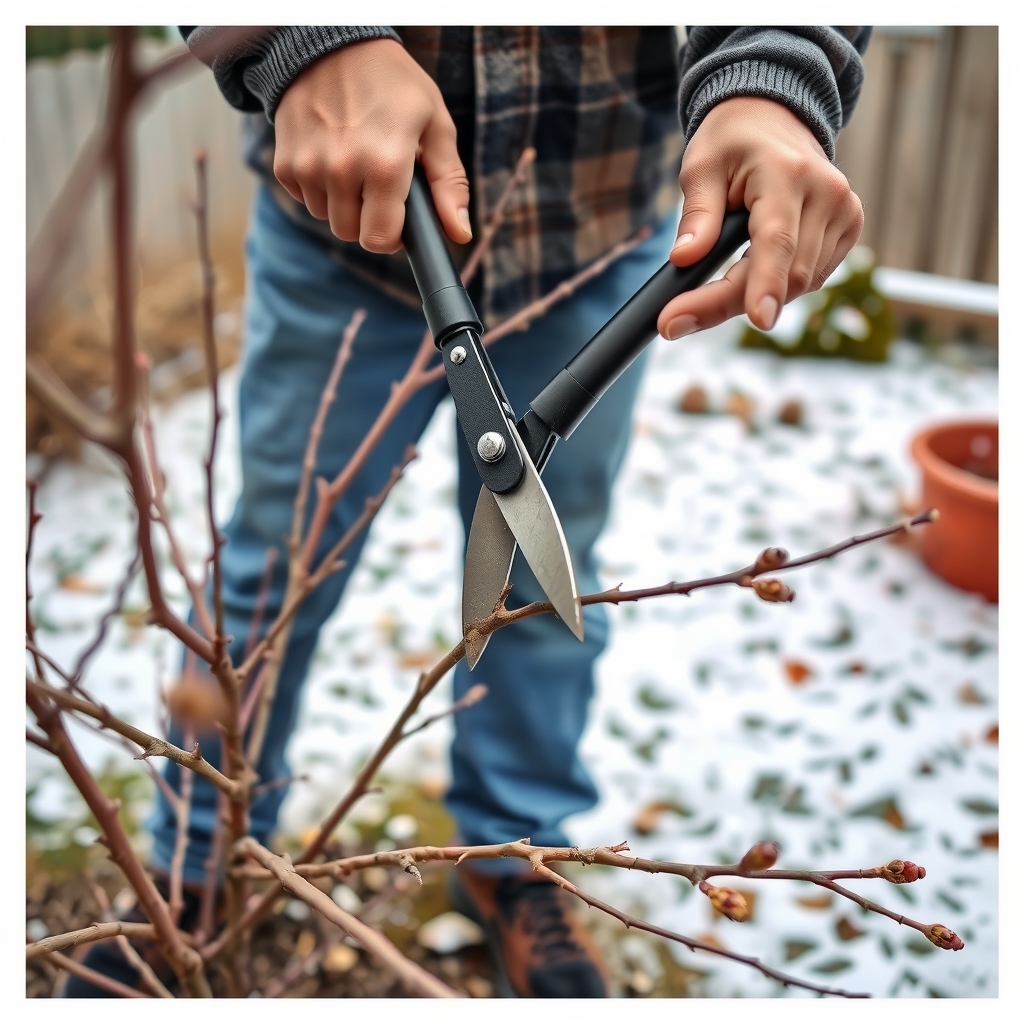
  • Best Loppers for Pruning Trees and Shrubs (2026 Guide)

    Best Loppers for Pruning Trees and Shrubs (2026 Guide)

    Skip to content

    Lawn & Garden • Pruning Tools • Updated October 30, 2026

    Best Loppers for Pruning Trees and Shrubs (2026 Guide)

    Explore related guides: When to prune fruit trees in Iowa · Bypass vs anvil pruners · Garden tool storage for winter · Gifts for gardeners under $50 · Best pruning shears.

    Loppers are the tool for branches too thick for hand pruners and too thin to need a saw. The best loppers for you depend on three things: the blade type (bypass or anvil), how thick your branches are, and how much leverage you need. This guide explains each choice using university extension advice, then lists six loppers that were sold by Amazon.com when we checked.

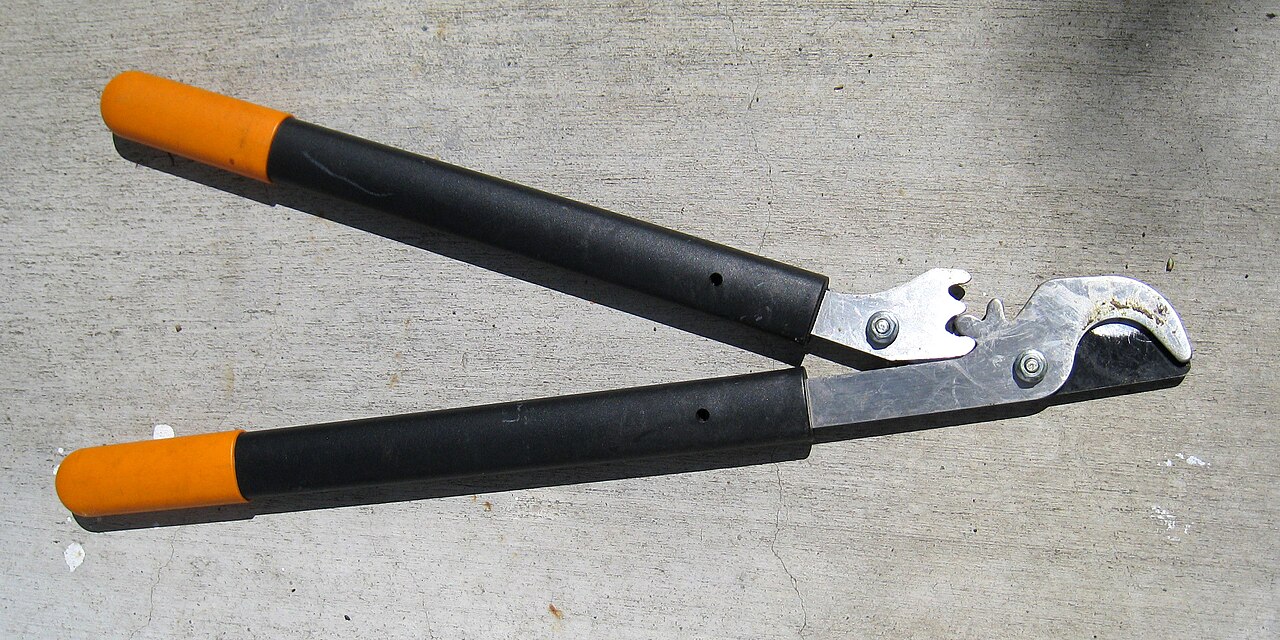
    Long-handled bypass loppers lying open on concrete
    A pair of geared bypass loppers. Photo: Dvortygirl, CC BY-SA 3.0, via Wikimedia Commons.

    Quick picks

    Best loppers by job
    Best for Lopper Type Listed cut capacity
    Best value, most yards Fiskars 28″ Bypass Loppers Bypass, 28 in 1.5 in
    Shrubs and tight spaces Fiskars 18″ PowerGear2 Geared bypass, 18 in 1.5 in
    Thick live branches Corona 33″ DualLINK Compound bypass, 33 in 2 in
    Reaching higher Corona SL 3364 ComfortGEL Extendable bypass, 28 to 35 in 1.5 in
    Heavy use, orchards Corona X Series Pro Bypass 2-1/4 in
    Dead, dry wood Fiskars 32″ Ratchet Drive Ratchet anvil, 32 in 2 in

    Bypass or anvil: pick the blade first

    • Bypass loppers work like scissors: a sharp curved blade slides past a thicker hook. University of Maryland Extension calls bypass tools superior because they reduce tearing and crushing of plant tissue. Use them for live wood: fruit trees, shrubs, roses and young shade trees.
    • Anvil loppers press a straight blade onto a flat anvil, like a knife on a cutting board. University of Missouri Extension notes that this action tends to crush tissue but can cut through thicker limbs. Save them for dead, dry branches and for cutting up brush.

    Rule of thumb: if you only buy one pair, buy bypass. Most pruning is on living wood.

    Cut capacity: match the branch size

    NC State Extension places loppers in the range of roughly 1/2 inch to 1-1/2 inches, and recommends a pruning saw above 1-1/2 inches. Missouri Extension notes that bypass loppers are generally used on branches up to about 2-1/2 inches. Listed capacities are a maximum, not a comfortable everyday size: working well below the limit gives cleaner cuts and less strain on the tool.

    Which tool for which branch
    Branch diameter Best tool
    Up to 3/4 inch Bypass hand pruners
    3/4 to 1-1/2 inches Standard bypass loppers
    1-1/2 to 2 inches Geared, compound or ratchet loppers
    Over 2 inches Pruning saw

    Gears, ratchets and handle length

    • Handle length. Longer handles (28 to 33 inches) give more leverage and reach. Short loppers (15 to 20 inches) are easier to steer inside a dense shrub.
    • Gears and compound linkages. Virginia Tech Extension suggests loppers with gears or ratchets for heavy-duty pruning. Fiskars PowerGear and Corona DualLINK are examples: they multiply your force so a thick branch takes less effort.
    • Ratchets. A ratchet lopper closes in several small squeezes. It is slower, but helpful if you have limited hand or arm strength.
    • Extendable handles. Telescoping handles add reach for higher branches without a ladder.
    • Bumpers. Missouri and Virginia Tech Extension both point to shock-absorbing bumpers near the blades, which reduce strain on your elbows during long sessions.

    The 6 best loppers (sold by Amazon.com)

    1. Best value: Fiskars 28-Inch Bypass Loppers

    Best value

    Fiskars 28” Garden Bypass Loppers, 1.5-Inch Cut Capacity

    Long-handled bypass loppers cutting a branch on a dormant apple tree, illustrative AI image

    Illustrative image (AI-generated), not the exact product.

    See current photos and price on Amazon →

    A simple, lightweight bypass lopper for the 1/2 to 1-1/2 inch branches most yards produce. Fiskars lists steel blades with a low-friction coating that reduces gumming and resists rust, and non-slip grips. No gears, so very tough branches take more effort, but it is the easiest pick to recommend for everyday pruning.

    Good for: fruit tree water sprouts, shrubs, small trees. Skip if: you regularly cut branches near 2 inches.

    2. Best compact: Fiskars 18-Inch PowerGear2 Bypass Loppers

    Best compact

    Fiskars 18” PowerGear2 Garden Bypass Loppers, 1.5-Inch Capacity

    Compact bypass loppers trimming a shrub, illustrative AI image

    Illustrative image (AI-generated), not the exact product.

    See current photos and price on Amazon →

    Short handles make this lopper easy to work inside shrubs, hedges and roses, and the PowerGear2 mechanism multiplies leverage so you don’t lose much cutting power. Fiskars lists fully hardened steel bypass blades with a low-friction coating and rounded SoftGrip handles.

    Good for: shrubs, roses, small gardens. Skip if: you need reach into a tree.

    3. Best for thick live branches: Corona 33-Inch DualLINK Bypass Loppers

    Heavy-duty bypass

    Corona Tools 33” Bypass Loppers with DualLINK MAXFORGED, 2-Inch Capacity

    Heavy-duty bypass loppers cutting a thick tree branch, illustrative AI image

    Illustrative image (AI-generated), not the exact product.

    See current photos and price on Amazon →

    Corona’s DualLINK compound linkage increases cutting force, and the 33-inch handles add leverage and reach. Corona lists forged steel blades and a 2-inch capacity, so this is the bypass pick for larger live limbs that would stall a basic lopper.

    Good for: overgrown shrubs, neglected fruit trees, larger yards. Skip if: you want a light tool for quick trims.

    4. Best extendable: Corona SL 3364 ComfortGEL Extendable Bypass Lopper

    Extendable

    Corona SL 3364 ComfortGEL Extendable Bypass Lopper, 1-1/2 Inch Cut

    Extendable loppers reaching a high tree branch, illustrative AI image

    Illustrative image (AI-generated), not the exact product.

    See current photos and price on Amazon →

    Steel-core handles extend from 28 to 35 inches, so you can cut a little higher without a ladder and shorten the handles again for close work. Corona lists a non-stick blade coating and ComfortGEL grips.

    Good for: taller shrubs and lower tree limbs. Skip if: your branches are mostly over 1-1/2 inches.

    5. Best for heavy use: Corona X Series Pro Bypass Lopper

    Pro pick

    Corona Tools X Series Pro Bypass Lopper, 2-1/4-Inch Capacity

    Bypass loppers pruning an apple tree in an orchard, illustrative AI image

    Illustrative image (AI-generated), not the exact product.

    See current photos and price on Amazon →

    Corona’s pro-grade line, with the largest listed capacity here at 2-1/4 inches. The bypass blade suits live wood, and Corona lists heavy-duty construction and ergonomic handles for repeated use. It costs more than the others, so it makes most sense for orchards, big properties or a gardener who prunes every winter.

    Good for: orchards, acreages, frequent pruning. Skip if: you prune a few shrubs a year.

    6. Best for dead wood: Fiskars 32-Inch Ratchet Drive Anvil Loppers

    Dead wood

    Fiskars 32” Ratchet Drive Garden Anvil Loppers, 2-Inch Capacity

    Anvil loppers cutting a dead branch, illustrative AI image

    Illustrative image (AI-generated), not the exact product.

    See current photos and price on Amazon →

    The ratchet builds force over a few easy squeezes, which helps on hard, dry branches and for gardeners with less grip strength. Fiskars lists a hardened, precision-ground steel blade with a low-friction coating and a 2-inch capacity. As an anvil tool, it is meant for dead wood, not live pruning.

    Good for: storm cleanup, dead limbs, cutting brush into pieces. Skip if: this would be your only lopper.

    How to use and care for loppers

    • Prune at the right time. Most trees and fruit trees are best pruned in late winter while dormant. See our guide to when to prune fruit trees in Iowa.
    • Get the branch deep in the jaws. Cut near the pivot, not with the blade tips, for the most power and a clean cut.
    • Cut just outside the branch collar and don’t leave stubs.
    • Don’t twist. If a branch won’t cut, it is too thick: switch to a saw rather than wrenching the handles, which can spring the blades.
    • Clean between plants when cutting diseased wood. University of Maryland Extension suggests 70 percent alcohol, or bleach diluted 1 to 9 with water, rinsed off afterward.
    • Store them dry and oiled. Our winter tool storage guide covers cleaning and sharpening.

    FAQs

    What are the best loppers for most people?
    A bypass lopper with 26 to 32 inch handles and about 1.5 inch capacity suits most yards. The Fiskars 28 inch bypass lopper is a good value pick. Choose a geared or compound model, like the Corona 33 inch DualLINK, if you often cut branches near 2 inches.

    Should I buy bypass or anvil loppers?
    Buy bypass loppers for live branches. University of Maryland Extension says bypass tools reduce tearing and crushing of plant tissue. Anvil loppers are best kept for dead, dry wood.

    How thick a branch can loppers cut?
    NC State Extension places loppers at roughly 1/2 inch to 1-1/2 inches and recommends a pruning saw above that. Geared, compound and ratchet loppers are often listed at 2 inches or more, but cuts are cleaner well below the maximum.

    Are ratchet loppers worth it?
    Ratchet loppers close in several small squeezes, so they need less hand strength on thick or hard branches. They are slower than standard loppers and most are anvil style, so they suit dead wood and gardeners with limited grip strength.

    Are long or short loppers better?
    Long handles (28 to 33 inches) give more leverage and reach for trees. Short loppers (15 to 20 inches) are easier to use inside dense shrubs. Extendable loppers let you switch between the two.

    Sources

    Explore more Lawn & Garden guides.
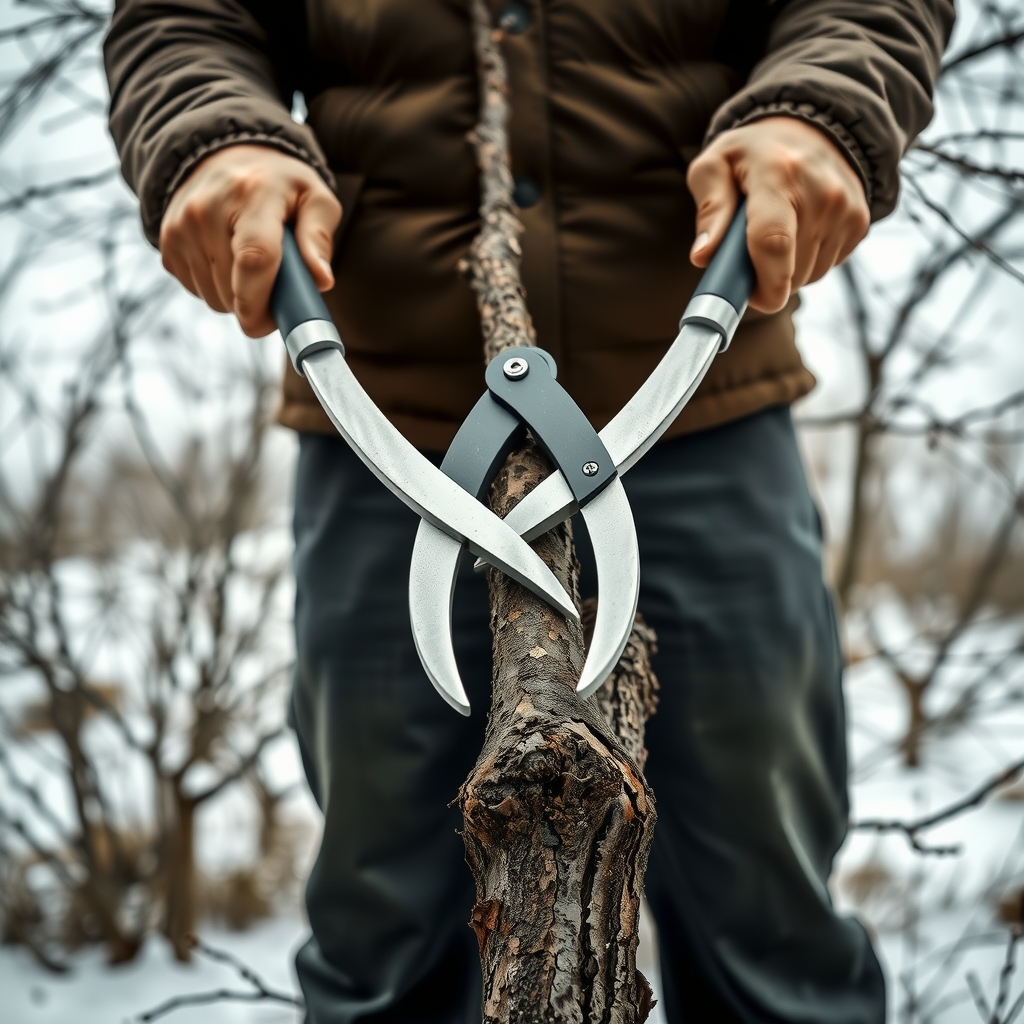
  • When to Prune Fruit Trees in Iowa (and How to Do It Right)

    When to Prune Fruit Trees in Iowa (and How to Do It Right)

    Skip to content

    Lawn & Garden • Iowa Fruit Trees • Updated October 30, 2026

    When to Prune Fruit Trees in Iowa (and How to Do It Right)

    Explore related guides: Gardening in Iowa: all guides · Fall garden cleanup checklist · Protect shrubs in winter · Garden tool storage for winter · Best loppers for trees and shrubs · Best pruning shears.

    Apple, pear, plum and cherry trees need regular pruning to stay healthy and produce good fruit, but timing matters as much as technique. In Iowa the window is short and specific. This guide covers when to prune fruit trees in Iowa, what to cut first, how to shape a young apple tree, how to bring back a neglected one, and which tools to have ready, based on Iowa State University Extension and Outreach guidance.

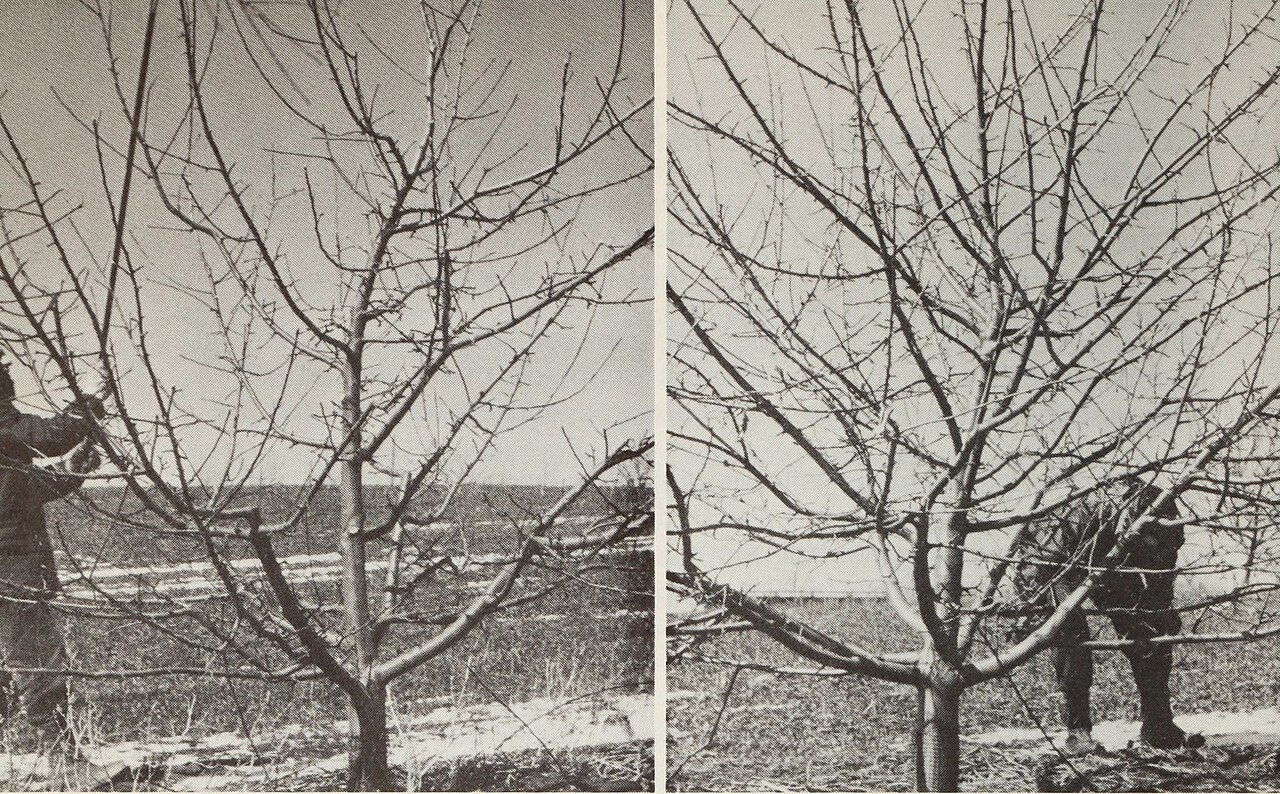
    Historic photo of young apple trees before and after pruning
    Young apple trees before and after dormant pruning, from a historic fruit-growing manual. Image: Internet Archive Book Images, no known copyright restrictions, via Wikimedia Commons.

    When to prune fruit trees in Iowa: the short answer

    Iowa State University Extension says late February to early April is the best time to prune fruit trees in Iowa. Finish before the trees break bud and leaf out. Summer pruning is generally not recommended, with one exception: water sprouts (fast, upright shoots) can be removed in June or July.

    It is fall now, so this is planning season. Don’t prune fruit trees in autumn. Use the winter to get your tools sharp and decide which branches will go, then prune on a mild, dry day in late February or March.

    Fruit tree pruning calendar for Iowa (ISU Extension)
    When What to do
    Fall and early winter Don’t prune. Plan cuts, sharpen and clean tools.
    Late February to early April Main pruning, while trees are dormant and before bud break
    Spring (bud break onward) Stop major pruning
    June to July Optional: remove water sprouts only
    Any time Remove dead, broken or storm-damaged branches

    Why late winter is best

    • You can see the structure. With no leaves, crossing branches, narrow crotches and crowded centers are easy to spot.
    • Wounds close faster. Cuts made at the end of dormancy begin to seal as soon as spring growth starts.
    • Less winter injury. Pruning in fall can stimulate tender growth or leave fresh wounds exposed to a full Iowa winter.

    What to cut first

    1. Dead, diseased and broken branches. ISU Extension makes this the first step on any tree.
    2. Water sprouts. Vigorous shoots growing straight up from limbs, often near old cuts.
    3. Suckers. Upright shoots from the base or roots. They steal energy and can harbor pests.
    4. Crossing and rubbing branches. Keep the better-placed one.
    5. Branches growing into the center. Open the canopy so sunlight and air reach the fruit.

    Don’t overdo it. ISU Extension warns that excessive pruning of bearing trees weakens them and triggers vigorous shoot growth with few flower buds, which means a poor crop the next year. Young trees need light pruning every year; bearing trees need light to moderate pruning.

    Small cuts

    Fiskars PowerGear2 Bypass Pruning Shears, 3/4-Inch Cut

    Bypass hand pruners cutting a dormant apple shoot above a bud, illustrative AI image

    Illustrative image (AI-generated), not the exact product.

    See current photos and price on Amazon →

    For shoots and small branches up to 3/4 inch. Bypass blades make clean cuts on live wood, and the geared handle helps on tough apple wood.

    How to make a good pruning cut

    • Cut just outside the branch collar, the slightly swollen ring where a branch joins the trunk or a larger limb. Don’t cut flush into the collar, and don’t leave a stub.
    • Cut above an outward-facing bud when shortening a shoot, so new growth heads out, not into the tree.
    • Use three cuts on heavy limbs: an undercut a foot out, a top cut a little farther out to drop the limb, then a final cut at the collar. This keeps the bark from tearing down the trunk.
    • Skip the wound paint. Missouri Botanical Garden and most extension services advise against tree wound dressings; cuts close better when left open.

    How to prune a young apple tree (central leader)

    ISU Extension trains apple trees to a central leader: one vertical trunk with tiers of side branches, shaped like a Christmas tree, with scaffold branches growing about 30 to 45 degrees above horizontal.

    1. At planting, unbranched whip: cut it to 30 inches, just above a bud.
    2. At planting, branched tree: keep the leader and 3 to 4 wide-angled side shoots spaced around the trunk, the lowest about 2 feet above the soil. Cut them and the leader back by half, just above buds.
    3. Year 2: keep the best shoot at the tip of each scaffold, remove 25% of new growth, and start the second tier 24 to 30 inches above the first.
    4. Year 3 and on: choose 3 to 4 second-tier branches that are not directly above first-tier branches, and keep the leader the tallest shoot.
    5. Finished tree: 3 to 4 tiers, with upper branches shorter than lower ones so they don’t shade them.

    Medium branches

    Fiskars 28-Inch Bypass Loppers, 1.5-Inch Cut

    Long-handled bypass loppers cutting a branch on a dormant apple tree, illustrative AI image

    Illustrative image (AI-generated), not the exact product.

    See current photos and price on Amazon →

    Long handles give leverage and reach for branches up to 1.5 inches, like water sprouts and crossing limbs in the middle of the tree.

    How to prune a neglected apple tree

    A large apple tree that hasn’t been pruned for years is usually tall, crowded and full of small, poorly colored fruit. ISU Extension says it can produce good fruit again with proper pruning, but complete renovation takes two or three years. A common way to split the work:

    1. Year 1: remove all dead, diseased and broken branches, then a few of the largest limbs that crowd the center or make the tree too tall.
    2. Year 2: thin crossing branches and remove most of the water sprouts that grew after year 1.
    3. Year 3: fine-tune: shorten long branches and open the canopy so light reaches the inside.

    Cutting too much in one year leads to a flush of water sprouts and a poor crop, so spread the work out.

    Large branches

    Fiskars 10-Inch Folding Pruning Saw

    Curved pruning saw cutting a thick apple tree limb near the trunk, illustrative AI image

    Illustrative image (AI-generated), not the exact product.

    See current photos and price on Amazon →

    For anything thicker than loppers can handle, especially on neglected trees. A folding saw locks open for cutting and closes for safe storage.

    Tools by branch size

    Which pruning tool to use
    Branch size Tool
    Up to 3/4 inch Bypass hand pruners
    3/4 to 1.5 inches Bypass loppers
    Over 1.5 inches Pruning saw (three-cut method)

    Choose bypass blades for live fruit wood; anvil tools can crush stems. Clean and sharpen tools before you start, and wipe blades between trees if you cut out diseased wood. Our winter tool care guide covers sharpening and oiling.

    Protect your hands: Wells Lamont Nitrile Work Gloves

    Gloves

    Wells Lamont Nitrile Work Gloves

    Nitrile-coated garden work gloves, illustrative AI image

    Illustrative image (AI-generated), not the exact product.

    See current photos and price on Amazon →

    Grippy gloves help on cold February days and protect against scrapes from rough bark and sharp cut ends.

    FAQs

    When should I prune fruit trees in Iowa?
    Late February to early April, according to Iowa State University Extension. Finish pruning before the trees break bud and leaf out in spring.

    Can I prune fruit trees in the fall?
    It is not recommended. Fall pruning can stimulate tender growth and leaves fresh wounds exposed all winter. Wait until late February to early April. Dead or broken branches can be removed any time.

    Can I prune fruit trees in summer?
    Summer pruning of fruit trees is generally not recommended in Iowa, but water sprouts can be removed in June or July.

    How much should I prune an apple tree?
    Young trees need light pruning every year, and bearing trees need light to moderate pruning. ISU Extension warns that excessive pruning weakens trees and reduces the next year’s crop. Neglected trees should be renovated over two or three years.

    Should I paint pruning cuts?
    No. Most extension services, including Missouri Botanical Garden, advise against wound dressings. Make clean cuts just outside the branch collar and leave them open.

    Sources

    Explore more Lawn & Garden guides.
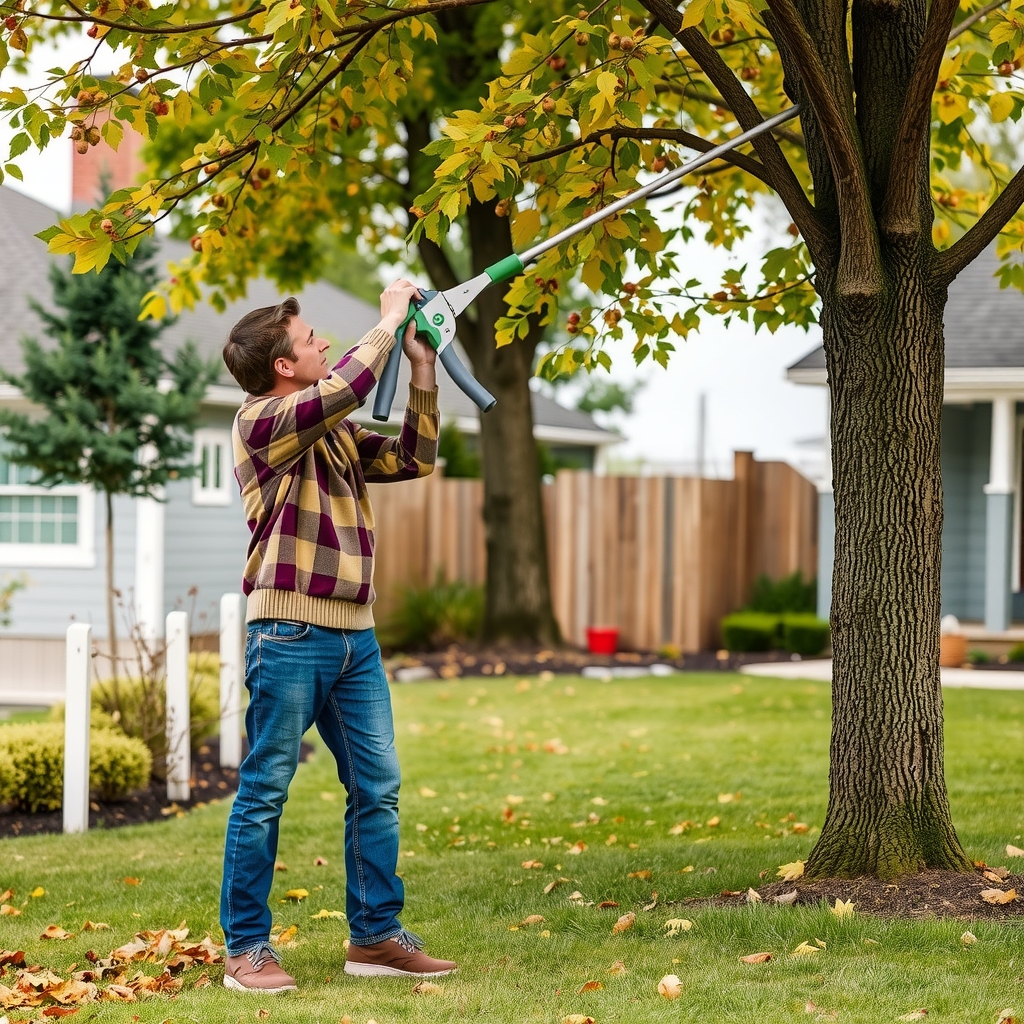
  • How to Store Dahlias and Cannas Over Winter in Iowa

    How to Store Dahlias and Cannas Over Winter in Iowa

    Skip to content

    Lawn & Garden • Iowa Fall Garden • Updated October 30, 2026

    How to Store Dahlias and Cannas Over Winter in Iowa

    Explore related guides: Gardening in Iowa: all guides · Overwinter geraniums · Fall garden cleanup checklist · When to plant tulip bulbs in Iowa.

    Dahlias and cannas bloom right up to the first hard frost, but they cannot survive an Iowa winter in the ground. The good news: their tubers and rhizomes are easy to save. Dig them a few days after a killing frost, let them dry, and store them somewhere cool and dry until spring. This guide walks through how to store dahlias and cannas over winter, step by step, based on Iowa State University Extension and Outreach guidance.

    Freshly dug dahlia tubers drying on a mesh rack
    Freshly dug dahlia tubers drying before storage. Photo: F. D. Richards, CC BY-SA 2.0, via Wikimedia Commons.

    The short answer

    A few days after a hard, killing frost, cut dahlias back to 2 to 4 inches and cannas to 4 to 6 inches. Dig the clumps carefully, let dahlias dry for about a day and cannas for 1 to 2 days, then store them in a cool (40 to 50°F), dry place. Dahlias go upside down in boxes covered with vermiculite, peat moss or wood shavings; cannas go in boxes, crates or mesh bags. That is the Iowa State University Extension method.

    When to dig dahlias and cannas in Iowa

    Wait for the first hard, killing frost that blackens the leaves. In much of Iowa that usually happens in October, a little earlier in the north and later in the south. The frost signals the plants to stop growing, and the few days after it give the tubers a chance to firm up.

    Don’t wait too long, though. Dig before the ground freezes hard, and pick a dry day: wet, muddy clumps are harder to clean and slower to dry.

    How to store dahlias over winter

    1. Cut back. Within a few days of a killing frost, cut stems to within 2 to 4 inches of the ground.
    2. Dig carefully. Use a spade or digging fork and start a foot or so from the stem so you don’t slice into the tubers. Lift the whole clump.
    3. Clean. Shake off the soil, cut the stems back to the crown and wash off the remaining soil.
    4. Dry. Let the clumps dry until they are dry to the touch, usually about one day.
    5. Label. Mark each clump with its variety or color before they all look the same.
    6. Pack. Place the clumps upside down in boxes or containers and cover them with vermiculite, peat moss or wood shavings.
    7. Store cool and dry. Keep them at 40 to 50°F, for example in a cool basement, root cellar or attached garage that does not freeze.

    Digging

    Spear & Jackson Neverbend Carbon Steel Border Fork

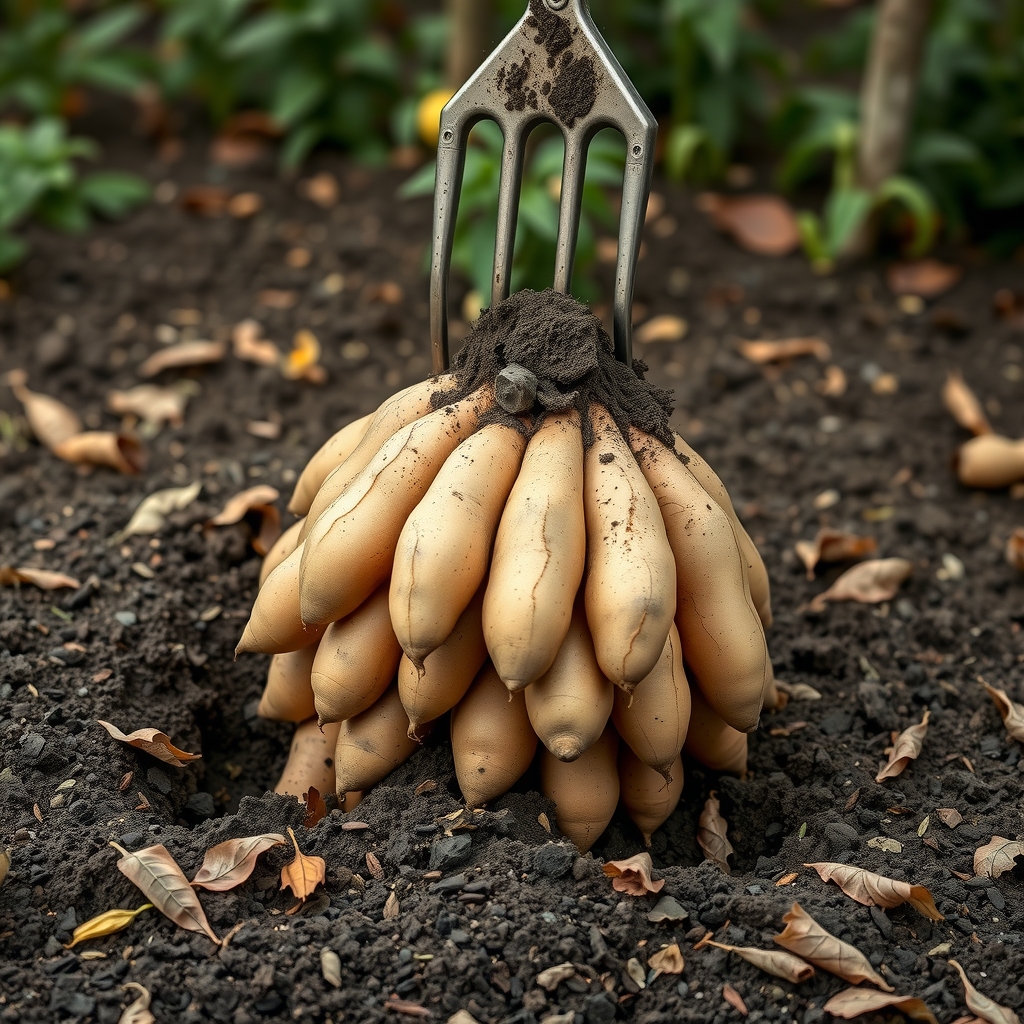
    Garden fork lifting a clump of dahlia tuberous roots, illustrative AI image

    Illustrative image (AI-generated), not the exact product.

    See current photos and price on Amazon →

    A fork lifts a clump with less risk of slicing tubers than a sharp spade. This border fork is a manageable size for flower beds.

    How to store cannas over winter

    1. Cut back. A few days after a hard, killing frost, cut cannas to 4 to 6 inches above the ground.
    2. Dig. Lift the clumps with a spade or fork, leaving a small amount of soil on the rhizomes.
    3. Dry. Let them dry for 1 to 2 days in a frost-free spot.
    4. Pack. Place the clumps in large boxes, wire crates or mesh bags.
    5. Store cool and dry. Keep them at 40 to 50°F in a dry location.

    Cutting back

    Fiskars PowerGear2 Bypass Pruning Shears, 3/4-Inch Cut

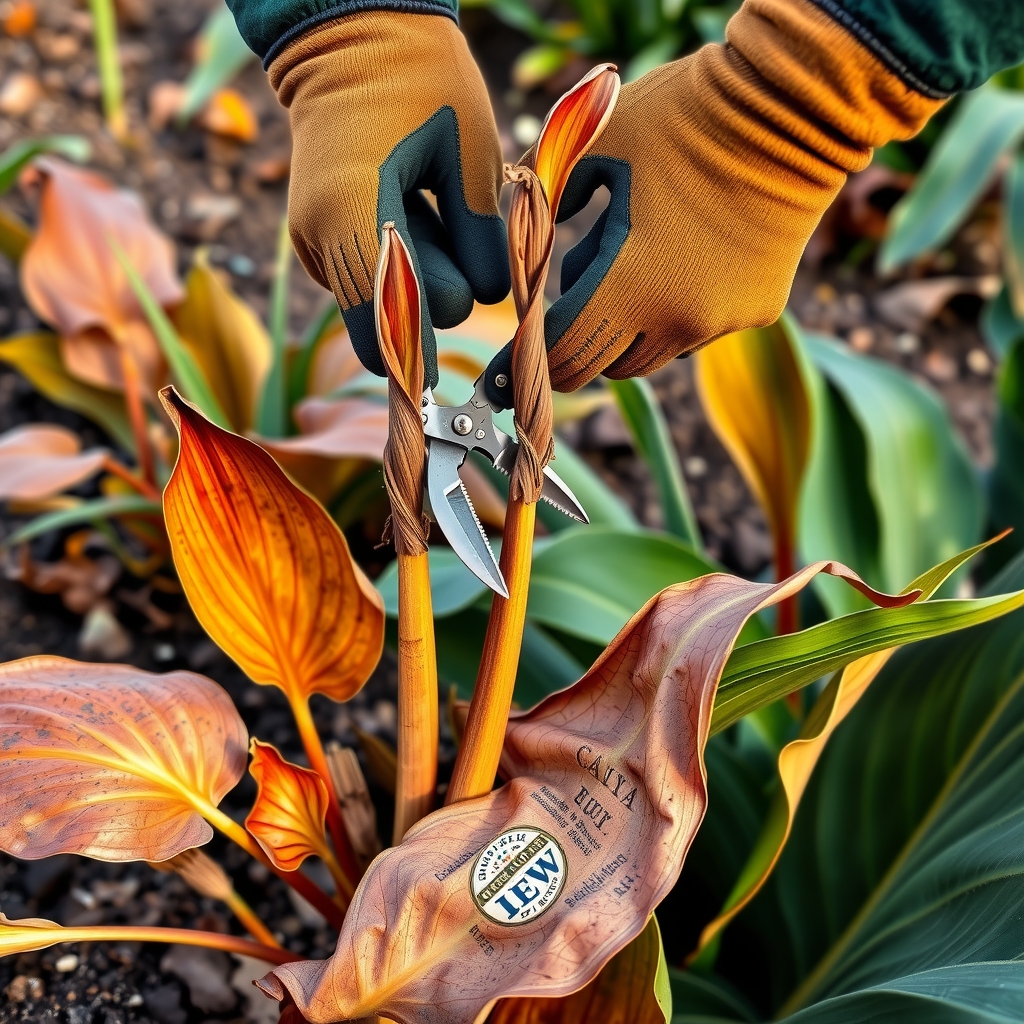
    Bypass pruners cutting frost-killed canna stalks, illustrative AI image

    Illustrative image (AI-generated), not the exact product.

    See current photos and price on Amazon →

    Thick canna and dahlia stalks are tough for small snips. Geared bypass pruners cut stems up to 3/4 inch with less hand effort.

    Dahlias vs cannas: side-by-side

    Winter storage steps for dahlias and cannas (ISU Extension)
    Step Dahlias Cannas
    When A few days after a killing frost A few days after a killing frost
    Cut back to 2 to 4 inches 4 to 6 inches
    Soil Shake and wash off Leave a little on
    Drying time About 1 day 1 to 2 days
    Store in Boxes, upside down, covered with vermiculite, peat moss or wood shavings Large boxes, wire crates or mesh bags
    Temperature 40 to 50°F, dry 40 to 50°F, dry

    Gladiolus are different. ISU Extension says to dig them in late summer or early fall, cut the foliage to 1 to 2 inches above the corms, dry them for 2 to 3 weeks in a warm, airy place, and store them at 35 to 45°F in mesh bags or old nylon stockings.

    Check them during winter

    Stored tubers are alive, so look at them every few weeks. Remove any that are soft or rotting so the problem doesn’t spread. If they are badly shriveled, the storage area is too dry: lightly moisten the packing material, but don’t soak it, because too much moisture causes rot. A min/max thermometer shows whether the storage spot stays in the 40 to 50°F range, including on the coldest nights.

    Replanting in spring

    In spring, divide large clumps before planting. ISU Extension advises leaving at least one or two dormant buds (eyes) on each section. Plant dahlias and cannas outdoors after the danger of frost has passed and the soil has warmed; see our Iowa last frost dates by city.

    Supplies for storing dahlias and cannas

    The fork and pruners above cover digging and cutting back. These three items handle storage. All were listed as sold by Amazon.com when checked on October 30, 2026.

    Packing material: Kaytee Pine Bedding

    Packing material

    Kaytee Pine Bedding, 52.4 Liter

    Dahlia tuber clumps stored upside down in pine shavings, illustrative AI image

    Illustrative image (AI-generated), not the exact product.

    See current photos and price on Amazon →

    ISU lists wood shavings as a dahlia storage medium. A bag of plain pine bedding is an easy, low-dust source. Use it dry, and cover the tubers completely.

    Labels: waterproof plant tags

    Labels

    100-Pack 4-Inch Waterproof Plastic Plant Labels

    White plant labels marking dahlia tubers and canna rhizomes, illustrative AI image

    Illustrative image (AI-generated), not the exact product.

    See current photos and price on Amazon →

    Once dug, every dahlia clump looks the same. Label each one with its variety or color before you pack them, using a pencil or garden marker.

    Monitor the storage spot: Taylor min/max thermometer

    Monitoring

    Taylor Digital Refrigerator/Freezer Thermometer with Min/Max Display

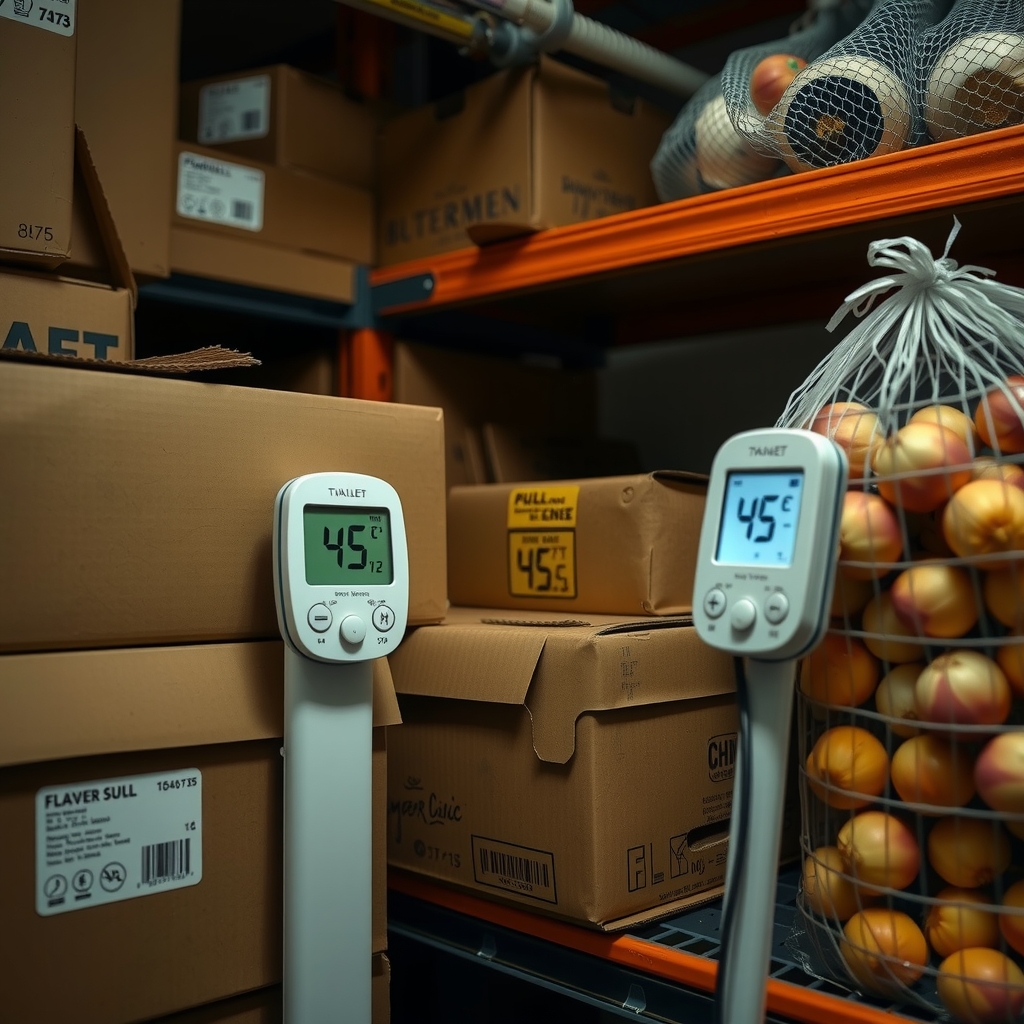
    Digital min/max thermometer on a basement shelf beside stored bulbs, illustrative AI image

    Illustrative image (AI-generated), not the exact product.

    See current photos and price on Amazon →

    Sold as a fridge and freezer thermometer, its min/max memory also works in a basement or garage: it shows how cold the spot gets overnight, so you know the tubers stay above freezing and near 40 to 50°F.

    FAQs

    When should I dig up dahlias in Iowa?
    A few days after a hard, killing frost blackens the leaves, which usually happens in October in much of Iowa. Cut the stems to 2 to 4 inches first, then dig before the ground freezes.

    Can dahlias and cannas stay in the ground over winter in Iowa?
    No. Iowa State University Extension says tender perennials such as dahlias and cannas will not survive Iowa winters outdoors and must be dug in fall and stored indoors.

    What temperature should dahlias and cannas be stored at?
    Cool and dry, at 40 to 50°F, according to ISU Extension. A basement, root cellar or attached garage that does not freeze often works.

    What do you pack dahlia tubers in for winter?
    ISU Extension recommends placing clumps upside down in boxes and covering them with vermiculite, peat moss or wood shavings.

    Do I wash canna rhizomes before storing them?
    No. ISU Extension suggests leaving a small amount of soil on canna clumps, letting them dry 1 to 2 days, and storing them in boxes, crates or mesh bags.

    Sources

    Explore more Lawn & Garden guides.
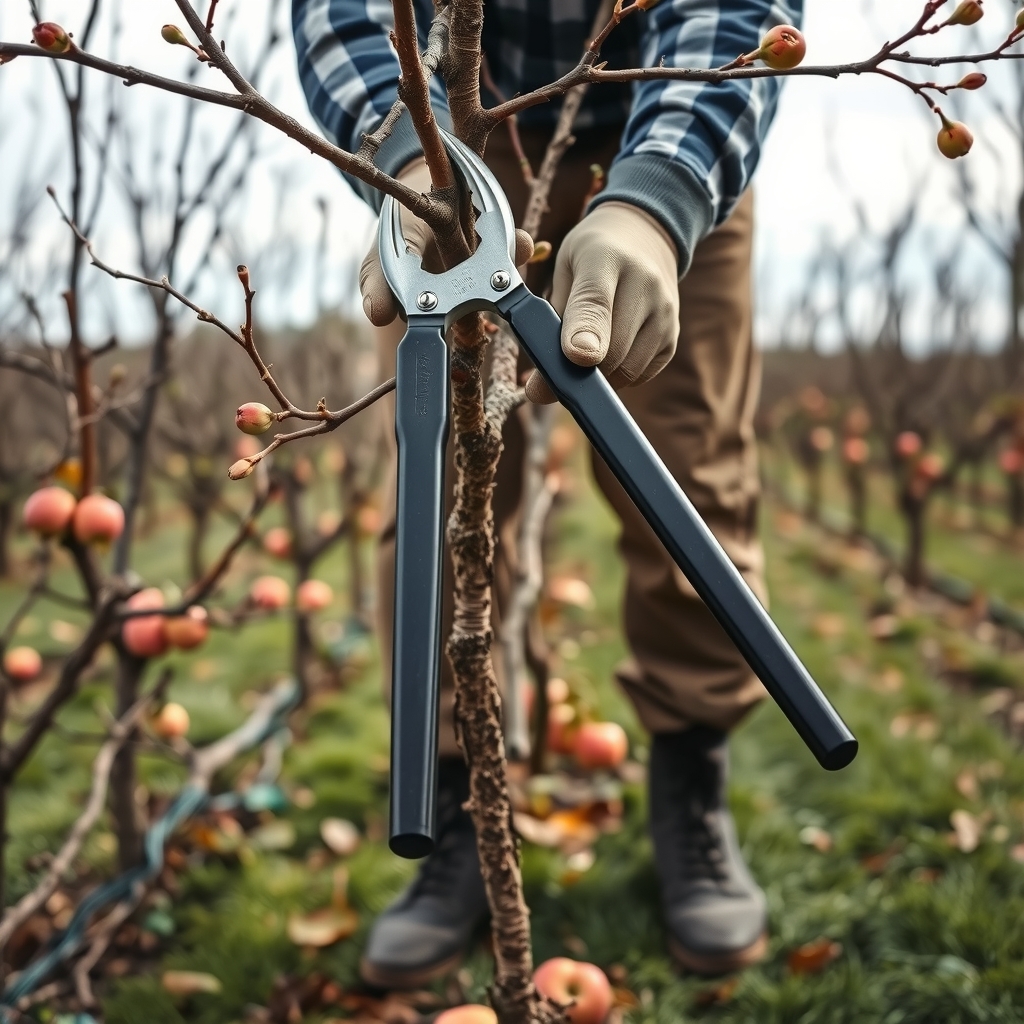
  • Best Bulb Planters for Tulips and Daffodils: 3 Tools Compared

    Best Bulb Planters for Tulips and Daffodils: 3 Tools Compared

    Skip to content

    Lawn & Garden • Buying Guide • Updated October 29, 2026

    Best Bulb Planters for Tulips and Daffodils: 3 Tools Compared

    Explore related guides: When to plant tulip bulbs in Iowa · When to plant garlic in Iowa · Fall garden cleanup checklist · Gifts for gardeners under $50.

    Planting 10 tulips with a trowel is easy. Planting 100 in heavy Midwest clay is a sore back. The best bulb planter depends on how many bulbs you plant, how hard your soil is and whether you would rather kneel or stand. This guide compares the three main types, a hand bulb planter, a long-handled step-on planter and a drill auger, with one pick for each, all sold by Amazon.com.

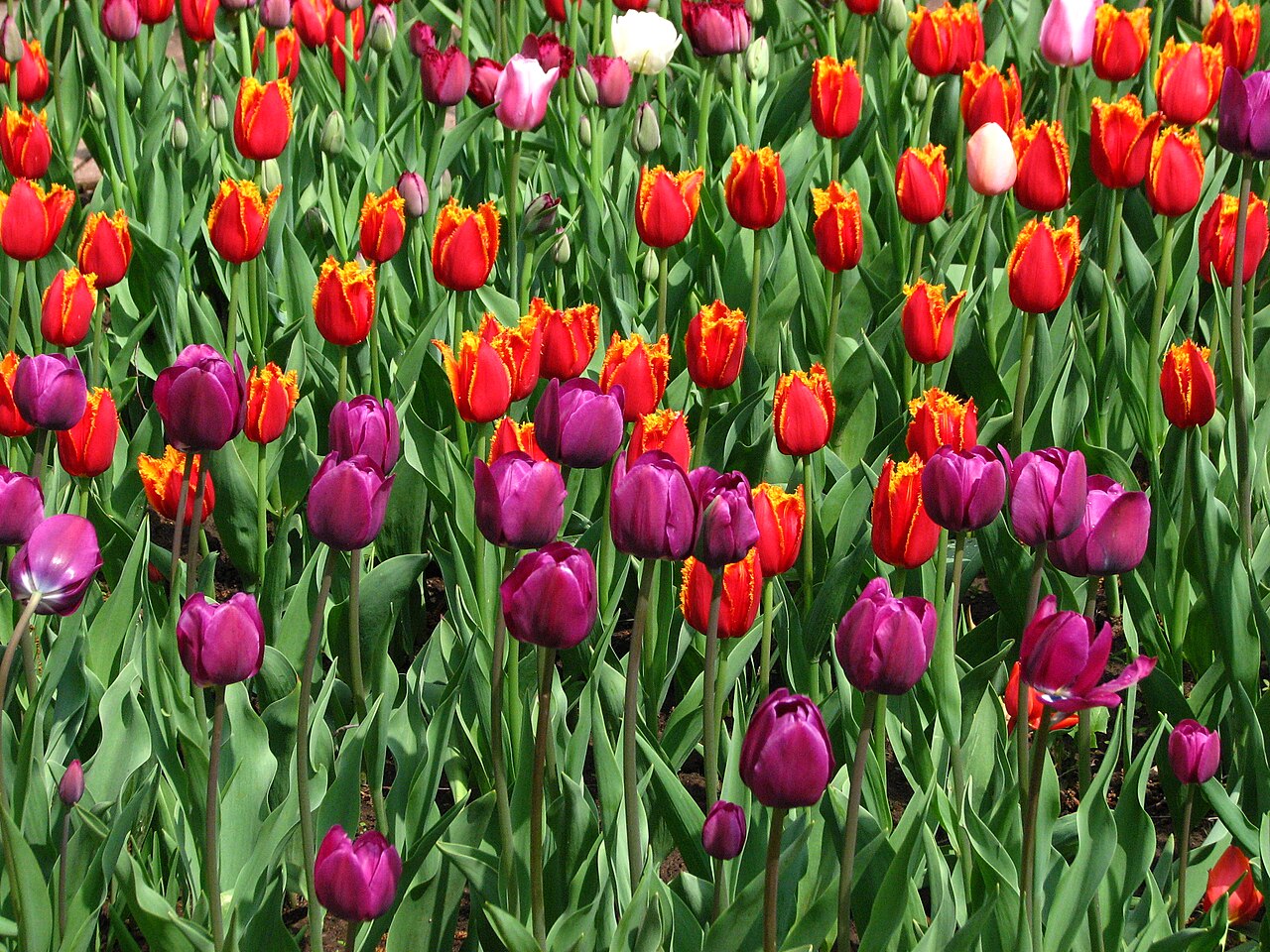
    Spring garden border planted with tulips
    The payoff for an afternoon of fall planting. Photo: Kor!An (Andrey Korzun), CC BY-SA 3.0, via Wikimedia Commons.

    Quick picks

    Bulb planter picks by type (all sold by Amazon.com when checked October 29, 2026)
    Tool Type Best for Link
    Fiskars Bulb Transplanter Hand planter Up to about 50 bulbs, raised beds, small groups Amazon
    Garden Weasel Long-Handle Bulb Planter Step-on, long handle Planting standing up, bad knees, loose to medium soil Amazon
    Yard Butler Roto Driller 9-Inch Drill auger Hundreds of bulbs, clay soil, naturalizing in lawns Amazon

    Types of bulb planters

    Hand bulb planters are short metal cylinders with a handle. You twist one into the soil, lift out a plug, drop in the bulb and drop the plug back on top. They are cheap and precise, and depth markings on the side help you hit the right depth. You do have to kneel.

    Long-handled bulb planters work the same way but have a foot step and a waist-high handle, so you plant standing up. They are easier on knees and backs. In heavy clay or rocky ground they can take more force to push in.

    Auger bulb planters fit a cordless drill and spin a clean hole in seconds. They are the fastest option for large plantings and handle compacted soil better than a push-in tool. You need a drill with enough torque, and a long auger is easier to control than a short one.

    Do you need one at all? For a dozen bulbs in loose garden soil, a sturdy trowel works fine. A bulb planter starts to pay off once you plant 25 or more bulbs, or when your soil is heavy clay, which is common across Iowa and much of the Midwest.

    Our picks

    Best hand bulb planter: Fiskars Bulb Transplanter

    Best hand planter

    Fiskars Bulb Transplanter with Depth Markings

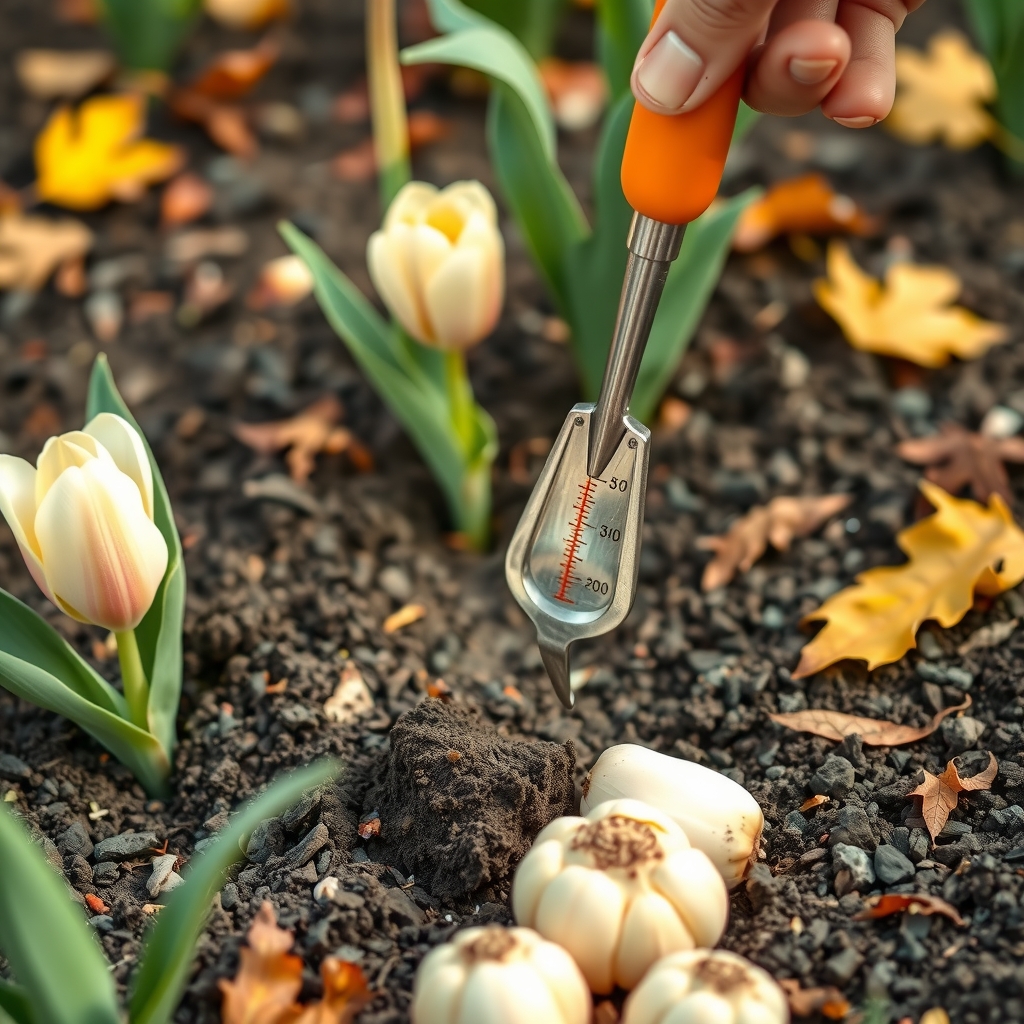
    Hand bulb transplanter lifting soil next to tulip bulbs, illustrative AI image

    Illustrative image (AI-generated), not the exact product.

    See current photos and price on Amazon →

    A simple, well-made hand planter with depth markings on the side, so it is easy to plant tulips at 6 to 8 inches and smaller bulbs shallower. It pulls a neat plug that drops back into the hole. A good fit for raised beds, containers and groups of up to about 50 bulbs. Trade-off: you plant on your knees.

    Best long-handled bulb planter: Garden Weasel

    Best for standing

    Garden Weasel Bulb Planter, Long Handle

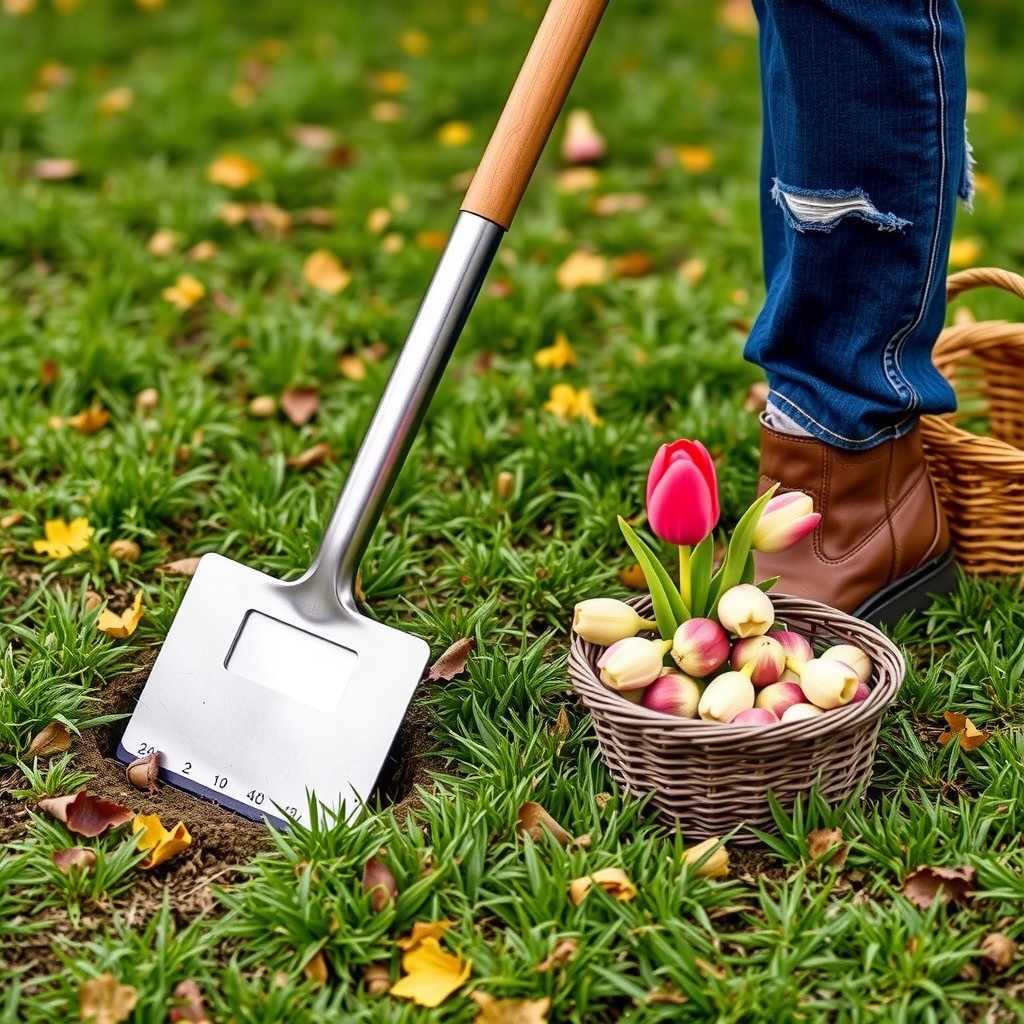
    Long-handled step-on bulb planter in a garden bed, illustrative AI image

    Illustrative image (AI-generated), not the exact product.

    See current photos and price on Amazon →

    Step on it, twist, lift and release the plug, all without bending over. This is the pick for gardeners with bad knees or a long border to fill. It also works for annuals, small perennials and vegetable transplants. Trade-off: in dense, dry clay you may need to water the area a day before planting so the tool goes in easily.

    Best for big plantings and clay: Yard Butler Roto Driller

    Best for clay and big jobs

    Yard Butler Roto Driller 9-Inch Bulb Planting Auger

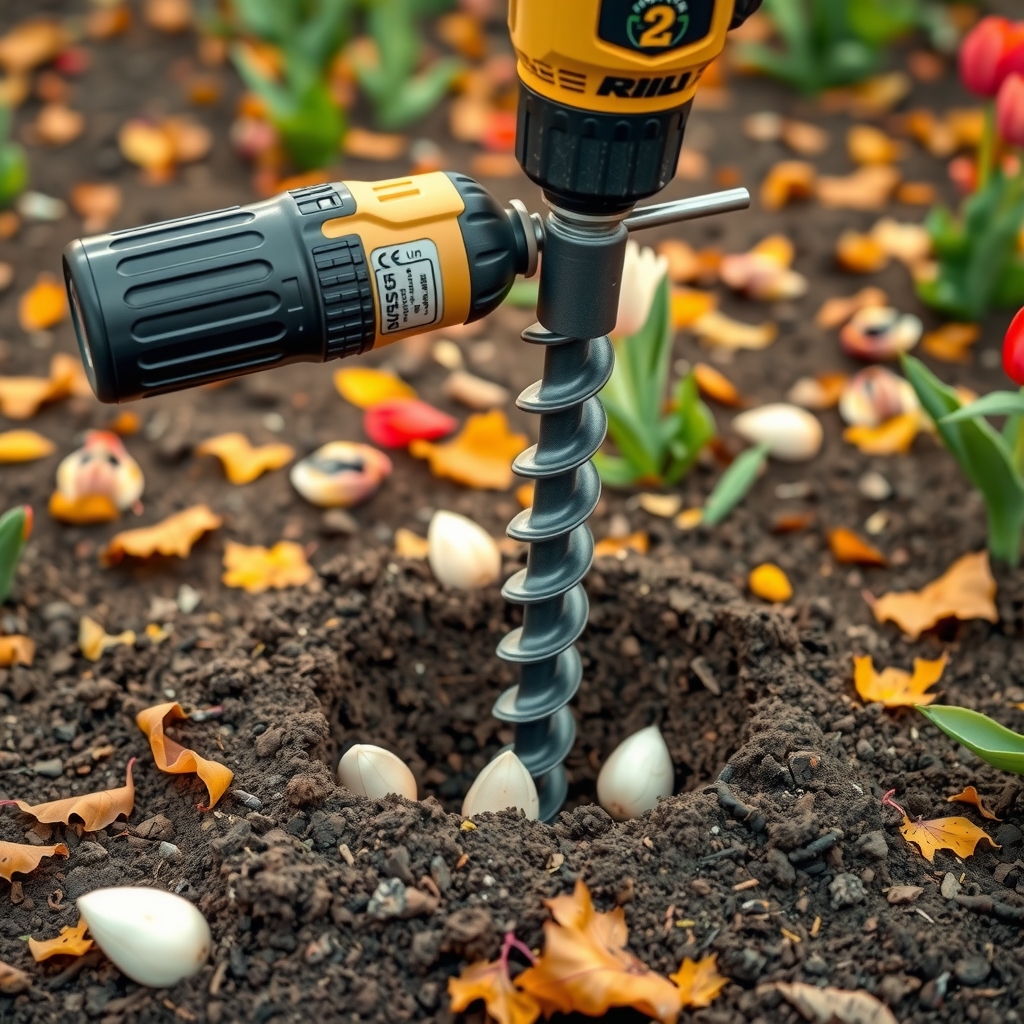
    Garden auger on a cordless drill drilling bulb holes, illustrative AI image

    Illustrative image (AI-generated), not the exact product.

    See current photos and price on Amazon →

    An auger bit that fits a standard cordless drill (not included) and drills a bulb hole in a few seconds. It is the fastest way to plant hundreds of crocus or daffodils, including naturalizing bulbs in a lawn, and it handles compacted Midwest clay better than push-in tools. Trade-off: you need a drill with a fully charged battery, and you will be kneeling or bending to use it.

    Helpful extras

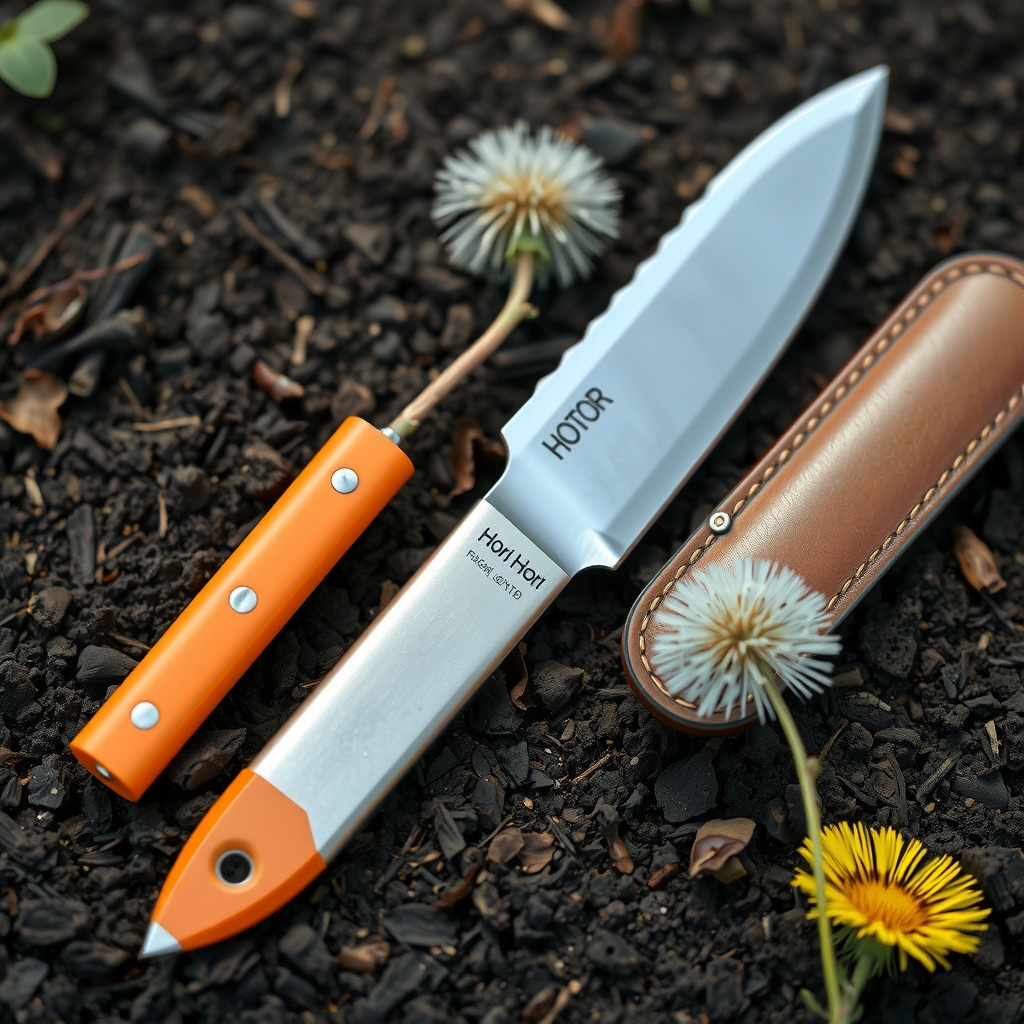
    For small bulbs and tight spots: Fiskars Hori Hori Garden Knife

    Helpful extra

    Fiskars Hori Hori Garden Knife with Sheath

    Hori hori garden knife on soil, illustrative AI image

    Illustrative image (AI-generated), not the exact product.

    See current photos and price on Amazon →

    A hori hori has depth markings on the blade and slices into soil between existing perennials, where a round planter won’t fit. It is especially handy for small bulbs like crocus and grape hyacinth.

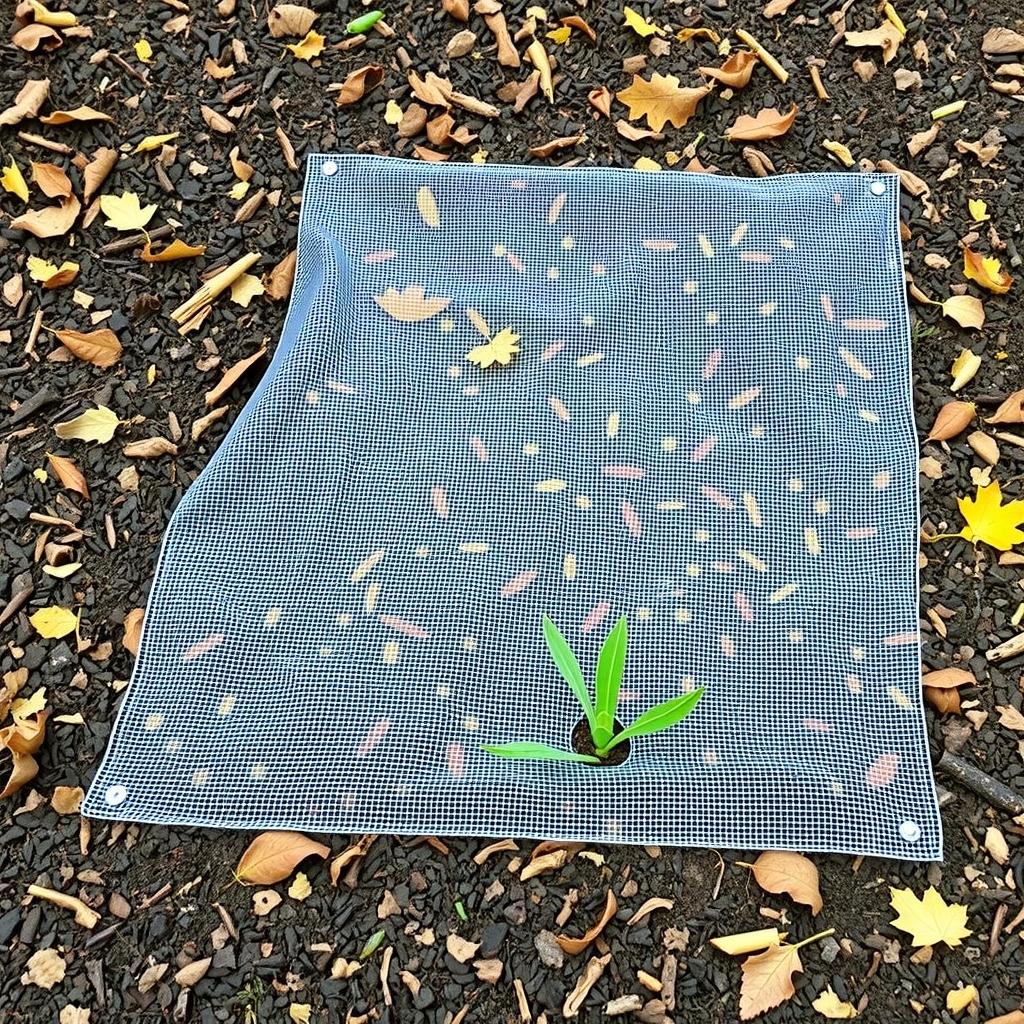
    To stop squirrels digging bulbs: VEVOR Hardware Cloth

    Helpful extra

    VEVOR Galvanized Hardware Cloth

    Hardware cloth laid over a freshly planted bulb bed, illustrative AI image

    Illustrative image (AI-generated), not the exact product.

    See current photos and price on Amazon →

    Squirrels love freshly planted tulip bulbs. Laying hardware cloth over the bed after planting, then covering it with mulch, keeps them from digging. Remove it in early spring before shoots come up, or cut holes large enough for stems.

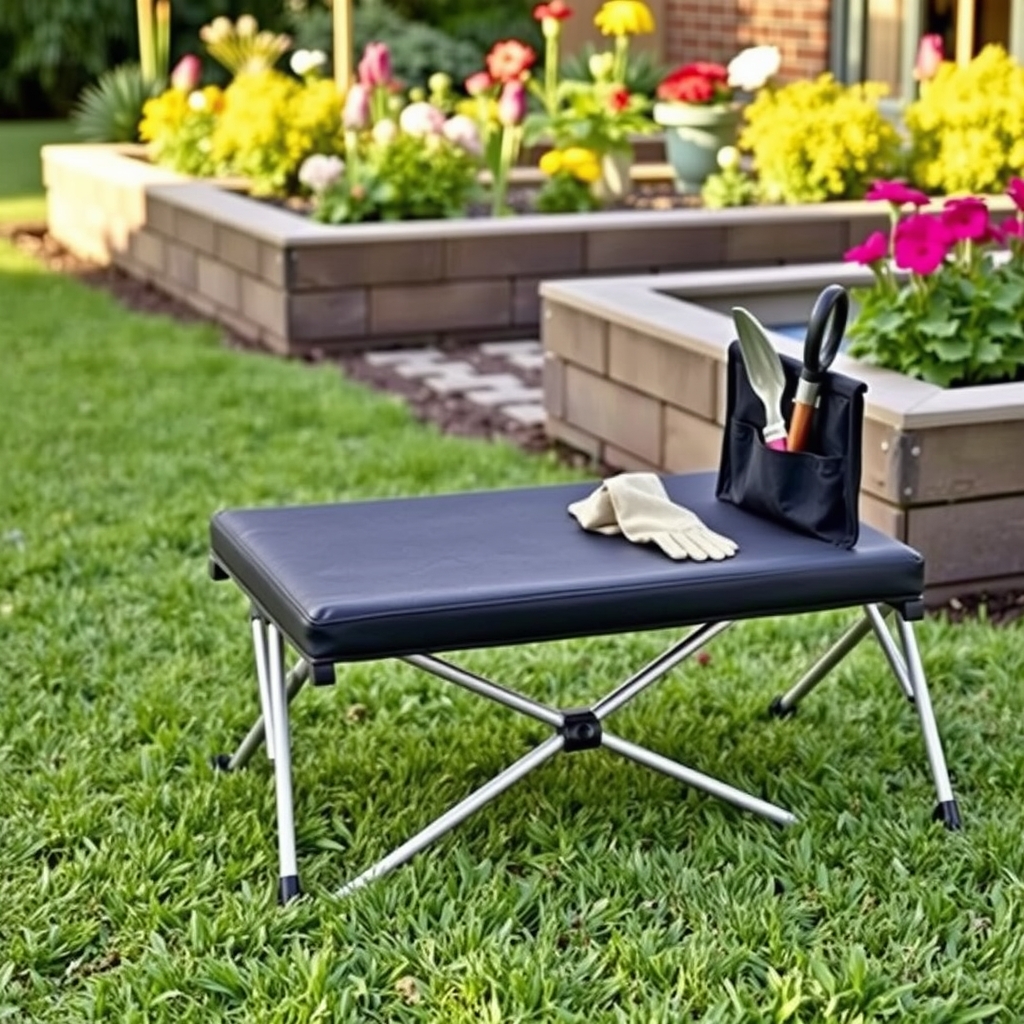
    For hours of planting: MaxWorks Garden Kneeler and Seat

    Helpful extra

    MaxWorks Garden Kneeler and Seat with Tool Pouch

    Folding garden kneeler and seat beside a flower bed, illustrative AI image

    Illustrative image (AI-generated), not the exact product.

    See current photos and price on Amazon →

    Hand planters and augers mean kneeling. A padded kneeler with handles makes it easier to get up and down, and it flips into a low seat.

    Bulb planting depth chart

    A common rule is to plant bulbs about three times as deep as the bulb is tall, measured from the bottom of the bulb. Iowa State University Extension recommends 6 to 8 inches for tulips.

    Typical planting depth for common spring bulbs
    Bulb Depth Best tool
    Tulips 6 to 8 inches Hand or long-handled planter
    Daffodils About 6 inches Hand or long-handled planter
    Hyacinths About 6 inches Hand planter
    Large alliums About 6 to 8 inches Hand planter or auger
    Crocus, grape hyacinth, snowdrops 3 to 4 inches Auger, hori hori or trowel

    How to use a bulb planter

    1. Pick a dry day when the soil is moist but not muddy. Wet clay sticks inside the planter.
    2. Push or drill to depth. Use the depth markings; for tulips, 6 to 8 inches.
    3. Lift the plug and set it beside the hole.
    4. Drop in the bulb pointy side up. If you can’t tell which end is up, plant it on its side.
    5. Replace the plug, firm it gently and water the area well.
    6. Mulch after the ground freezes to help prevent heaving in freeze-thaw cycles.

    In Iowa, ISU Extension says October is the ideal time to plant tulips, and bulbs can still go in as late as late November or early December if the ground is not frozen. See our full guide on when to plant tulip bulbs in Iowa.

    FAQs

    What is the best bulb planter for clay soil?
    A drill auger, such as the Yard Butler Roto Driller, handles compacted clay better than push-in planters. Watering the area a day before planting also makes any tool easier to use.

    Is a bulb planter better than a trowel?
    For a dozen bulbs in loose soil, a trowel is fine. A bulb planter makes even, correct-depth holes faster and is worth it once you plant 25 or more bulbs.

    Can I use a bulb planter standing up?
    Yes. Long-handled bulb planters like the Garden Weasel have a foot step and a tall handle, so you can plant without kneeling.

    How deep should I plant bulbs?
    About three times as deep as the bulb is tall. Iowa State University Extension recommends 6 to 8 inches for tulips; small bulbs like crocus go about 3 to 4 inches deep.

    Do I need a special drill for a bulb auger?
    A standard cordless drill works for most bulb augers. Use a fully charged battery and a drill with enough torque for your soil.

    Sources

    Explore more Lawn & Garden guides.
  • Gifts for Gardeners Under $50: 12 Useful Picks for Midwest Gardeners

    Gifts for Gardeners Under $50: 12 Useful Picks for Midwest Gardeners

    Skip to content

    Lawn & Garden • Gift Guide • Updated October 29, 2026

    Gifts for Gardeners Under $50: 12 Useful Picks for Midwest Gardeners

    Explore related guides: Gardening in Iowa: all guides · When to plant tulip bulbs in Iowa · Iowa seed starting · Last frost dates.

    Shopping for someone who loves their garden? The best gifts for gardeners are the tools they will actually reach for every week, not gadgets that sit in the shed. This guide lists 12 practical gift ideas under $50, sorted by price, with a Midwest twist: each one fits the way people garden in Iowa and nearby states, from starting seeds in late winter to planting bulbs in fall.

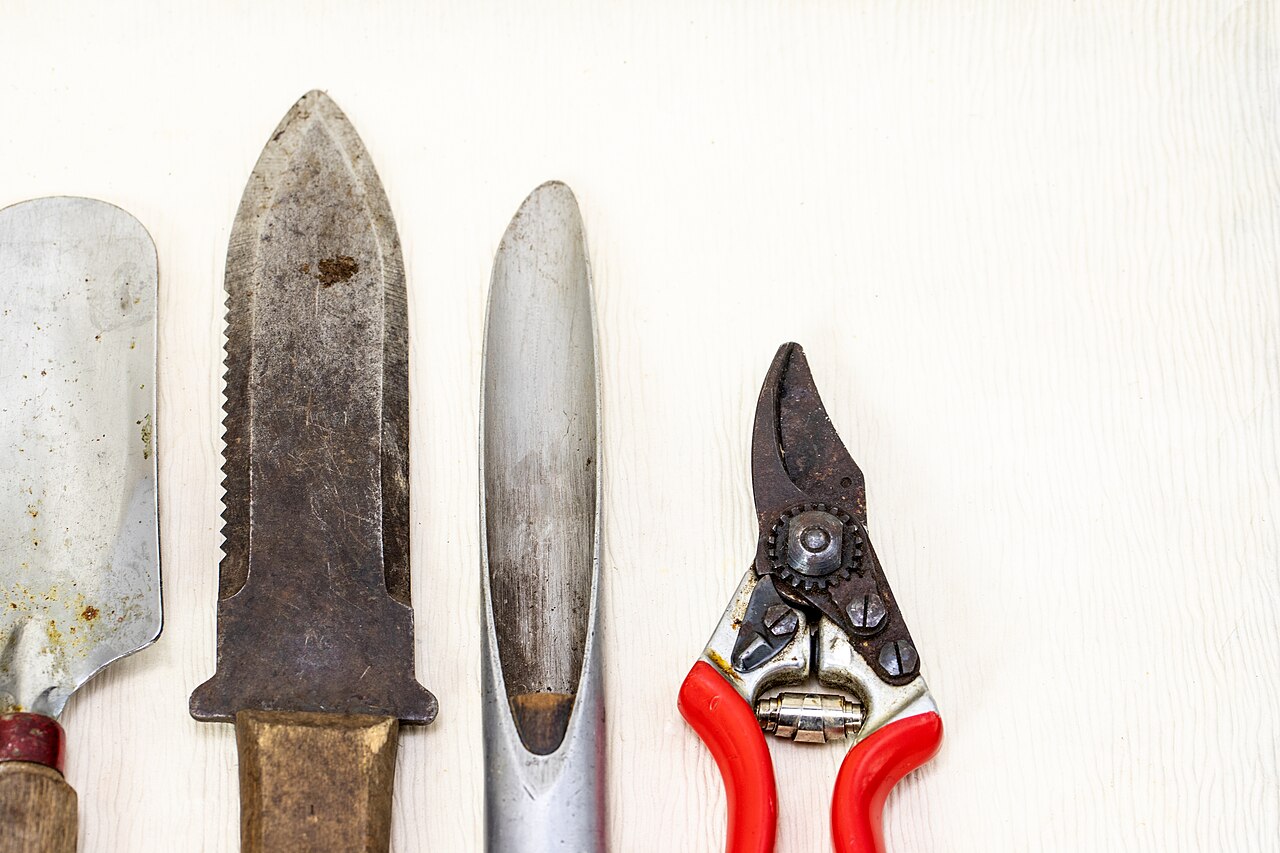
    A row of well-used garden hand tools: trowels and pruners
    Well-used hand tools: the kind of gift a gardener reaches for every week. Photo: Cindy Shebley, CC BY 2.0, via Wikimedia Commons.

    Quick list: 12 gifts for gardeners

    Gift ideas for gardeners, by approximate price (checked October 29, 2026)
    Gift Best for Typical price Link
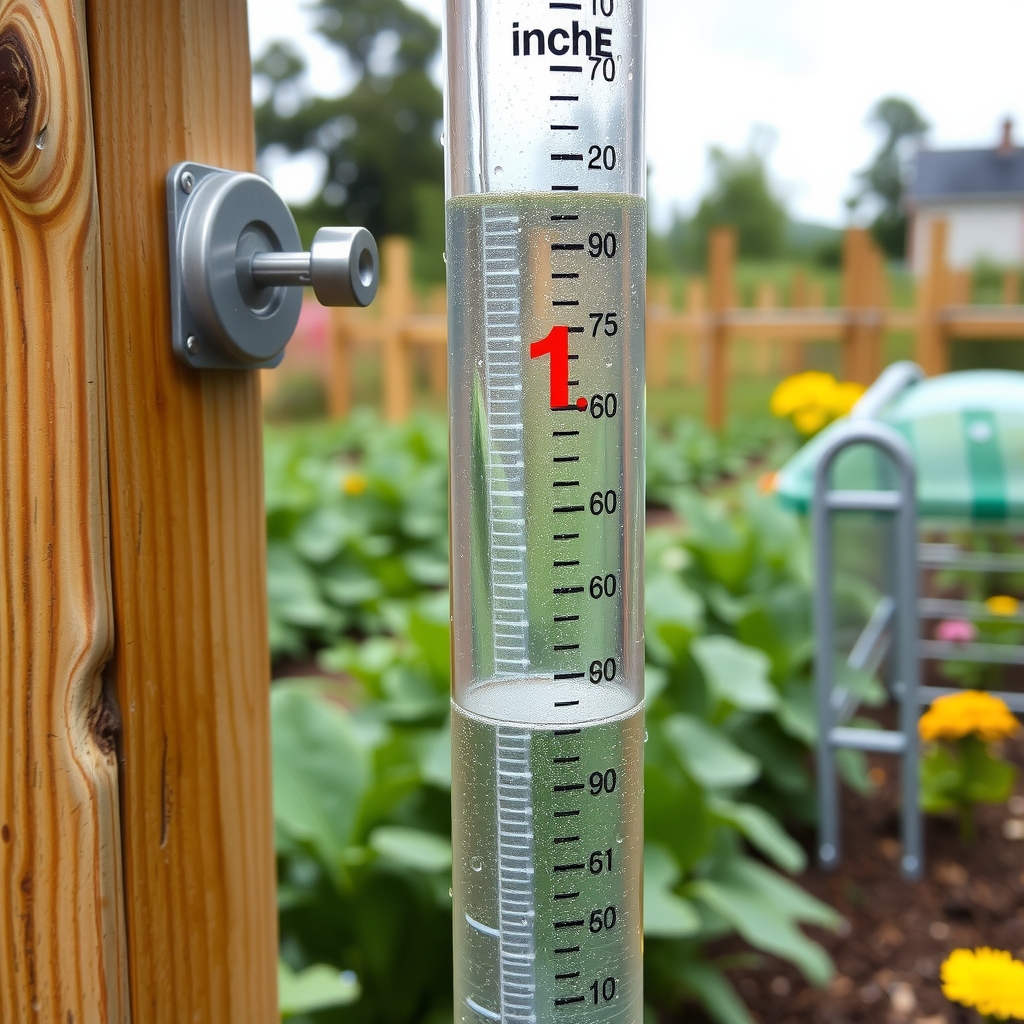
    AcuRite 5-Inch Magnifying Rain Gauge For the gardener who waters by guesswork Under $15 Amazon
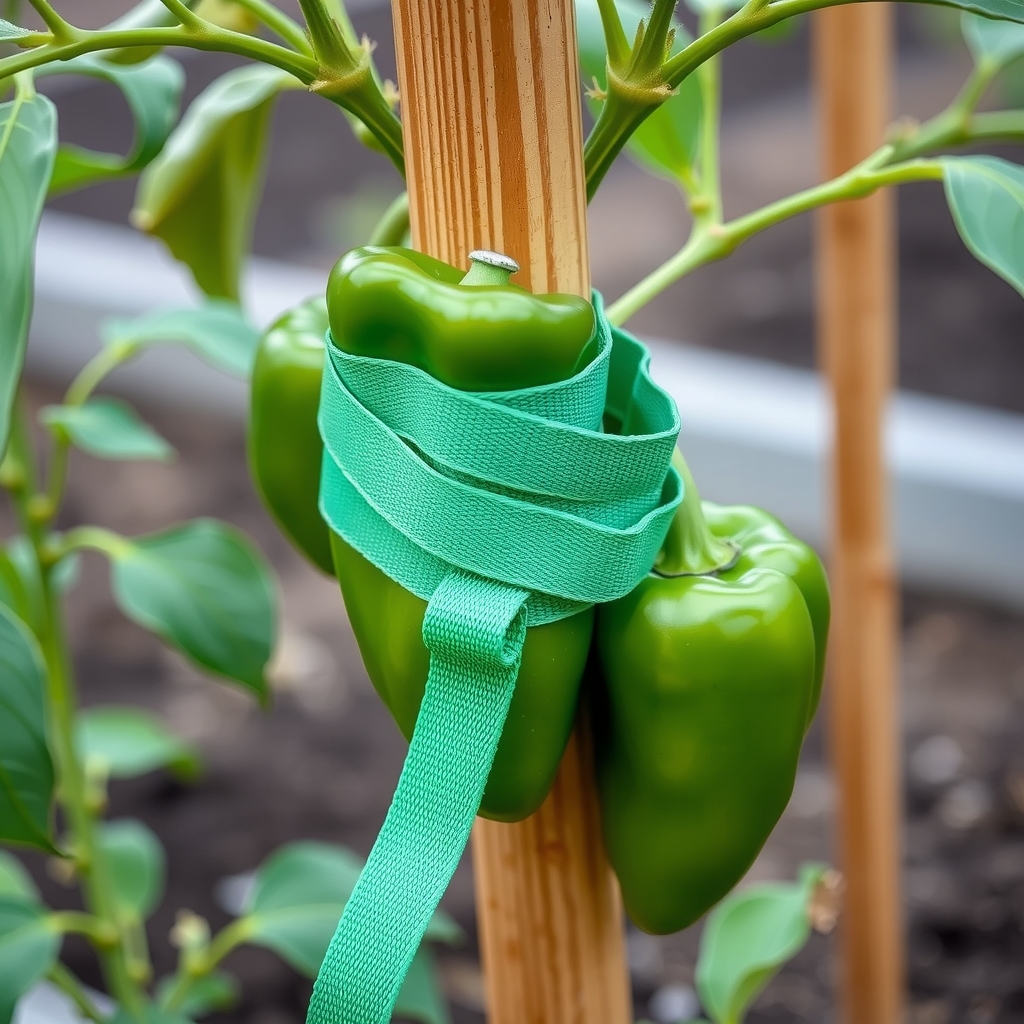
    VELCRO Brand Adjustable Plant Ties, 75 ft For tomato and pepper growers Under $15 Amazon
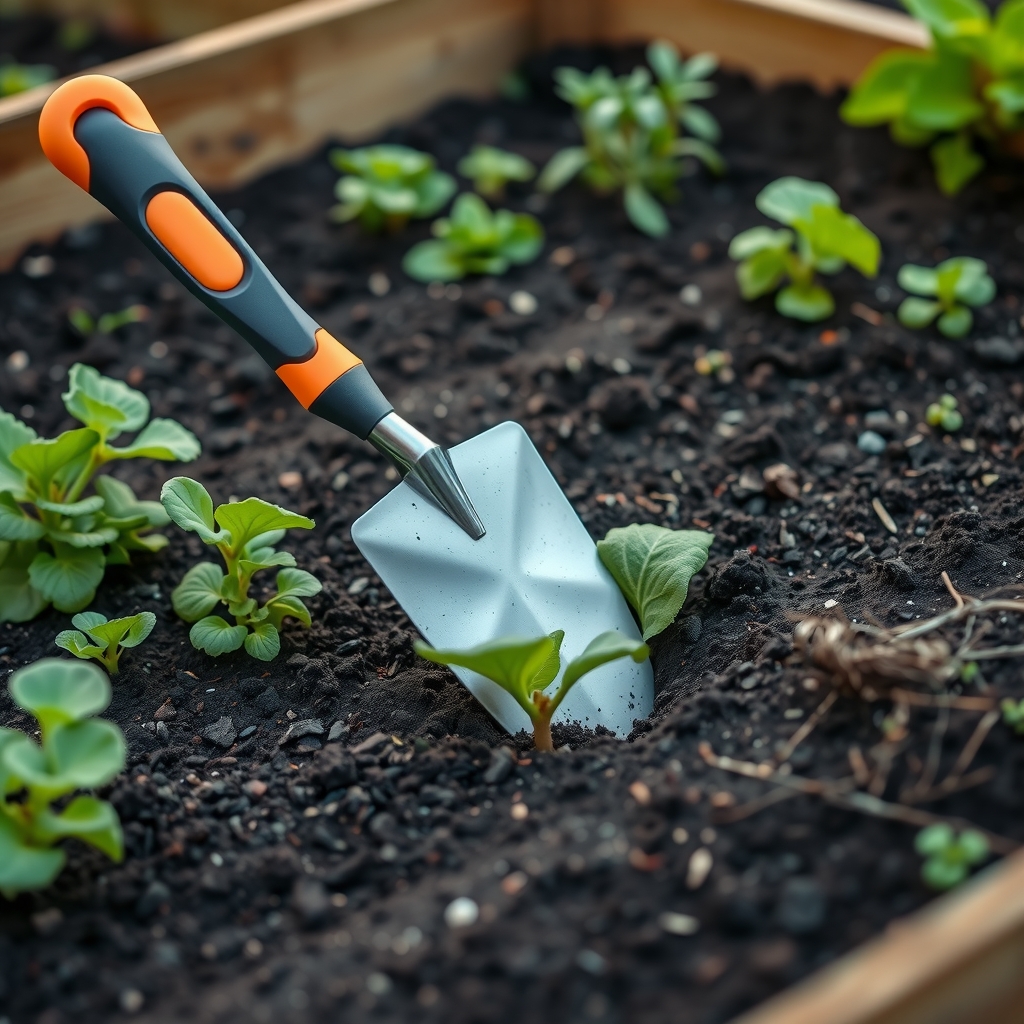
    Fiskars Ergo Garden Trowel The everyday tool everyone uses Under $15 Amazon
    Burpee SuperSeed 36-Cell Seed Starting Tray For the seed starter Under $15 Amazon
    Fiskars 6-Inch Micro-Tip Pruning Snips For harvesting and deadheading Under $15 Amazon
    Fiskars Bulb Transplanter with Depth Markings For the bulb planter $15 to $25 Amazon
    iPower 10-Gallon Potato Grow Bags, 5-Pack For small yards and patios $15 to $25 Amazon
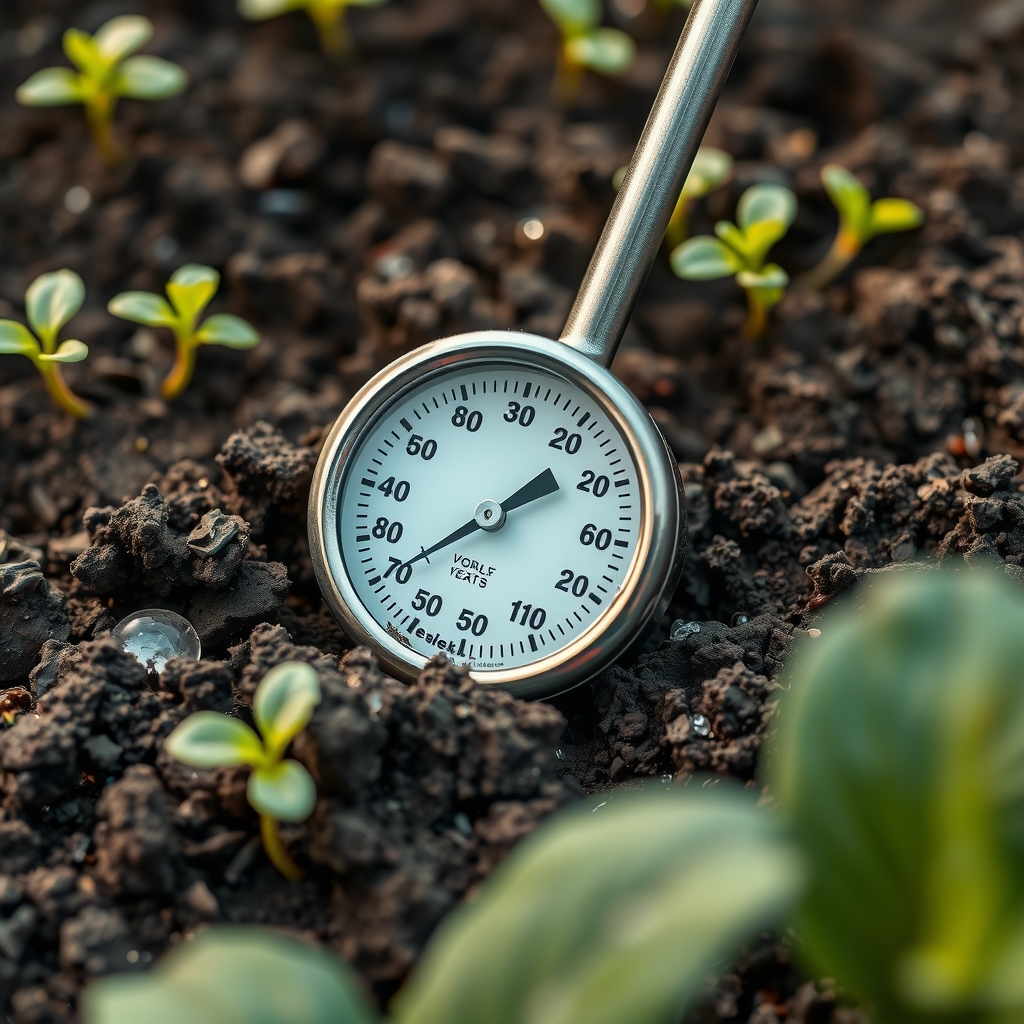
    Taylor Soil Thermometer For the gardener who plants by the calendar $15 to $25 Amazon
    Luster Leaf 1605 Rapitest Digital Soil Test Kit For the curious gardener $15 to $25 Amazon
    Scuddles 8-Piece Garden Tool Set with Carry Bag For a new gardener or first home $25 to $50 Amazon
    Fiskars Hori Hori Garden Knife with Sheath For the gardener who has everything $25 to $50 Amazon
    MaxWorks Garden Kneeler and Seat with Tool Pouch For knees and backs $25 to $50 Amazon

    Gifts for gardeners under $15

    For the gardener who waters by guesswork: AcuRite 5-Inch Magnifying Rain Gauge

    Gift pick

    AcuRite 5-Inch Magnifying Rain Gauge

    Clear tube rain gauge on a garden fence post, illustrative AI image

    Illustrative image (AI-generated), not the exact product.

    See current photos and price on Amazon →

    A rain gauge is the cheapest way to water smarter. Most Midwest lawns and vegetable gardens need about 1 inch of water a week, rain included, so a gauge tells you whether a storm already did the job. This one has a magnifying face that is easy to read from a few steps away. A good stocking stuffer.

    For tomato and pepper growers: VELCRO Brand Adjustable Plant Ties

    Gift pick

    VELCRO Brand Adjustable Plant Ties, 75 ft

    Green garden tie on a pepper plant, illustrative AI image

    Illustrative image (AI-generated), not the exact product.

    See current photos and price on Amazon →

    Soft, reusable ties for staking tomatoes, peppers and climbing plants. They can be cut to any length and loosened as stems grow, which is kinder to plants than wire or string. Pair it with our Iowa tomato planting guide.

    The everyday tool everyone uses: Fiskars Ergo Garden Trowel

    Gift pick

    Fiskars Ergo Garden Trowel

    Trowel planting in a raised bed, illustrative AI image

    Illustrative image (AI-generated), not the exact product.

    See current photos and price on Amazon →

    A trowel gets used more than any other hand tool. The Fiskars Ergo has a cast-aluminum head and a comfortable grip, and a gardener with an old bent trowel will notice the difference right away.

    For the seed starter: Burpee SuperSeed 36-Cell Seed Starting Tray

    Gift pick

    Burpee SuperSeed 36-Cell Seed Starting Tray

    36-cell seed tray with seedlings, illustrative AI image

    Illustrative image (AI-generated), not the exact product.

    See current photos and price on Amazon →

    In Iowa and most of the Midwest, tomatoes and peppers are started indoors in late winter, about 6 to 8 weeks before the last frost. A reusable tray is a gift they can use in February or March. Our Iowa seed starting guide has the dates.

    For harvesting and deadheading: Fiskars 6-Inch Micro-Tip Pruning Snips

    Gift pick

    Fiskars 6-Inch Micro-Tip Pruning Snips

    Snips harvesting a red pepper, illustrative AI image

    Illustrative image (AI-generated), not the exact product.

    See current photos and price on Amazon →

    Small, sharp snips for picking peppers and herbs, deadheading flowers and trimming houseplants. They slip into a pocket, and they are a gift people use year-round, not only in summer.

    Gifts for gardeners under $25

    For the bulb planter: Fiskars Bulb Transplanter with Depth Markings

    Gift pick

    Fiskars Bulb Transplanter with Depth Markings

    Hand bulb transplanter lifting soil, illustrative AI image

    Illustrative image (AI-generated), not the exact product.

    See current photos and price on Amazon →

    Pulls out a neat plug of soil for tulips, daffodils and small transplants. The depth markings take the guesswork out of planting bulbs 6 to 8 inches deep. See when to plant tulip bulbs in Iowa.

    For small yards and patios: iPower 10-Gallon Potato Grow Bags

    Gift pick

    iPower 10-Gallon Potato Grow Bags, 5-Pack

    Potato grow bags with harvest flap, illustrative AI image

    Illustrative image (AI-generated), not the exact product.

    See current photos and price on Amazon →

    Fabric grow bags let someone grow potatoes, tomatoes or herbs on a patio or driveway. The harvest flap makes potatoes easy to check without digging. Our potato planting guide explains the timing.

    For the gardener who plants by the calendar: Taylor Soil Thermometer

    Gift pick

    Taylor Soil Thermometer

    Dial soil thermometer in a garden bed, illustrative AI image

    Illustrative image (AI-generated), not the exact product.

    See current photos and price on Amazon →

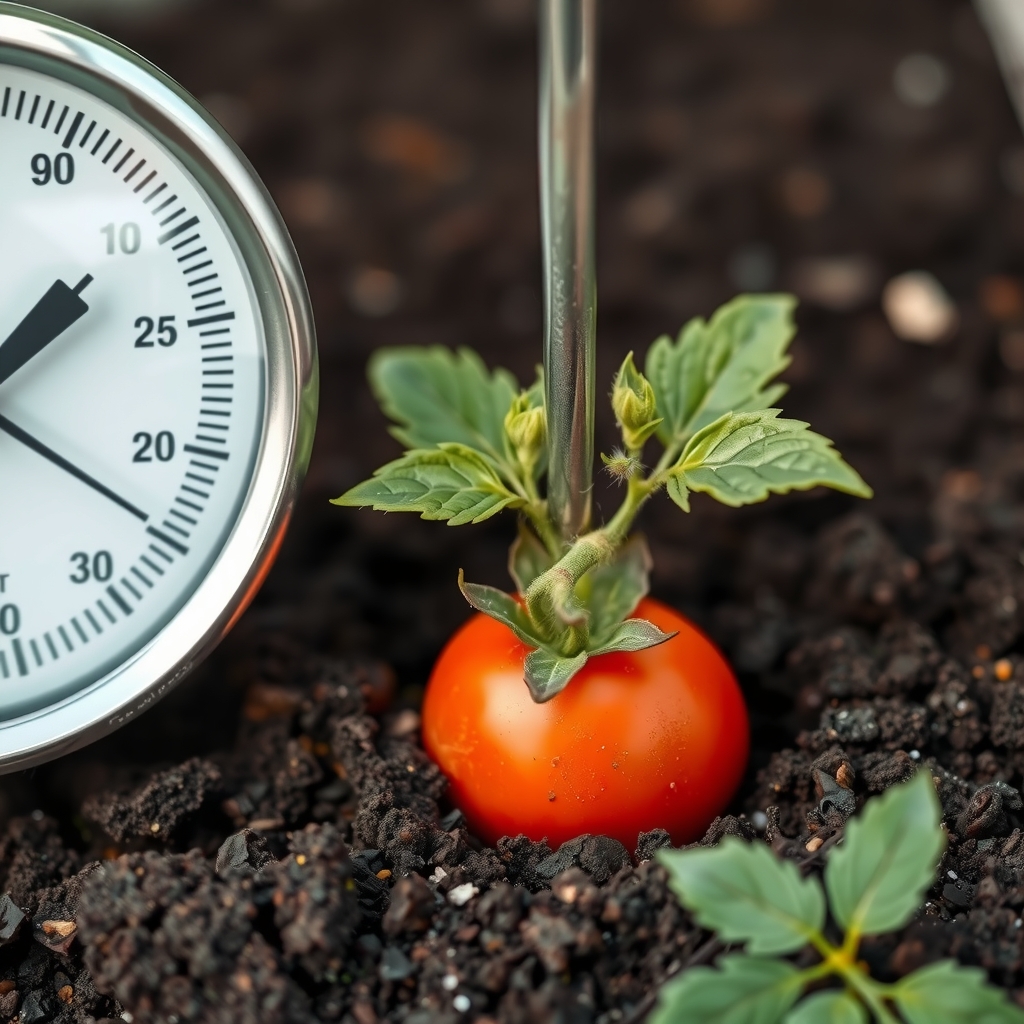
    Seeds care about soil temperature, not the date. Sweet corn needs soil of at least 50°F, and warm-season crops like tomatoes and beans do best once the soil reaches about 60°F. A soil thermometer is a small, practical gift that changes how someone plants in spring.

    For the curious gardener: Luster Leaf 1605 Rapitest Digital Soil Test Kit

    Gift pick

    Luster Leaf 1605 Rapitest Digital Soil Test Kit

    Digital soil test kit with capsules, illustrative AI image

    Illustrative image (AI-generated), not the exact product.

    See current photos and price on Amazon →

    Tests soil pH and the main nutrients at home. It is a fun, hands-on gift for a newer gardener. For a full lab analysis, many Midwest state extension services also offer soil testing, and this kit is a good way to start the habit.

    Gifts for gardeners under $50

    For a new gardener or first home: Scuddles 8-Piece Garden Tool Set with Carry Bag

    Gift pick

    Scuddles 8-Piece Garden Tool Set with Carry Bag

    Garden hand tool set in a canvas carry bag, illustrative AI image

    Illustrative image (AI-generated), not the exact product.

    See current photos and price on Amazon →

    A complete starter kit in one bag: trowel, transplanter, cultivator, pruner and more. It already looks like a gift, which makes it an easy pick for someone who just bought a house or is starting their first raised bed.

    For the gardener who has everything: Fiskars Hori Hori Garden Knife with Sheath

    Gift pick

    Fiskars Hori Hori Garden Knife with Sheath

    Hori hori garden knife on soil beside a pulled weed, illustrative AI image

    Illustrative image (AI-generated), not the exact product.

    See current photos and price on Amazon →

    A hori hori is a Japanese digging knife: one edge is sharp, one is serrated, and the blade has depth markings. It weeds, digs, divides perennials and opens bags. Many experienced gardeners don’t own one yet, so it often surprises.

    For knees and backs: MaxWorks Garden Kneeler and Seat with Tool Pouch

    Gift pick

    MaxWorks Garden Kneeler and Seat with Tool Pouch

    Folding garden kneeler and seat beside a flower bed, illustrative AI image

    Illustrative image (AI-generated), not the exact product.

    See current photos and price on Amazon →

    Flip it one way for a padded kneeler with handles to push up on; flip it over for a low seat. A thoughtful gift for older gardeners or anyone who weeds for hours. It folds flat for storage over a Midwest winter.

    How to choose a gift for a gardener

    • Replace what wears out. Trowels, snips and gloves get lost or bent. A better version of something they already use is almost always welcome.
    • Think about their season. A Midwest gardener opening a gift in December is planning, not planting. Seed trays, soil thermometers and soil test kits are ready to use in late winter and early spring.
    • Match their space. Grow bags and snips suit apartment and patio gardeners; a kneeler and tool set suit someone with big beds.
    • Consider comfort. For older gardeners, a kneeler or ergonomic tools can keep them gardening longer.
    • Skip the gimmicks. Simple, well-made tools from brands like Fiskars tend to outlast novelty gadgets.

    When to order for the holidays

    Garden tools are popular gifts from Black Friday through December, and some items sell out or go up in price close to Christmas. Ordering in November gives you time to compare options and still get delivery before the holidays. If a product here is out of stock or no longer sold by Amazon.com, choose a similar tool with strong reviews from a known brand.

    FAQs

    What is a good gift for a gardener under $25?
    A good trowel, micro-tip snips, a seed starting tray, a rain gauge, a soil thermometer or a bulb transplanter. These are tools gardeners use every season and they usually cost under $25.

    What do you get a gardener who has everything?
    Try a tool they may not own yet, such as a hori hori garden knife, a garden kneeler and seat, or a digital soil test kit. Upgrading an everyday tool, like a worn-out trowel, also works well.

    What is a good gift for a beginner gardener?
    A complete hand tool set with a carry bag is the easiest pick. Add a seed starting tray or grow bags so they can start growing right away.

    Are gardening gifts useful in winter?
    Yes. In Iowa and the Midwest, winter is planning season. Seed trays, soil thermometers and soil test kits are used in late winter and early spring, and tools are ready the first warm weekend.

    Are these gifts sold by Amazon?
    Every product in this guide was listed as sold by Amazon.com when checked on October 29, 2026. Listings and sellers change, so check the seller on the product page before you buy.

    More Midwest garden guides

    Explore more Lawn & Garden guides.
  • When to Plant Tulip Bulbs in Iowa: Timing, Depth and Tips

    When to Plant Tulip Bulbs in Iowa: Timing, Depth and Tips

    Skip to content

    Lawn & Garden • Iowa Planting Dates • Updated October 29, 2026

    When to Plant Tulip Bulbs in Iowa: Timing, Depth and Tips

    Explore related guides: Gardening in Iowa: all guides · When to plant garlic in Iowa · Fall garden cleanup checklist · Overwinter geraniums · Gifts for gardeners under $50 · Best bulb planters · Store dahlias and cannas over winter.

    Tulips need an Iowa winter to bloom, so they go in the ground in fall, not spring. Plant too early and they may sprout before winter; plant too late and the ground freezes first. This guide explains when to plant tulip bulbs in Iowa, how deep and far apart to set them, which tulips come back for years, and how to keep squirrels out, based on Iowa State University Extension and Outreach guidance.

    Spring garden border planted with tulips
    A spring border of tulips planted the fall before. Photo: Kor!An (Andrey Korzun), CC BY-SA 3.0, via Wikimedia Commons.

    When to plant tulip bulbs in Iowa: the short answer

    Iowa State University Extension says October is the ideal time to plant tulips, daffodils and other spring-flowering bulbs in Iowa. As long as the ground isn’t frozen, you can still plant as late as late November or early December. Plant tulips 6 to 8 inches deep and 4 to 6 inches apart in a sunny, well-drained spot.

    Tulip planting timing in Iowa

    Tulip bulb planting calendar for Iowa (ISU Extension)
    When What to do
    Late August to September Buy bulbs; store in a cool, dry place such as a garage or basement
    October Best time to plant
    November to early December Still fine if the ground isn’t frozen
    After the ground freezes Too late outdoors; force bulbs in pots instead
    April to May Tulips bloom
    • Cool, not warm. An ISU Extension educator suggests planting once evening temperatures average 40 to 50°F, about four to six weeks before the ground freezes.
    • Warm fall? Wait a few weeks. Bulbs planted in warm soil can send up shoots in fall.
    • Dry fall? Plant the day after a rain, or water the area the day before you dig.

    Where to plant tulips

    • Sun: ISU Extension says tulips perform best with at least six hours of direct sun a day. Spots under deciduous trees often qualify, since trees leaf out after tulips bloom.
    • Drainage: well-drained, fertile soil. Bulbs rot in soggy ground, so avoid low spots where water collects.
    • Soil prep: loosen soil at least 8 inches deep and mix in compost.

    Tulip planting depth and spacing

    ISU Extension’s rule is to plant bulbs at a depth of three to four times their widest diameter.

    Bulb planting depth and spacing (ISU Extension)
    Bulb Depth Spacing
    Tulips 6 to 8 in 4 to 6 in
    Daffodils 6 to 8 in 6 in
    Crocus, grape hyacinth 3 to 4 in 3 in

    How to plant tulip bulbs

    1. Choose good bulbs: large for their type and firm, with no soft or brown spots.
    2. Dig the hole or trench 6 to 8 inches deep. A bulb planter or auger speeds this up.
    3. Set bulbs pointy side up, root side down. If you can’t tell, plant it on its side.
    4. Plant in groups. ISU Extension suggests 10 or more bulbs of the same variety together for the best show, not a single line along a walk.
    5. Cover and water well to settle the soil and start root growth, but don’t overwater.
    6. Mulch lightly after the ground freezes to help even out winter temperatures.

    Tulips that come back for years

    ISU Extension says most modern tulips bloom well for only two to four years, so many gardeners treat them as short-lived. For tulips that return longer:

    • Darwin hybrid tulips: generally the longest-blooming hybrids, often five years or more in a good spot. Large flowers on stems up to 30 inches tall, in mid-spring.
    • Fosteriana tulips: also perennialize well.
    • Let leaves ripen. After blooming, cut off spent flowers but leave the foliage until it turns yellow, so the bulb can store energy for next year.

    Keeping squirrels away from tulip bulbs

    • Clean up bulb skins and loose debris after planting; the scent attracts digging.
    • Water in to settle the soil so the bed looks less freshly dug.
    • Cover the bed with hardware cloth or chicken wire pinned at the edges until the ground freezes, or lay it just under the soil.
    • Mix in daffodils, which squirrels and rabbits generally leave alone.

    Tools for planting tulip bulbs

    All five were listed as sold by Amazon.com when checked on October 29, 2026. Check the current listing before you buy.

    For small groups of bulbs: Fiskars Bulb Transplanter

    Product pick

    Fiskars Bulb Transplanter with Depth Markings

    Hand bulb transplanter lifting soil next to tulip bulbs, illustrative AI image

    Illustrative image (AI-generated), not the exact product.

    See current photos and price on Amazon →

    A hand tool that pulls out a neat plug of soil. The depth markings make it easy to hit the 6 to 8 inches ISU Extension recommends for tulips.

    For planting standing up: Garden Weasel Long-Handle Planter

    Product pick

    Garden Weasel Bulb Planter, Long Handle

    Long-handled step-on bulb planter in a garden bed, illustrative AI image

    Illustrative image (AI-generated), not the exact product.

    See current photos and price on Amazon →

    Step on it and twist to open a hole while standing up. Easier on knees and back when you plant dozens of bulbs.

    For big plantings: Yard Butler Roto Driller

    Product pick

    Yard Butler Roto Driller 9 Inch Bulb Auger

    Cordless drill with a garden auger bit making bulb holes, illustrative AI image

    Illustrative image (AI-generated), not the exact product.

    See current photos and price on Amazon →

    Fits a cordless drill and bores bulb holes fast in firm Iowa clay. Good for planting 50 or 100 bulbs in an afternoon.

    To stop squirrels: VEVOR Hardware Cloth

    Product pick

    VEVOR Hardware Cloth, 24 in x 100 ft, 1/2 in Mesh

    Hardware cloth laid over a newly planted bulb bed, illustrative AI image

    Illustrative image (AI-generated), not the exact product.

    See current photos and price on Amazon →

    Squirrels love to dig up freshly planted tulip bulbs. A sheet of 1/2 inch wire mesh pinned over the bed, or laid just under the soil surface, keeps them out; tulips grow through the openings in spring.

    To check soil has cooled: Taylor Soil Thermometer

    Product pick

    Taylor Soil Thermometer with Silicone Bumper

    Dial soil thermometer in garden soil, illustrative AI image

    Illustrative image (AI-generated), not the exact product.

    See current photos and price on Amazon →

    Plant once soil has cooled in fall. Planting into warm soil can push bulbs to sprout before winter.

    FAQs

    When is the best time to plant tulip bulbs in Iowa?
    October, according to Iowa State University Extension. Planted in October, bulbs have time to grow a good root system before the ground freezes.

    Is it too late to plant tulips in November in Iowa?
    No. ISU Extension says tulips can be planted as late as late November or early December, as long as the ground isn’t frozen.

    How deep should I plant tulip bulbs?
    6 to 8 inches deep, which is about three to four times the bulb’s diameter, and 4 to 6 inches apart. Set them pointy side up.

    Do tulips come back every year in Iowa?
    Most modern tulips bloom well for only two to four years. Darwin hybrid tulips can bloom five years or more in a good spot, and Fosteriana tulips also perennialize well.

    Can I plant tulips in shade?
    Tulips do best with at least six hours of direct sun a day. Spots under trees often get enough spring sun before the leaves come out.

    How do I keep squirrels from digging up tulip bulbs?
    Clean up bulb skins and debris after planting, water the bed, and cover it with hardware cloth or chicken wire pinned at the edges until the ground freezes.

    Sources and review scope

    This guide was prepared on October 29, 2026 from the following sources and from the product listings on Amazon.com. Homingwell did not perform hands-on testing.

    Explore more Lawn & Garden guides.
  • Japanese Beetles in Iowa: When They Appear and How to Control Them

    Japanese Beetles in Iowa: When They Appear and How to Control Them

    Skip to content

    Lawn & Garden • Iowa Garden Pests • Updated October 29, 2026

    Japanese Beetles in Iowa: When They Appear and How to Control Them

    Explore related guides: Gardening in Iowa: all guides · When to fertilize your lawn in Iowa · Protect shrubs in winter · Fall garden cleanup checklist.

    Every summer, shiny green and copper beetles turn Iowa roses, grapes and linden trees into lace. Japanese beetles first showed up in eastern Iowa in the 1990s and have since spread to many parts of the state. This guide explains Japanese beetles in Iowa: how to identify them, when they appear, what they eat, and which control methods actually work, based on Iowa State University Extension and Outreach guidance.

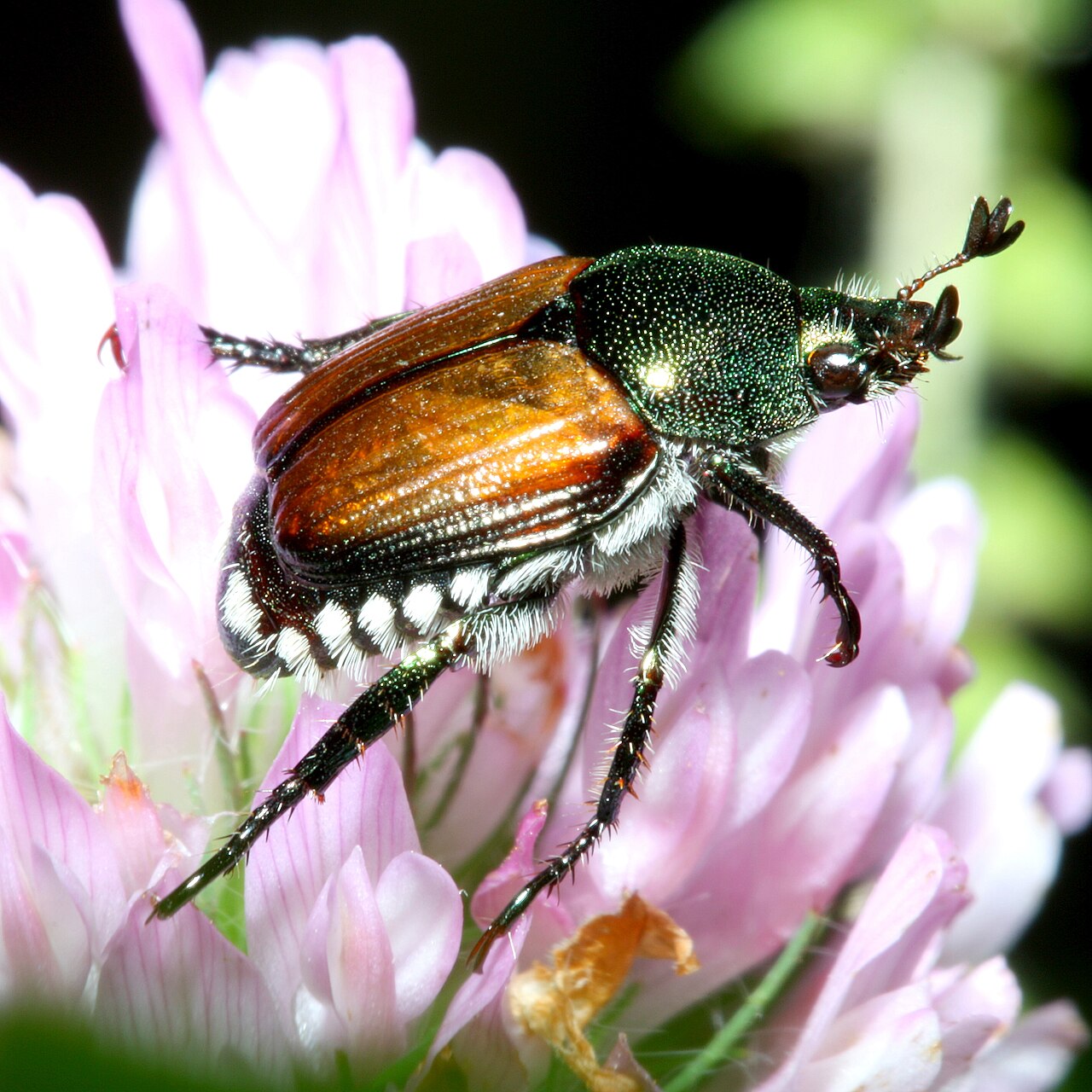
    Adult Japanese beetle with metallic green head and coppery wing covers
    An adult Japanese beetle at the Morton Arboretum, Illinois. Photo: Bruce Marlin, CC BY 3.0, via Wikimedia Commons.

    Japanese beetles in Iowa: the short answer

    In Iowa, adult Japanese beetles emerge in late June, keep appearing through July, and are mostly gone by mid- to late August. The most reliable home-garden control is handpicking: knock beetles into a bucket of soapy water early in the morning, every day or two. Screening and spot-spraying high-value plants also help. Skip the traps: ISU Extension says they can attract more beetles than they catch.

    How to identify Japanese beetles

    • Size: about 3/8 inch long and 1/4 inch wide.
    • Color: shiny metallic green head and thorax with coppery red wing covers.
    • Key feature: five tufts of white hairs on each side of the abdomen, which set them apart from similar native beetles.
    • Grubs: white, C-shaped and about 1¼ inches long when full grown. They live in the soil from August until June, feeding on plant roots, especially turfgrass.

    When Japanese beetles appear in Iowa

    Japanese beetle calendar for Iowa (ISU Extension)
    Time of year Life stage What to do
    Late June Adults begin to emerge Start checking roses, grapes and lindens daily
    July Peak adults; new ones still emerging Handpick every morning, screen or spot-spray high-value plants
    Mid- to late August Most adults gone; eggs hatch in soil Preventive lawn grub treatments must be applied before mid-August to work
    August to June Grubs feed on roots in the soil Watch lawns for brown patches

    Adults are present for about six weeks each summer, and each beetle lives 30 to 45 days.

    Damage and favorite plants

    ISU Extension says Japanese beetles eat the leaves, fruits and flowers of more than 300 plants. On leaves they eat the tissue between the veins, leaving a lace-like skeleton; flowers and fruits are sometimes eaten completely. Iowa favorites include:

    • Roses
    • Raspberries
    • Grapevines
    • Crabapples
    • Birches
    • Lindens

    What actually works

    1. Handpick early and often. Beetles are cool and sluggish early in the morning. Collect or shake them into a bucket of soapy water and discard. Removing beetles quickly also reduces the scent that attracts more beetles.
    2. Be persistent. New beetles emerge every day for weeks, so repeat every day or two from late June through July.
    3. Screen high-value plants. ISU Extension says screening can help in isolated situations with limited beetle numbers. Cover small plants with lightweight fabric or netting during peak weeks.
    4. Spot-spray if needed. A labeled garden insecticide on infested foliage of high-value plants may reduce damage for several days, but repeat applications are needed. Check that your plant is on the label and follow directions. Spray in the evening and avoid open flowers to protect bees.

    Why not to use Japanese beetle traps

    Bag traps baited with floral scent and a sex pheromone are sold everywhere, but ISU Extension says they have been shown to be ineffective against moderate to heavy infestations. Research in Kentucky and elsewhere found that traps attract more beetles than they catch, which can leave your yard with a bigger problem than before. If you do use one, put it far away from the plants you want to protect.

    Japanese beetle grubs and your lawn

    • Grubs damage lawns, feeding on grass roots from late summer through spring.
    • Timing matters. ISU Extension notes that most preventive grub insecticides must be applied before mid-August to be effective.
    • It won’t stop next year’s beetles. Treating grubs protects the turf, but adults fly in from nearby areas, so it will not reduce the beetles feeding in your landscape the next summer.
    • A healthy lawn copes better. Follow a good fall feeding program; see when to fertilize your lawn in Iowa.

    Will Japanese beetles kill trees?

    Established, healthy trees usually leaf out again. ISU Extension says defoliation is most harmful to recently planted trees (the last two or three years) and trees in poor health. Protect small trees with a labeled insecticide if needed, and water them regularly during dry periods, because defoliation combined with drought stress can be too much for young trees.

    Helpful supplies

    All five were listed as sold by Amazon.com when checked on October 29, 2026. Check the current listing before you buy. We do not recommend Japanese beetle traps; see why above.

    For handpicking: United Solutions 5 Gallon Bucket

    Product pick

    United Solutions 5 Gallon Heavy Duty Plastic Bucket

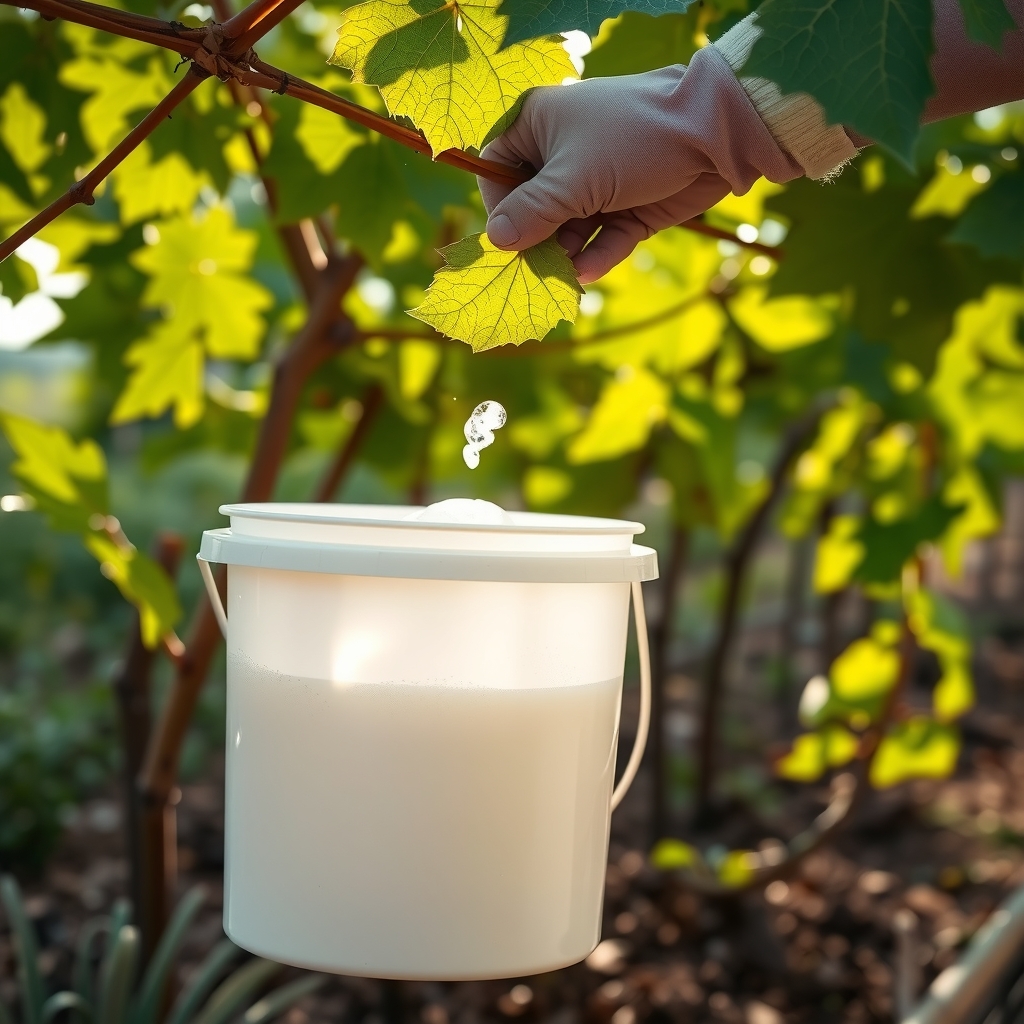
    Bucket of soapy water held under grape leaves for handpicking beetles, illustrative AI image

    Illustrative image (AI-generated), not the exact product.

    See current photos and price on Amazon →

    ISU Extension’s main method is shaking beetles into a bucket of soapy water early in the morning. Fill a few inches with water and a squirt of dish soap, hold it under the leaves, and tap the stem.

    To screen plants: Tenax Insect Netting, 7 x 100 ft

    Product pick

    Tenax Insect Netting, 7 ft x 100 ft, Clear

    Insect netting draped over a rose bush, illustrative AI image

    Illustrative image (AI-generated), not the exact product.

    See current photos and price on Amazon →

    Fine mesh lets light, air and rain through while keeping beetles off high-value roses, raspberries or a young tree. Cut it to size and pin the edges down during the late June to July peak.

    For daily picking: Wells Lamont Nitrile Work Gloves

    Product pick

    Wells Lamont Nitrile Work Gloves

    Nitrile-coated work gloves on a garden bench, illustrative AI image

    Illustrative image (AI-generated), not the exact product.

    See current photos and price on Amazon →

    Grippy, washable gloves for picking beetles off thorny roses and wet morning leaves every day for several weeks.

    To screen small plants: Amazon Basics Plant Cover

    Product pick

    Amazon Basics Plant Covers, 10 x 30 ft

    White fabric cover draped over garden plants, illustrative AI image

    Illustrative image (AI-generated), not the exact product.

    See current photos and price on Amazon →

    ISU Extension says screening high-value plants can help. A lightweight fabric cover draped over small roses, raspberries or vegetables during peak beetle weeks keeps beetles off. Remove it when plants need pollinators, and secure the edges.

    To water stressed young trees: Gilmour Soaker Hose

    Product pick

    Gilmour 50 ft Flat Weeper Soaker Hose

    Flat soaker hose watering plants, illustrative AI image

    Illustrative image (AI-generated), not the exact product.

    See current photos and price on Amazon →

    ISU Extension advises watering small trees regularly during dry periods, because defoliation plus drought stress can be too much for young trees. A soaker hose coiled under the canopy waters deeply without wetting leaves.

    FAQs

    When do Japanese beetles come out in Iowa?
    Adults begin to emerge from the ground in late June, and new adults keep appearing through July, according to Iowa State University Extension. Most are gone by mid- to late August.

    Do Japanese beetle traps work?
    Not for most yards. ISU Extension says traps have been shown to be ineffective for moderate to heavy infestations and may attract more beetles than they catch.

    What is the best way to get rid of Japanese beetles?
    For a few plants, handpick or shake beetles into a bucket of soapy water early in the morning, when they are sluggish, and repeat often. Screening high-value plants and spot-spraying with a labeled garden insecticide are other options.

    What plants do Japanese beetles eat in Iowa?
    More than 300 plants. Favorites include roses, raspberries, grapevines, crabapples, birches and lindens.

    Will treating my lawn for grubs stop Japanese beetles?
    No. ISU Extension notes that controlling grubs in your lawn will not reduce the number of beetles in your yard the next year, because adults fly in from nearby areas. Grub treatment protects the lawn itself.

    Will Japanese beetles kill my tree?
    Established, healthy trees usually recover. ISU Extension says defoliation is most harmful to trees planted in the last two or three years and to trees in poor health, so protect and water young trees.

    Sources and review scope

    This guide was prepared on October 29, 2026 from the following sources and from the product listings on Amazon.com. Homingwell did not perform hands-on testing.

    Explore more Lawn & Garden guides.
  • When to Plant Grass Seed in Iowa: Best Dates and Seeding Rates

    When to Plant Grass Seed in Iowa: Best Dates and Seeding Rates

    Skip to content

    Lawn & Garden • Iowa Lawn Care • Updated October 29, 2026

    When to Plant Grass Seed in Iowa: Best Dates and Seeding Rates

    Explore related guides: When to fertilize your lawn in Iowa · Best broadcast spreaders · Soil test kits · Gardening in Iowa: all guides · Japanese beetles in Iowa.

    Timing makes or breaks a new Iowa lawn. Seed the wrong month and you get crabgrass, dried-out seedlings or nothing at all. This guide explains when to plant grass seed in Iowa, which seed to buy, how much to spread, and how to care for new grass, based on Iowa State University Extension and Outreach guidance.

    New grass seedlings coming up in bare soil after seeding
    New grass seedlings coming up. Photo: Eirian Evans, CC BY-SA 2.0, via Wikimedia Commons.

    When to plant grass seed in Iowa: the short answer

    The best time to plant grass seed in Iowa is mid-August to mid-September, according to Iowa State University Extension. Seeding between August 15 and September 30 generally gives the best results, and Kentucky bluegrass does best sown by September 15. Spring seeding works if you can water, but expect more weeds. Late fall dormant seeding is a third option.

    Iowa grass seeding calendar

    Grass seeding windows for Iowa lawns
    Window Rating Notes
    Mid-August to mid-September Best Warm soil, cool nights, few weeds germinating (ISU Extension)
    Mid- to late September Good Kentucky bluegrass can still germinate to about September 30; earlier is better
    October Risky Seedlings may be too small to survive winter
    Late fall to early winter (dormant) Option Seed lies dormant and sprouts early in spring
    Early spring (as early as possible) Fair Needs watering; competes with crabgrass and other weeds
    Late spring and summer Poor Heat and drought kill young seedlings

    Why late summer is best

    • Fast germination. ISU Extension says cool-season grass seed germinates quickly in the warm soil of late summer.
    • Ideal growing weather. Warm days and cool nights in early fall promote rapid turfgrass growth.
    • Fewer weeds. Few weed seeds germinate in late summer or fall, and annual weeds are finishing their life cycle.
    • Time to root before winter, so the lawn goes into spring already established.

    Spring seeding: ISU Extension says spring seeding may be done if irrigation is available, but spring-seeded lawns often become heavily infested with weeds. Purdue turf specialists advise seeding as early in spring as possible and note that bluegrass seed takes about 18 to 28 days to germinate once soil reaches 55°F.

    Dormant seeding: Seed sown in late fall or early winter stays dormant and germinates in spring, often 2 to 3 weeks earlier than a spring seeding. Cornell turf specialists suggest waiting until soil at 1 inch is 40 to 45°F or colder and using about 50% more seed.

    Which grass seed to buy for Iowa

    Grass seed choices for Iowa (ISU Extension)
    Site Best choice
    Full sun Kentucky bluegrass, a mix of at least three cultivars
    Partial shade Kentucky bluegrass + perennial ryegrass + fine-leaf fescues
    Shade Fine-leaf fescues (creeping red, hard, chewings fescue)
    Quick cover in spring Mix with some perennial ryegrass

    ISU Extension notes that perennial ryegrass helps spring plantings establish quickly, while a mix of three or four Kentucky bluegrass varieties is preferred for late summer seeding.

    How much grass seed to use

    Seeding rates for new lawns (ISU Extension)
    Seed mix Pounds per 1,000 sq ft
    100% Kentucky bluegrass 1 to 1½ (up to 3 for faster fill-in)
    80% Kentucky bluegrass + 20% perennial ryegrass 2 to 2½
    Dormant seeding About 50% more than normal

    Check the seed bag too: label rates vary by mix. For overseeding a thin lawn, use roughly half the new-lawn rate.

    How to seed a lawn in Iowa

    1. Test the soil if you are starting a new lawn, so you know whether lime or phosphorus is needed. See our soil test kit guide.
    2. Prepare the surface. For bare soil, loosen and level it. For overseeding, mow short and rake out dead grass, or core aerate; ISU Extension says early September is the best time to aerate, and seed can drop into the holes.
    3. Split the seed in half. ISU Extension recommends sowing one half in one direction and the other half at right angles to the first.
    4. Cover lightly. Rake so seed is no deeper than ¼ to ½ inch, then roll lightly to firm the soil around it.
    5. Water right away and keep the surface moist.

    Caring for new grass

    • Never let the surface dry out. ISU Extension warns that grass seedlings are very susceptible to drying. Water lightly once or twice a day until the grass is up, then water less often and more deeply.
    • Mow early. Don’t let new grass grow too long before the first mowing, and never remove more than one-third of the blade at once.
    • Wait on weed killer. ISU Extension says a broadleaf herbicide is safe once the new lawn has been mowed at least 3 to 4 times.
    • Fertilize in late fall. New lawns benefit from the late October to early November feeding in our Iowa lawn fertilizer schedule.

    Tools for seeding a lawn

    All five were listed as sold by Amazon.com when checked on October 29, 2026. Check the current listing before you buy.

    To time seeding: Taylor Soil Thermometer

    Product pick

    Taylor Soil Thermometer with Silicone Bumper

    Dial soil thermometer in garden soil, illustrative AI image

    Illustrative image (AI-generated), not the exact product.

    See current photos and price on Amazon →

    Handy for timing both seeding windows: warm late-summer soil speeds germination, and for dormant seeding you want soil cold enough that seed will not sprout until spring.

    To prepare the soil: True Temper Steel Tine Rake

    Product pick

    True Temper Steel Tine Leaf Rake

    Steel tine rake loosening thatch on a thin lawn before seeding, illustrative AI image

    Illustrative image (AI-generated), not the exact product.

    See current photos and price on Amazon →

    Rake out dead grass and scratch up bare spots so seed reaches the soil, then rake lightly again to cover seed no deeper than ¼ to ½ inch.

    For whole lawns: Scotts EdgeGuard DLX

    Product pick

    Scotts Turf Builder EdgeGuard DLX Broadcast Spreader

    Push broadcast spreader with side shield on a lawn, illustrative AI image

    Illustrative image (AI-generated), not the exact product.

    See current photos and price on Amazon →

    Spreads seed and starter fertilizer evenly over large areas. Spread half the seed in one direction and half at right angles for even coverage.

    For bare spots: Chapin Hand Crank Spreader

    Product pick

    CHAPIN 8706G 3 lb Hand Crank Lawn Spreader

    Handheld crank spreader with grass seed, illustrative AI image

    Illustrative image (AI-generated), not the exact product.

    See current photos and price on Amazon →

    Ideal for overseeding thin patches and small yards where a push spreader is overkill.

    To keep seed moist: Melnor Oscillating Sprinkler

    Product pick

    Melnor Metal Oscillating Sprinkler, 4500 Sq Ft

    Oscillating sprinkler watering a newly seeded lawn, illustrative AI image

    Illustrative image (AI-generated), not the exact product.

    See current photos and price on Amazon →

    New seedlings dry out fast. A gentle oscillating sprinkler keeps the surface moist with light, frequent watering until the grass is established.

    FAQs

    When is the best time to plant grass seed in Iowa?
    Late summer to early fall. ISU Extension says mid-August to mid-September is the best time to seed new lawns and overseed existing ones, and seeding between August 15 and September 30 generally gives the best results.

    Is it too late to plant grass seed in October in Iowa?
    For Kentucky bluegrass, usually yes. ISU Extension notes it can germinate as late as September 30, but earlier seeding gives better establishment. After that, consider dormant seeding in late fall or wait for spring.

    Can I plant grass seed in spring in Iowa?
    Yes, if you can water. ISU Extension says spring seeding may be done with irrigation, but late summer or early fall is preferred because spring-seeded lawns are often heavily infested with weeds.

    How much grass seed do I need per 1,000 square feet?
    ISU Extension lists 1 to 1½ pounds for 100% Kentucky bluegrass and 2 to 2½ pounds for a mix of 80% bluegrass and 20% perennial ryegrass. Another ISU publication gives 1.5 to 3 pounds of bluegrass depending on how quickly you want it to fill in.

    What grass seed is best for Iowa?
    In sun, Kentucky bluegrass, ideally a mix of at least three cultivars. In partial shade, a mix of Kentucky bluegrass, perennial ryegrass and fine fescues; fine fescues are the best grasses for shade.

    What is dormant seeding?
    Sowing seed in late fall or early winter when soil is too cold for it to germinate, so it sprouts early the next spring. Cornell turf specialists suggest waiting until soil at 1 inch is 40 to 45°F or colder and increasing the seeding rate by about 50%.

    Sources and review scope

    This guide was prepared on October 29, 2026 from the following sources and from the product listings on Amazon.com. Homingwell did not perform hands-on testing.

    Explore more Lawn & Garden guides.
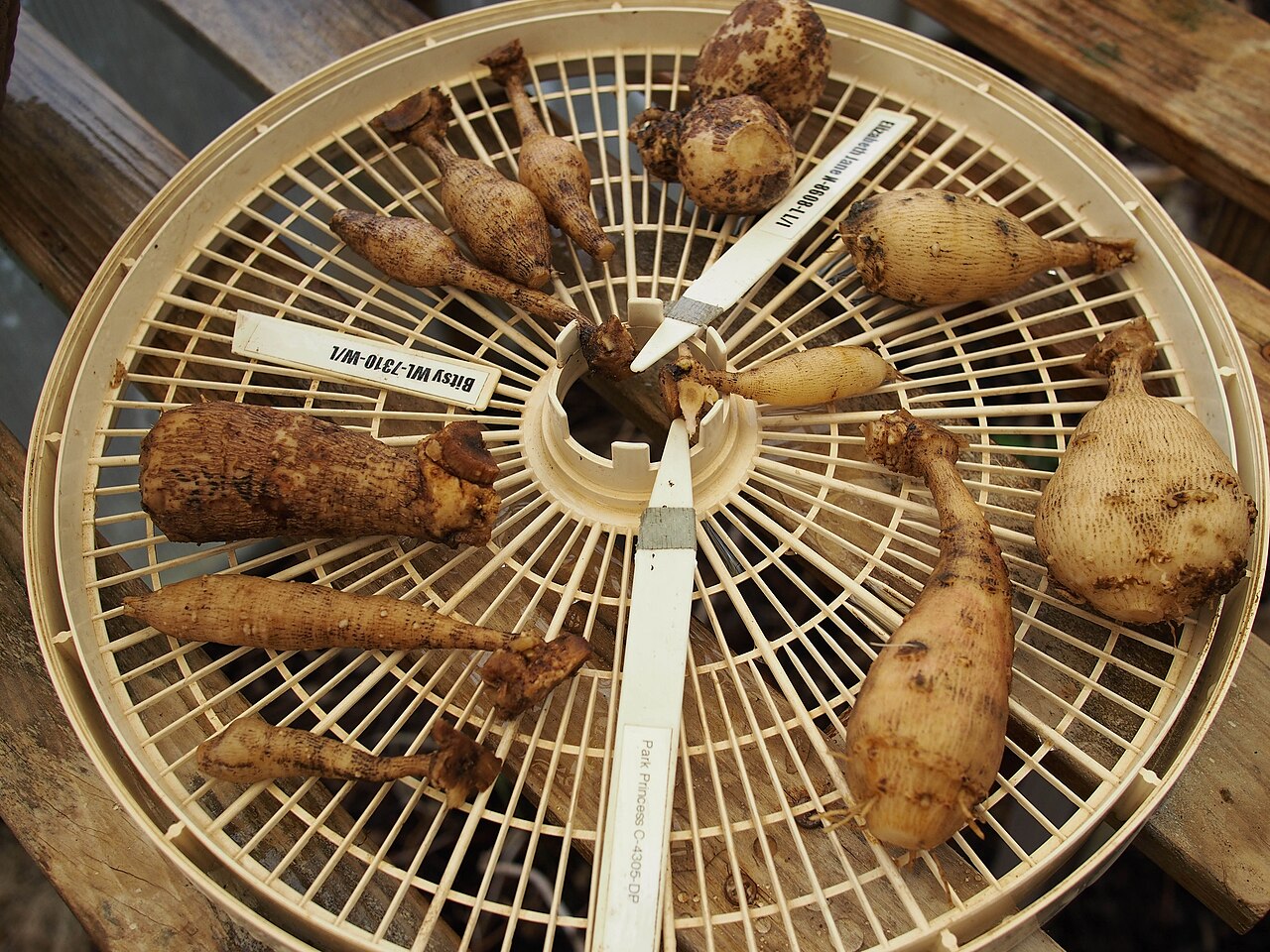
  • When to Fertilize Your Lawn in Iowa: ISU Schedule and Rates

    When to Fertilize Your Lawn in Iowa: ISU Schedule and Rates

    Skip to content

    Lawn & Garden • Iowa Lawn Care • Updated October 29, 2026

    When to Fertilize Your Lawn in Iowa: ISU Schedule and Rates

    Explore related guides: Best broadcast spreaders · Soil test kits · Fall garden cleanup checklist · Gardening in Iowa: all guides · When to plant grass seed in Iowa · Japanese beetles in Iowa.

    Most Iowa lawns are Kentucky bluegrass and other cool-season grasses, and they need fertilizer at very different times than the bags in spring store displays suggest. This guide explains when to fertilize your lawn in Iowa, how many applications you need, how much to apply, and what to skip, based on Iowa State University Extension and Outreach guidance.

    Green lawn with fallen autumn leaves in late fall, the best time to fertilize an Iowa lawn
    A lawn in late fall, when ISU Extension says fertilizer does the most good. Photo: Nyttend, public domain, via Wikimedia Commons.

    When to fertilize your lawn in Iowa: the short answer

    Iowa State University Extension says cool-season lawns can be fertilized in spring (April or May), mid-September and late October/early November. If you fertilize only once, make it late October or early November, after the grass has stopped growing. Do not fertilize in June, July or August, and never apply more than 1 pound of actual nitrogen per 1,000 square feet at one time.

    Iowa lawn fertilizer schedule

    ISU Extension says the number of applications depends on how you want your lawn to look and how much care you want to give it:

    Lawn fertilizer programs for Iowa Kentucky bluegrass (ISU Extension)
    Program Spring (April or May) Mid-September Late Oct / early Nov
    Minimal: healthy, lower maintenance — — Yes
    Moderate — Yes Yes
    High: vigorous, dark green lawn Yes Yes Yes

    One ISU Extension article suggests a slightly lighter spring rate of 0.5 to 0.75 pound of nitrogen per 1,000 square feet, and 0.75 to 1 pound in September and late fall.

    Why late fall matters most

    • Roots, not just leaves. ISU Extension notes that spring and late summer fertilizer mainly push leaf growth, while a late fall application promotes root development.
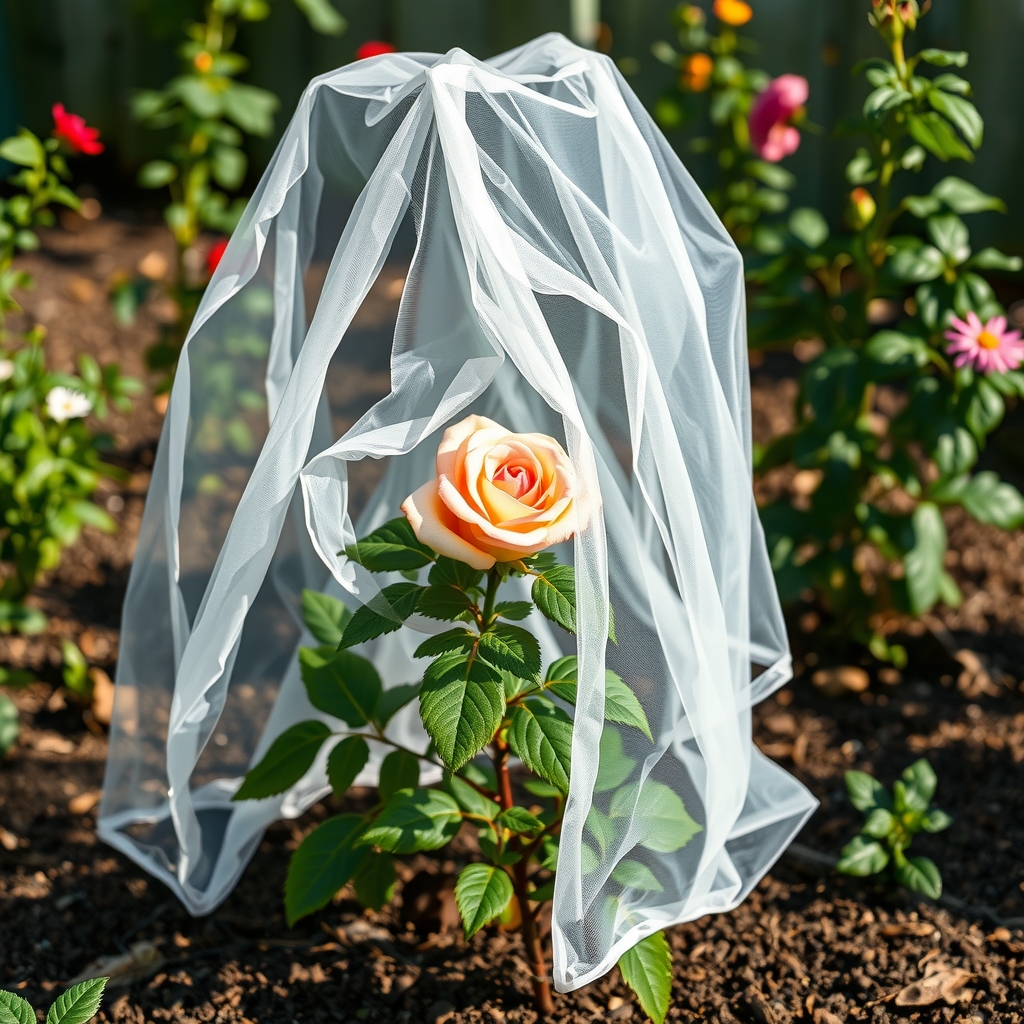
    • Food for winter. Late fall fertilizer helps the grass store food reserves before winter.
    • Earlier spring green-up. Lawns fed in late fall green up earlier the next spring.
    • Timing cue. Kentucky bluegrass usually stops growing in late October or early November in Iowa. Fertilize once you have stopped mowing and before the ground freezes.
    • Not in summer. Cool-season grasses slow down in summer heat, which is why ISU Extension says not to fertilize them in June, July and August.
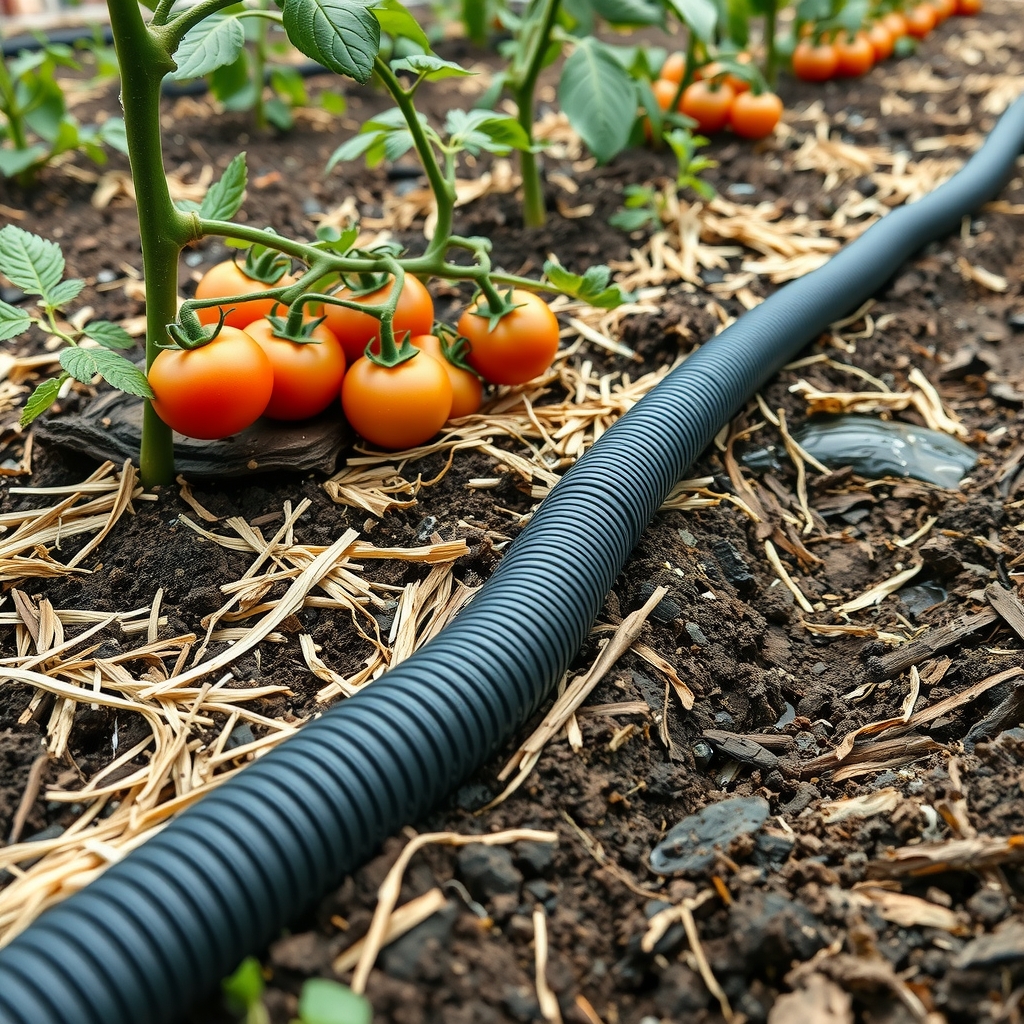
    How much fertilizer to apply

    Fertilizer rates are based on actual nitrogen, the first number on the bag. A 24-0-6 bag is 24% nitrogen. To apply 1 pound of nitrogen per 1,000 square feet:

    1. Divide 1 by the nitrogen percentage as a decimal: 1 ÷ 0.24 = about 4.2 pounds of product per 1,000 sq ft.
    2. Multiply by your lawn area in thousands of square feet. A 5,000 sq ft lawn needs about 21 pounds of a 24% product.
    3. Set your spreader using the bag’s chart, then check it. See our guide to calibrating a broadcast spreader.

    Lawn fertilizer calculator

    Lawn fertilizer amount calculator

    ISU Extension: do not apply more than 1 lb of actual nitrogen per 1,000 sq ft in one application. Always follow the product label.

    What kind of fertilizer to use

    • Nitrogen is the key nutrient, especially in fall, according to ISU Extension.
    • Skip phosphorus unless a soil test calls for it. ISU Extension says most Iowa soils contain enough phosphorus. Look for a middle number of 0, such as 24-0-6. A soil test is the best guide.
    • Potassium (the last number) is fine in moderate amounts, but again let a soil test guide you.
    • Follow the label. Product labels give spreader settings and legal application rates.

    Tips for fertilizing an Iowa lawn

    • Sweep up granules that land on driveways, sidewalks and streets so they don’t wash into storm drains.
    • Don’t fertilize frozen or snow-covered ground, where fertilizer can run off instead of soaking in.
    • Keep mowing at 2½ to 3 inches in fall until the grass stops growing, as ISU Extension recommends.
    • Control broadleaf weeds in fall. ISU Extension says late September to early November is the best time to treat perennial broadleaf weeds such as dandelions.
    • Rake or mulch leaves. Thick layers of leaves block light and can smother grass; shred light layers with the mower.

    Tools for fertilizing your lawn

    All four were listed as sold by Amazon.com when checked on October 29, 2026. Check the current listing before you buy.

    Best for most lawns: Scotts EdgeGuard DLX

    Product pick

    Scotts Turf Builder EdgeGuard DLX Broadcast Spreader

    Push broadcast spreader with side shield on a lawn, illustrative AI image

    Illustrative image (AI-generated), not the exact product.

    See current photos and price on Amazon →

    A popular push spreader for typical Iowa yards. The EdgeGuard shield blocks fertilizer from going onto driveways and flower beds along the edges.

    For larger lawns: Agri-Fab 130 lb Push Spreader

    Product pick

    Agri-Fab 45-0614 130 lb Push Broadcast Spreader

    Large heavy-duty push broadcast spreader, illustrative AI image

    Illustrative image (AI-generated), not the exact product.

    See current photos and price on Amazon →

    A larger 130 lb hopper for half-acre lawns, so you stop to refill less often.

    For small lawns: Chapin Hand Crank Spreader

    Product pick

    CHAPIN 8706G 3 lb Hand Crank Lawn Spreader

    Handheld crank spreader with grass seed, illustrative AI image

    Illustrative image (AI-generated), not the exact product.

    See current photos and price on Amazon →

    For small lawns, side yards and touch-ups. Easy to store and good for spreading grass seed on thin spots too.

    To check your soil first: Luster Leaf Rapitest Digital

    Product pick

    Luster Leaf 1605 Rapitest Digital Soil Test Kit

    Digital soil test kit with capsules, illustrative AI image

    Illustrative image (AI-generated), not the exact product.

    See current photos and price on Amazon →

    A quick home check of pH, nitrogen, phosphorus and potassium. For the most accurate results, ISU Extension’s soil testing lab is the gold standard.

    FAQs

    When is the best time to fertilize a lawn in Iowa?
    Late October or early November, once the grass has stopped growing, is the most important application, according to Iowa State University Extension. Mid-September and spring (April or May) are the other good times.

    How many times a year should I fertilize my Iowa lawn?
    One to three times. ISU Extension suggests one application in late October/early November for a low-maintenance lawn, two (mid-September and late October/early November) for a moderate program, and three (adding spring) for a dark green, high-quality lawn.

    Should I fertilize my lawn in summer in Iowa?
    No. ISU Extension advises against fertilizing Kentucky bluegrass and other cool-season grasses in June, July and August.

    How much fertilizer should I put on my lawn?
    No more than 1 pound of actual nitrogen per 1,000 square feet in a single application. Divide 1 by the nitrogen percentage on the bag to get pounds of product per 1,000 square feet; for a 24% nitrogen product that is about 4.2 pounds.

    Do Iowa lawns need phosphorus?
    Usually not. ISU Extension says most Iowa soils contain enough phosphorus, so apply it only when a soil test shows a need.

    Why fertilize the lawn in late fall?
    A late fall application promotes root growth, helps the grass store food reserves for winter and gives earlier green-up next spring.

    Sources and review scope

    This guide was prepared on October 29, 2026 from the following sources and from the product listings on Amazon.com. Homingwell did not perform hands-on testing.

    Explore more Lawn & Garden guides.