
Lawn & Garden • Iowa guide • Updated October 27, 2026
When to Start Seeds in Iowa: Indoor Sowing Calendar for Zone 5
Explore related guides: Gardening in Iowa: all guides · Last frost date in Iowa by city · When to start seeds in Minnesota · When to start seeds in Illinois · When to start seeds in Nebraska · Seed starting kits for beginners · When to plant garlic in Iowa · When to plant tomatoes in Iowa · Best raised beds for Iowa · Gifts for gardeners · Raised garden bed size · Winterize raised beds · Garden tool storage ideas · Best garden trowel.
Every January, Iowa gardeners ask the same thing: can I start my seeds yet? Usually the answer is “not quite.” Knowing when to start seeds in Iowa comes down to one date, your average last spring frost, and a little counting backward. This guide uses Iowa State University Extension’s timing to give you a crop-by-crop sowing calendar, plus the setup you need indoors.

When to start seeds in Iowa: the short answer
In most of Iowa the frost-free date falls in the first or second week of May. Count back the weeks each crop needs indoors, then add one to two weeks for hardening off. That puts peppers and eggplant in early March, tomatoes in late March, broccoli and cabbage in late February to early March, and cucumbers, melons and squash in early to mid-April. Southern Iowa can start about a week earlier and northern Iowa about a week later.
How to count back from your frost date
ISU Extension’s method is simple and works for any seed packet:
- Find your planting-out date. For tender crops (tomatoes, peppers, marigolds, impatiens) that is after the danger of frost, the first or second week of May in most of Iowa. Cool-season crops such as broccoli, cabbage, pansies and snapdragons tolerate light freezes and often go out around mid-April.
- Check the weeks indoors. Look on the seed packet for the number of weeks from sowing to transplanting.
- Add hardening off. Allow one to two extra weeks to get seedlings used to outdoor conditions.
- Count back on a calendar. ISU’s examples: crops needing 6 weeks (plus 1 for hardening off) are sown in the third week of March, 8 weeks in the first week of March, and 12 weeks in the first week of February.
Write the dates down as a sowing schedule. ISU’s tip is that a schedule keeps you from planting too early, which is the most common mistake. Seedlings started too soon get tall and leggy before it is warm enough to plant them.
Iowa indoor seed starting calendar
The weeks indoors come from ISU Extension. The sowing windows assume central Iowa, a mid-April planting date for cool-season crops, early to mid-May for warm-season crops, and one week of hardening off.
| Crop | Weeks indoors (ISU) | Plant outside | Sow indoors |
|---|---|---|---|
| Geranium, wax begonia | 12 to 14 | After frost, mid-May | Late January to early February |
| Petunia, impatiens | 8 to 10 | After frost, mid-May | Late February to early March |
| Pepper, eggplant | 6 to 8 | After frost, mid-May | Early to mid-March |
| Marigold | 6 to 8 | After frost, mid-May | Early to mid-March |
| Broccoli, cabbage, cauliflower | 5 to 7 | Mid-April | Late February to early March |
| Tomato | 5 to 6 | After frost, May | Late March |
| Cucumber, squash, melons | 3 to 4 | After frost, mid-May | Early to mid-April |
Tomatoes are the crop people start too early most often. ISU says they grow quickly and the ideal transplant is short and stocky, so 5 to 6 weeks is enough. Cucumbers, squash and melons grow fast too, and many Iowa gardeners simply sow them directly in the garden once the soil is warm.
Northern vs southern Iowa
ISU’s vegetable planting chart is written for central Iowa and notes that southern Iowa can shift dates about one week earlier and northern Iowa about one week later. ISU also says southern Iowa gardeners can plant tomatoes outdoors in late April, while those in northern counties should wait until mid-May.
For example, the Old Farmer’s Almanac puts the average last spring frost around May 3 in Creston in southwest Iowa and May 2 in Ames, based on a 30 percent chance of frost after that date. Frost dates are averages, so keep an eye on the forecast and be ready to cover plants. You can confirm your hardiness zone by ZIP code on the USDA map.
Set up your indoor seed starting station
ISU lists four essentials for quality transplants: seeds, containers, a growing medium and supplemental light. Here is what it recommends for each:
- Containers with drainage. Flats, cell packs, pots, peat or coir pellets, or reused cups and cartons with holes punched in the bottom. Wash old containers in soapy water, then disinfect them in 1 part chlorine bleach to 9 parts water.
- A light, sterile mix. Use a lightweight, porous, pathogen-free soilless mix for germination, and a well-drained potting mix when moving seedlings to bigger pots.
- Warmth. Most seeds germinate best when the mix stays at 70 to 75 degrees Fahrenheit. A warm spot in the house often works; in cool rooms, ISU suggests heating mats or cables.
- Bright, close light. A windowsill is rarely enough: seedlings stretch and lean toward the glass. ISU recommends a plug-in fluorescent or full-spectrum LED shop fixture (at least 3,000 lumens for LEDs). Keep fluorescent tubes 4 to 6 inches above the seedlings and LEDs about 8 to 12 inches, and raise the light as plants grow.
- A timer. Run the lights 14 to 16 hours a day. Seedlings also need a dark period, so do not leave lights on around the clock.
Harden off before planting out
Seedlings grown indoors have never felt sun or wind. ISU’s hardening routine:
- Start with the plants in a shady, protected spot outdoors.
- Gradually give them longer periods of direct sun over several days.
- Check them once or twice a day and water when the surface is dry to the touch.
- Bring them inside if strong winds, a severe storm or an overnight frost threatens.
- After 7 to 10 days they are ready to plant.
If you grow in raised beds, our raised garden bed size guide helps you plan how many transplants will fit.
Products for starting seeds indoors
These match the setup ISU describes. All were listed as sold by Amazon.com at the time of writing.
For seeds: Burpee SuperSeed 36-Cell Seed Starting Tray
Product pick
Burpee SuperSeed 36-cell seed starting tray
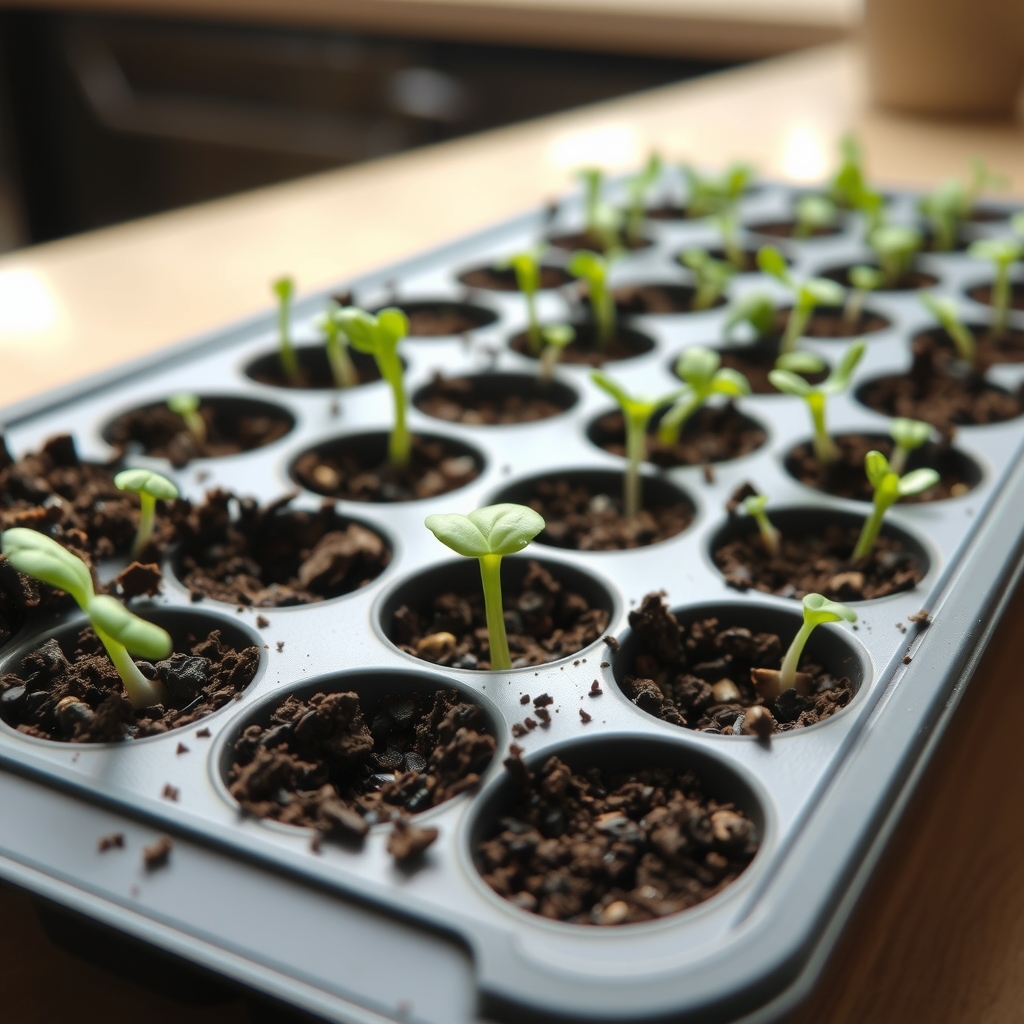
Illustrative image (AI-generated), not the exact product.
A reusable tray with 36 soft silicone cells that flex so seedlings pop out with the root ball intact. Corner slots in each cell help drainage, which matters because ISU stresses containers that drain. Because it is reusable, wash and disinfect it each spring the way ISU suggests for old flats.
Check the Burpee SuperSeed tray on Amazon
For light: iPower LED Grow Light Stand, 2 ft
Product pick
iPower 2 ft LED grow light stand
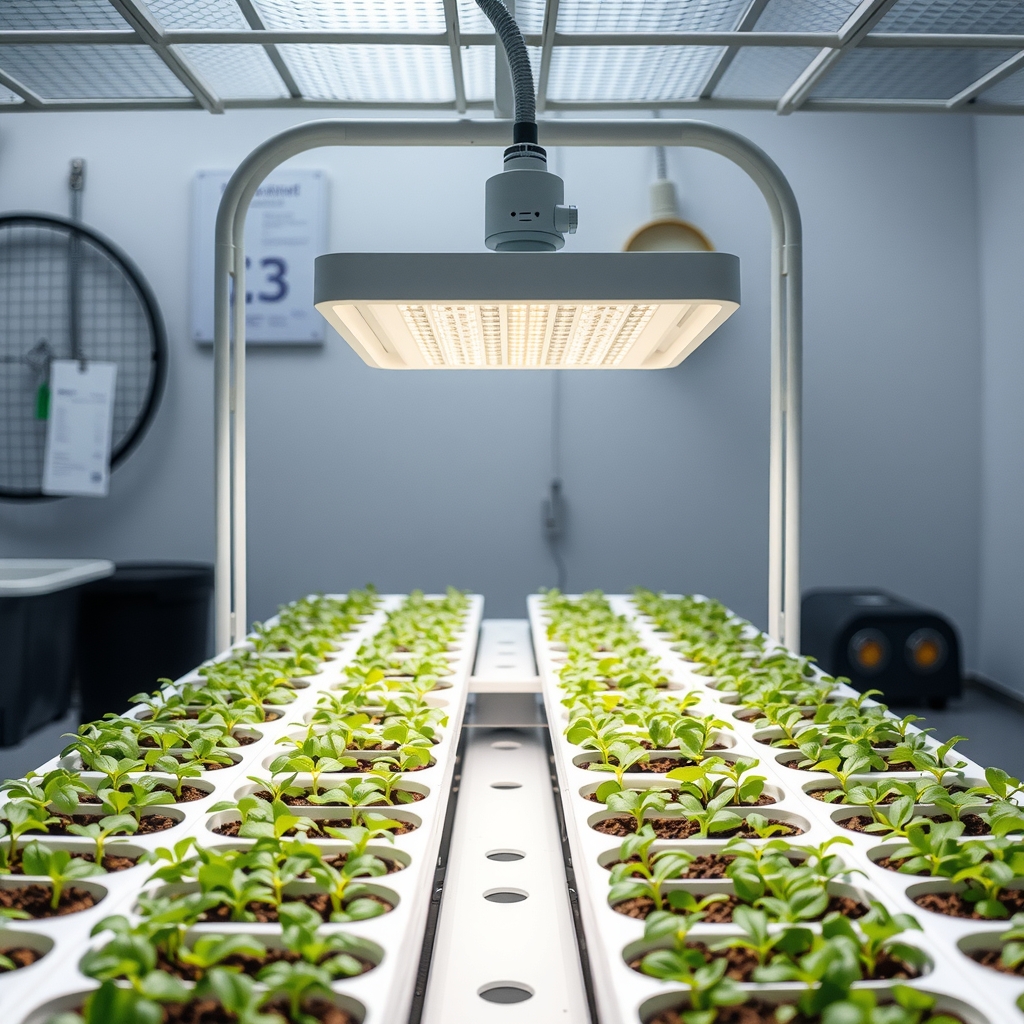
Illustrative image (AI-generated), not the exact product.
ISU says the light must be adjustable so it can rise with the seedlings, and that full-spectrum light is enough; special grow lights are not required. This iPower stand has a natural white full-spectrum LED with a height-adjustable arm and a 50 or 100 percent dimmer. Several units can be linked if you start more flats.
Check the iPower grow light stand on Amazon
For warmth: iPower 10 x 20 in Seedling Heat Mats (2 Pack)
Product pick
iPower 10 x 20 in seedling heat mats, 2 pack
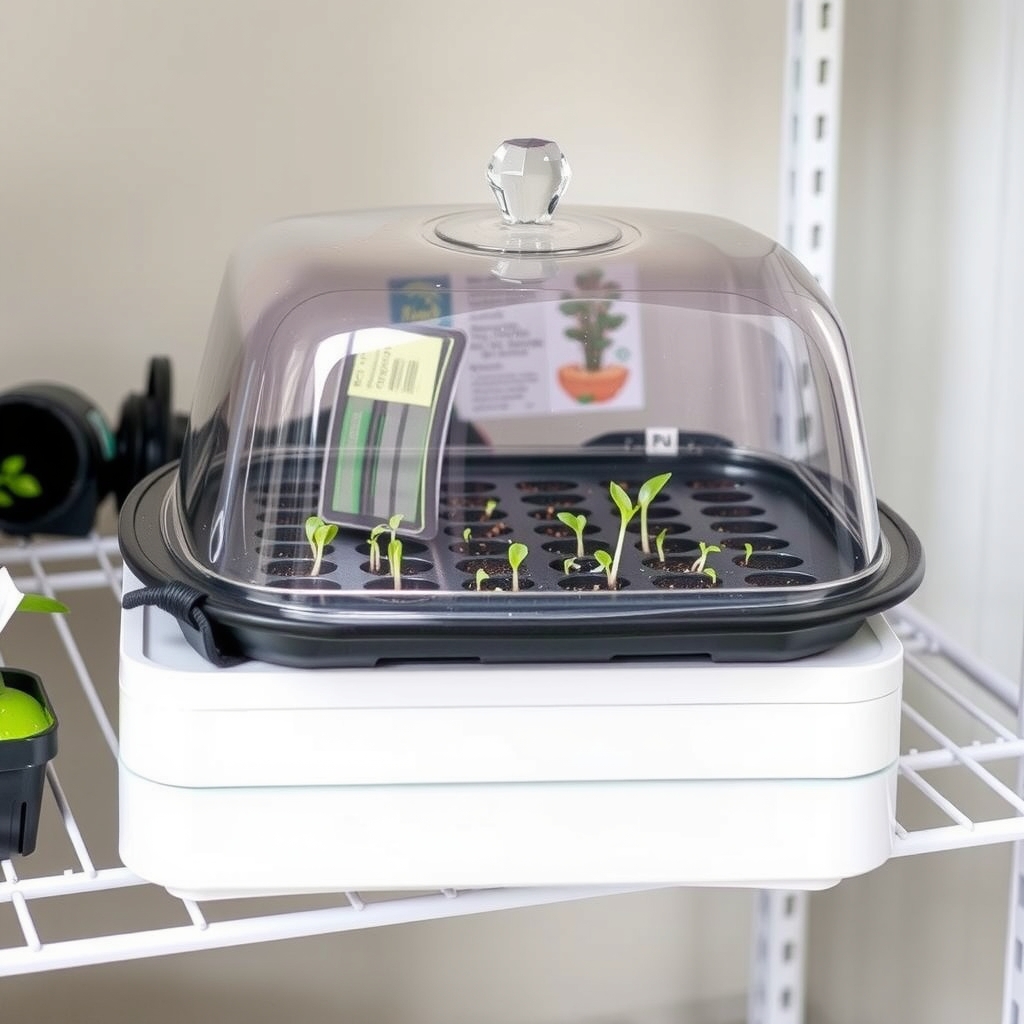
Illustrative image (AI-generated), not the exact product.
Most seeds germinate best at a steady 70 to 75 degrees Fahrenheit, says ISU, and in a cool Iowa basement in February a heat mat is the easy way to get there. Each waterproof mat fits under a standard 10 x 20 tray and warms it 10 to 20 degrees above room temperature, according to the listing. Take trays off the mat once most seeds have sprouted.
Check the iPower heat mats on Amazon
For control: JumpStart Digital Thermostat for Heat Mats
Product pick
JumpStart digital thermostat controller
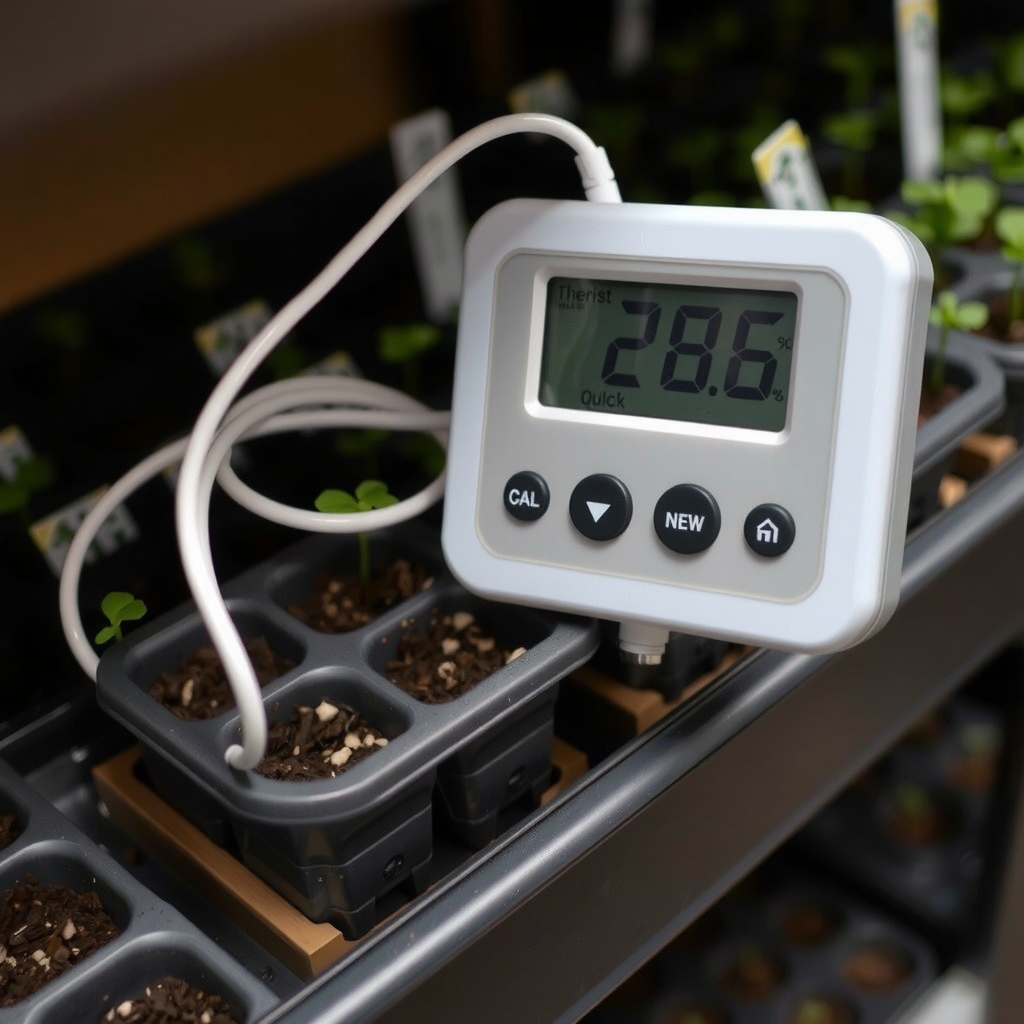
Illustrative image (AI-generated), not the exact product.
A heat mat on its own just adds heat. A thermostat with a probe in the mix holds it at the temperature you set, so you can dial in the 70 to 75 degrees ISU recommends instead of guessing. This one has a digital readout, a 68 to 108 degree range and a 6 ft cord.
Check the JumpStart thermostat on Amazon
For timing: GE 24-Hour Plug-in Mechanical Timer
Product pick
GE 24-hour plug-in mechanical timer
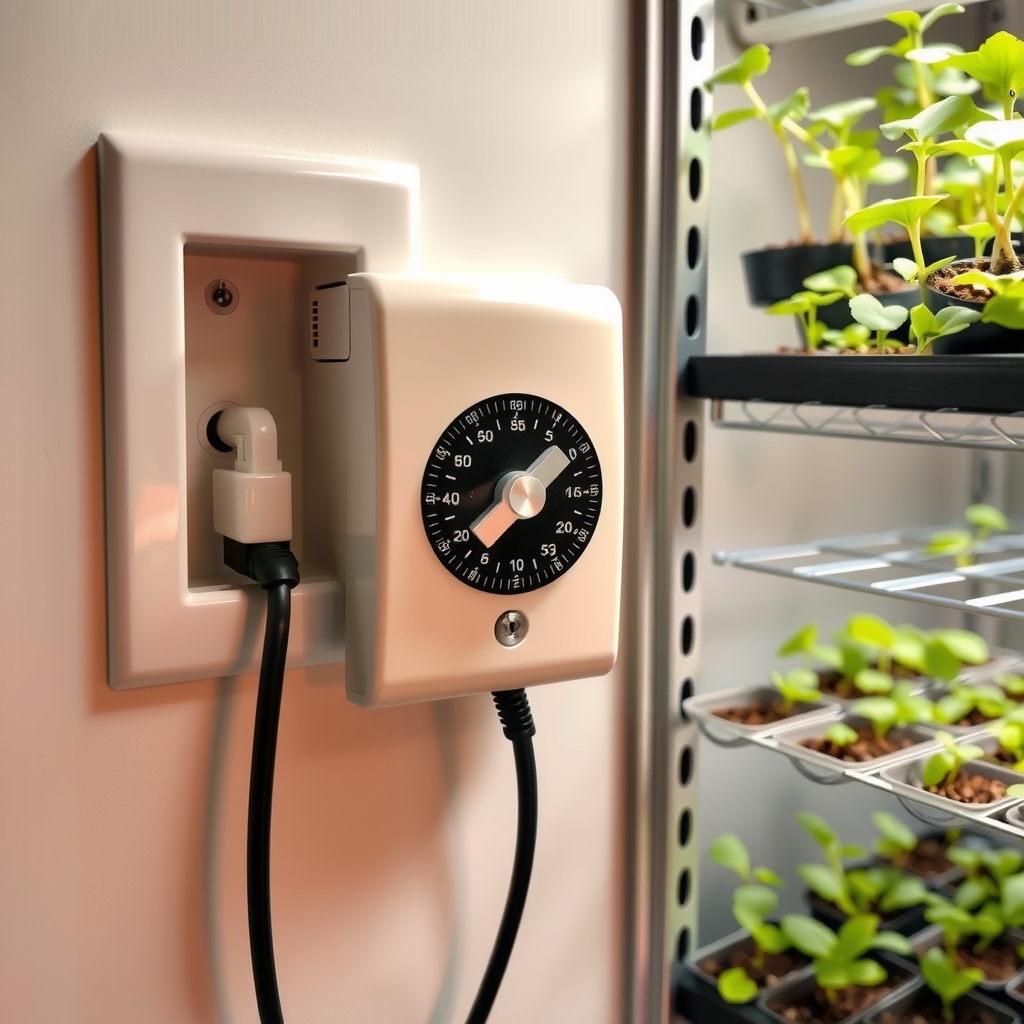
Illustrative image (AI-generated), not the exact product.
ISU suggests running seedling lights 14 to 16 hours a day on a timer. This simple push-pin timer handles it without Wi-Fi or apps, in 30-minute steps. Note that it has one polarized outlet for two-prong plugs; check that your light’s plug fits.
For the growing medium, any bagged soilless seed starting mix from a garden center works. ISU’s own example of a commercial soilless mix is Jiffy Mix.
Conclusion
So, when to start seeds in Iowa? Later than most people think. Work back from a frost-free date in the first or second week of May, add a week or two for hardening off, and use the weeks on each seed packet. That means peppers in early March, tomatoes in late March and squash in April. Give seedlings 70 to 75 degree warmth to sprout, bright light close above them and a timer, and you will plant short, sturdy transplants instead of leggy ones.
FAQs
When should I start tomato seeds indoors in Iowa?
About 5 to 6 weeks before you plan to plant outside, according to ISU. See when to plant tomatoes in Iowa for outdoor dates. For a mid-May planting in central Iowa that means sowing in late March. Southern Iowa can plant out in late April, so sow a week or two earlier.
When should I start pepper seeds in Iowa?
Peppers need 6 to 8 weeks indoors, so sow them in early to mid-March for planting out after the frost-free date in May.
Is January too early to start seeds in Iowa?
For most vegetables, yes. Only slow annuals such as geraniums, begonias and lisianthus, which need 12 or more weeks, should be sown in January or early February.
Do I need a heat mat to start seeds?
Not always. ISU says a warm spot in the house often works, but in cool rooms a heat mat helps keep the mix at the 70 to 75 degrees most seeds need.
Can I start seeds on a windowsill?
It rarely works well. Even the brightest window gives weak, one-sided light, so seedlings stretch and lean. A fluorescent or LED fixture close above the plants gives much stockier transplants.
What is the last frost date in Iowa?
In most of Iowa the frost-free date falls in the first or second week of May. Southern Iowa is about a week earlier and northern Iowa about a week later.
Sources and review scope
This guide was prepared on October 27, 2026 from the following sources. Homingwell did not perform hands-on testing. Sellers were checked on Amazon.com on the same date.
- Iowa State University Extension – Can I start my seeds indoors yet? (2026)
- Iowa State University Extension – When should I sow my flower and vegetable seeds indoors?
- Iowa State University Extension – When should I sow tomato seeds indoors?
- ISU Extension – Vegetable planting and harvesting times chart (PDF)
- Iowa State University Extension – Do I need a heat mat to germinate seeds indoors?
- Iowa State University Extension – What type of lights should I use to start seedlings indoors?
- Iowa State University Extension – How do I set up supplemental lights for my seedlings?
- Washington Evening Journal – ISU Yard and Garden: germinating and growing seedlings indoors
- Iowa State University Extension – Selecting, hardening and planting bedding plants
- Old Farmer’s Almanac – Frost dates for Creston, Iowa
- Old Farmer’s Almanac – Frost dates for Ames, Iowa
- USDA Plant Hardiness Zone Map
Explore more Lawn & Garden buying guides.