
Lawn & Garden • Lawn Care • Updated October 29, 2026
Best Broadcast Spreaders for Iowa Lawns: 6 Picks for Seed and Fertilizer
Explore related guides: Gardening in Iowa: all guides · Soil test kits · Fall garden cleanup · Snow shovels · Rain barrels · When to fertilize your lawn in Iowa · When to plant grass seed in Iowa.
Late October and early November is one of the best times to feed an Iowa lawn, and stripes of dark and pale grass next spring are usually a spreader problem, not a fertilizer problem. A good broadcast spreader puts seed and fertilizer down evenly, fast, and at the rate on the bag. This guide covers broadcast vs. drop spreaders, how to calibrate one, Iowa State University timing, and six spreaders sold by Amazon.com, from handheld to tow-behind.
The short answer
For most Iowa yards up to about a third of an acre, a walk-behind broadcast spreader with an edge guard is the best all-round choice. For half an acre and up, choose a large push model with air-filled tires or a tow-behind for a riding mower. Use a handheld for small lawns and patching. Whatever you buy, check the setting against the fertilizer bag, calibrate once a year, and never put down more than 1 pound of actual nitrogen per 1,000 square feet in one application, as Iowa State University Extension advises.
Broadcast spreader or drop spreader?
| Broadcast (rotary) | Drop | |
|---|---|---|
| How it works | A spinning plate throws product in a wide fan | Product drops straight down through holes |
| Coverage | Wide, fast, fewer passes | Narrow, exact strip |
| Mistakes | Forgiving; overlapping hides small gaps | Missed strips show as stripes |
| Best for | Medium and large lawns, seed, ice melt | Small lawns, tight beds, near water |
Virginia Cooperative Extension notes that drop spreaders suit limited spaces because they avoid throwing product onto sidewalks and driveways. A broadcast spreader with an edge guard or side shield gives you most of that control on borders while keeping the speed of a rotary.
What size broadcast spreader do you need?
- Under 5,000 sq ft (small city lot): a handheld crank or cordless spreader.
- 5,000 to 15,000 sq ft (typical suburban yard): a walk-behind spreader like the Scotts EdgeGuard DLX.
- 15,000 to 25,000 sq ft (up to half an acre): a 100 to 130 lb push spreader with pneumatic tires.
- Half an acre and more: a tow-behind spreader for a riding mower or lawn tractor.
How to calibrate a broadcast spreader
- Start with the bag setting. The setting printed on the fertilizer bag is a starting point, not a guarantee; UMass Extension recommends checking it by calibration.
- Measure a test area, such as 10 by 10 feet (100 sq ft), on the lawn.
- Weigh the right amount for that area. Example from Preen: a 25 lb bag that covers 5,000 sq ft needs 0.5 lb per 100 sq ft.
- Spread it at a steady walking pace and see whether the hopper runs out right at the end of the area.
- Adjust the dial up or down and repeat until it matches.
- Overlap passes so the edges of each fan meet, and shut the gate when you stop or turn.
Before you buy fertilizer, a soil test tells you whether you need phosphorus or potassium at all. See our soil test kit guide.
When to fertilize a lawn in Iowa
Iowa State University Extension says Kentucky bluegrass lawns can be fed in spring (April or May), mid-September, and late October or early November. A one-feeding plan uses the late October to early November timing; a moderate plan adds mid-September; a high-quality lawn gets all three. ISU recommends no summer fertilizing of cool-season grass in June, July and August.
To figure out how much product to use, divide the nitrogen rate you want by the nitrogen percentage on the bag. ISU’s example: for 0.75 lb of nitrogen with a 20-5-10 fertilizer, 0.75 divided by 0.20 equals 3.75 lb of product per 1,000 sq ft.
Best broadcast spreaders
All six were listed as sold by Amazon.com at the time of writing. Check the current listing before you buy.
Best overall: Scotts Turf Builder EdgeGuard DLX Broadcast Spreader
Product pick
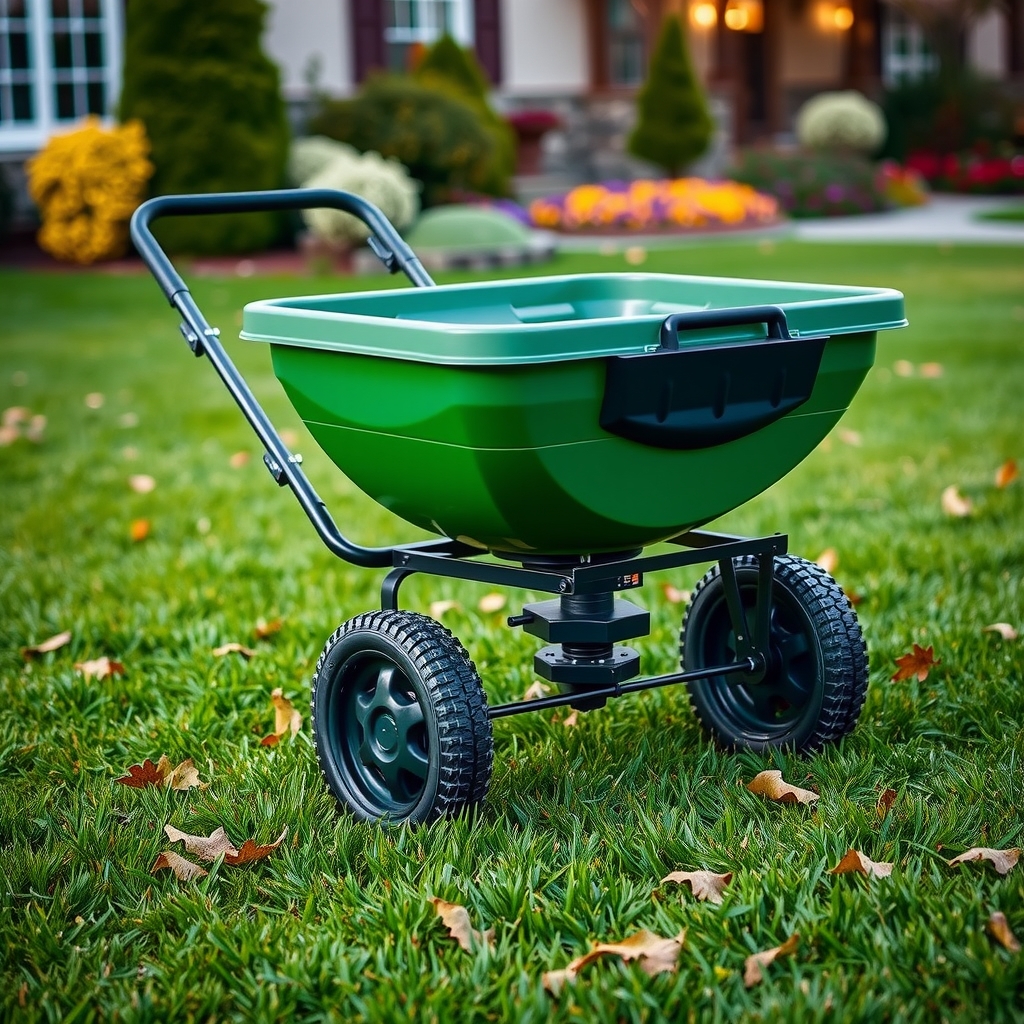
Scotts Turf Builder EdgeGuard DLX Broadcast Spreader
Illustrative image (AI-generated), not the exact product.
The default pick for a typical suburban yard. It comes pre-calibrated with no assembly, holds enough product for up to 15,000 sq ft, and the EdgeGuard side shield keeps fertilizer off beds, driveways and sidewalks. It handles seed, fertilizer and ice melt, so it earns its garage space in winter too.
Best for half-acre lawns: Agri-Fab 45-0614 130 lb Push Broadcast Spreader
Product pick
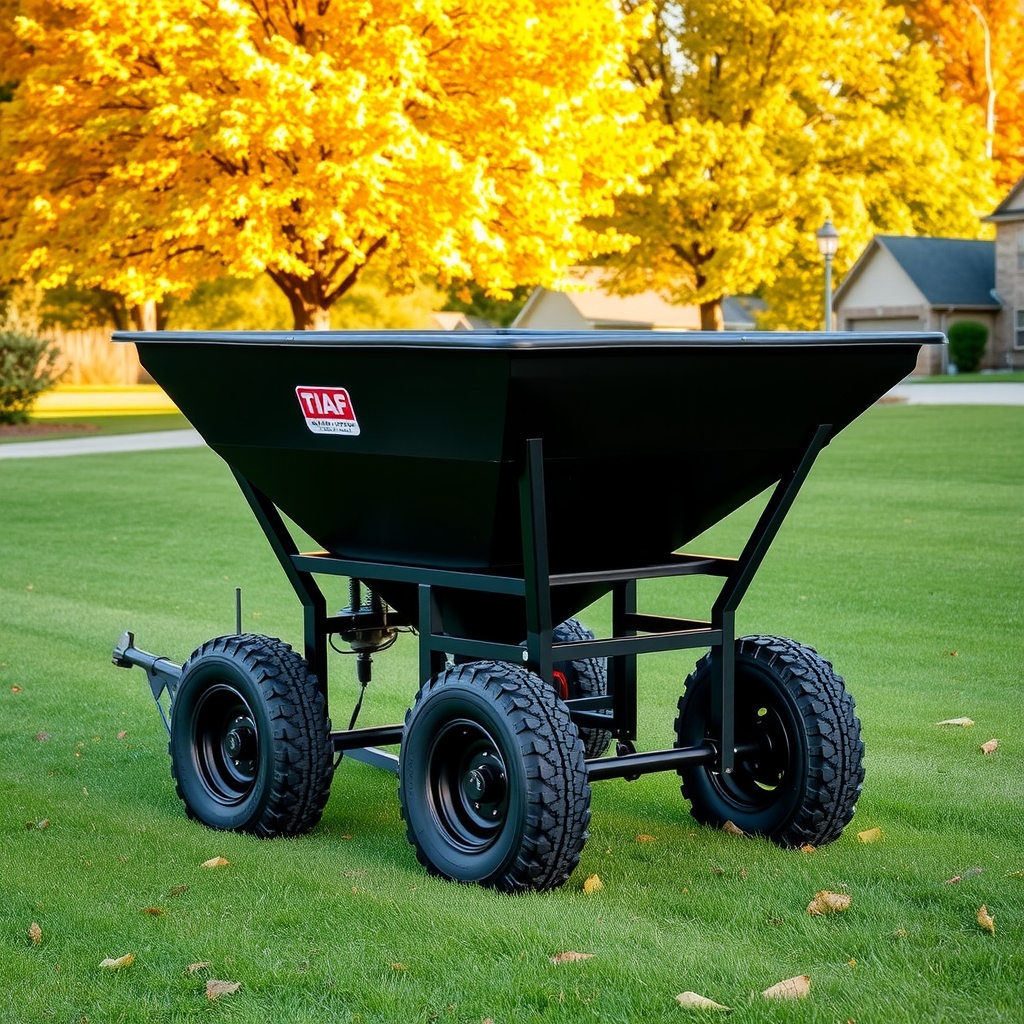
Agri-Fab 45-0614 130 lb Push Lawn and Garden Broadcast Spreader
Illustrative image (AI-generated), not the exact product.
A big, made-in-USA walk-behind with a 130 lb hopper that covers up to half an acre (25,000 sq ft) per fill and throws a 10 to 12 foot spread. The 13 by 4 inch pneumatic tires roll well over bumpy yards. A good match for acreage lots where you still want to walk, not ride.
Built to last: Chapin TurfPro 89303C 100 lb Push Spreader
Product pick
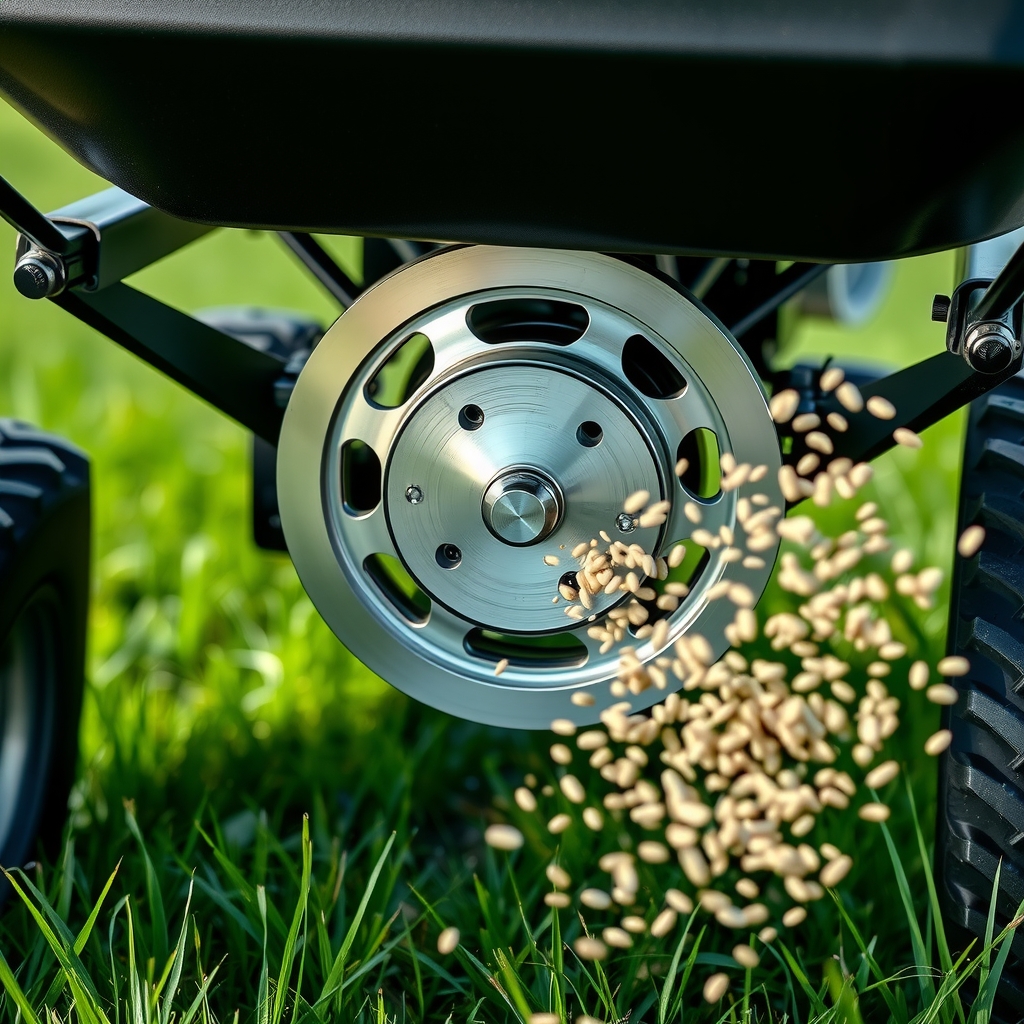
Chapin 89303C TurfPro 100 lb Push Lawn Spreader
Illustrative image (AI-generated), not the exact product.
A contractor-style spreader with a stainless steel axle, gears and gate link arm, 12-inch wide-tread pneumatic tires and a large T-handle with rubber grips. A slide lever sets the gate opening for each product. Chapin backs it with a 5-year limited warranty, which matters because fertilizer is hard on cheap metal parts.
Best tow-behind: Brinly BS26BH-A Tow Behind Broadcast Spreader, 125 lb
Product pick
Brinly BS26BH-A Tow Behind Broadcast Spreader with Universal Hitch, 125 lb

Illustrative image (AI-generated), not the exact product.
For rural and acreage lawns, a tow-behind does the job from the mower seat. This Brinly holds 125 lb in a rust- and dent-proof poly hopper, uses a locking dial for rate settings, and has spread pattern control to keep product where you want it. Brinly provides pre-calibrated settings for many products, and assembly takes about 30 minutes.
Best handheld: Chapin 8706G 3 lb Hand Crank Spreader
Product pick
Chapin 8706G 3 lb Hand Crank Lawn Spreader

Illustrative image (AI-generated), not the exact product.
The cheapest way to overseed bare spots in fall or feed a tiny lawn. A thumb control sets the gate while you crank with the other hand, and the hopper doubles as a scoop for one-handed filling. Lightweight poly construction resists corrosion, with a 2-year limited warranty.
Cordless option: Craftsman V20 Four Season Handheld Spreader
Product pick
Craftsman V20 Four Season Handheld Seed Spreader, 1.2 Gal
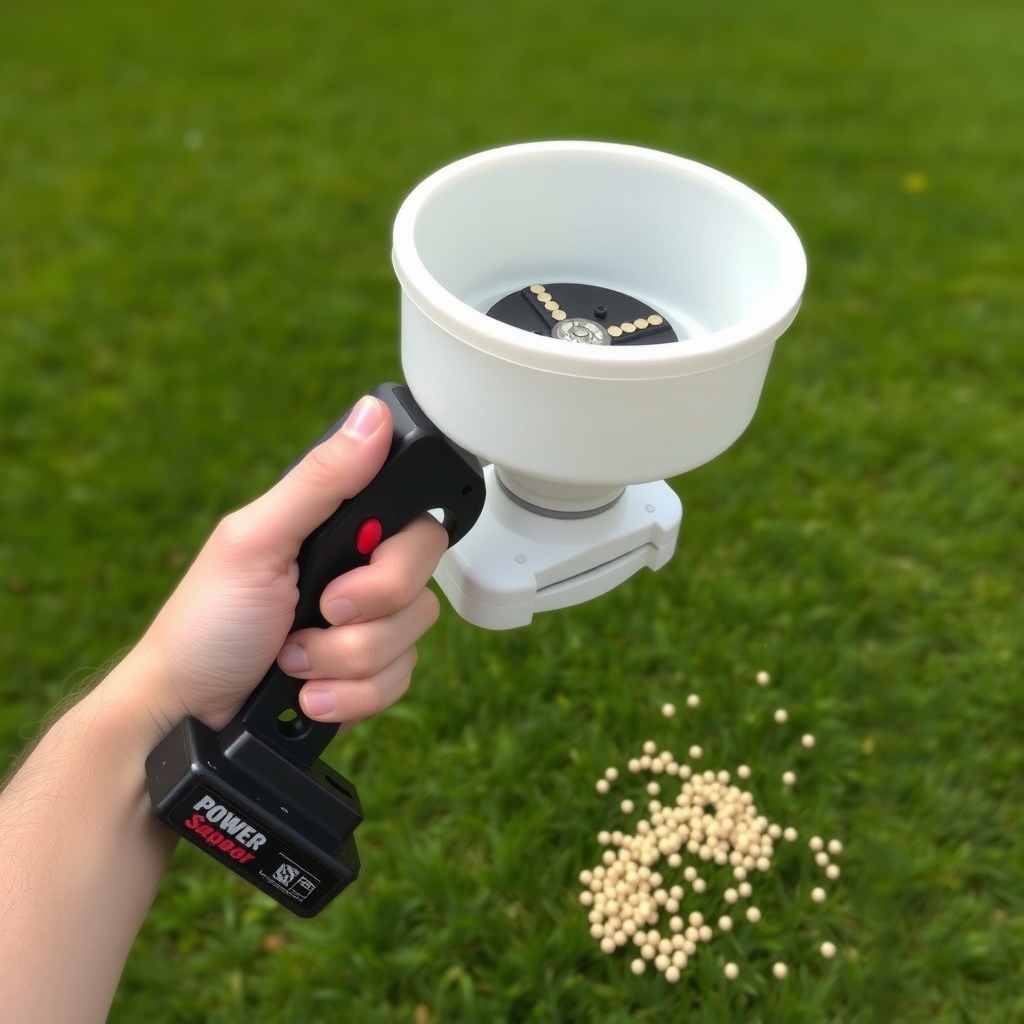
Illustrative image (AI-generated), not the exact product.
No cranking: a motor spins the plate, with 6 speed settings and an adjustable swath. The 1.2 gallon hopper suits small lawns, garden beds and sidewalks in winter. It runs on the Craftsman V20 battery system, so check the listing to see whether a battery and charger are included.
Conclusion
Pick the spreader that matches your yard: handheld for small lots and patching, a walk-behind like the Scotts EdgeGuard DLX for most suburban lawns, a 100 to 130 lb push model for half an acre, and a tow-behind for acreage. Calibrate it, overlap your passes, and follow Iowa State timing, with the most important feeding in late October or early November.
FAQs
Is a broadcast spreader better than a drop spreader?
For most lawns, yes. A broadcast spreader covers ground faster and is more forgiving of small gaps. A drop spreader is better for small, tight areas where you must keep product off pavement, beds or water.
When should I fertilize my lawn in Iowa?
Iowa State University Extension lists spring (April or May), mid-September, and late October or early November. If you only fertilize once, choose late October to early November.
How much fertilizer should I put down at once?
No more than 1 pound of actual nitrogen per 1,000 square feet per application. Divide the nitrogen rate by the nitrogen percentage on the bag to get pounds of product.
Do I need to calibrate a new spreader?
Bag settings are a starting point. A quick test on a measured 100 sq ft area tells you whether the spreader actually puts down the right amount, and it is worth repeating every year or two.
Can I use a broadcast spreader for grass seed and ice melt?
Yes. Most broadcast spreaders handle seed, fertilizer and ice melt. Rinse and dry the spreader after salt or fertilizer to slow corrosion.
What size spreader do I need for a half-acre lawn?
Half an acre is about 21,800 square feet. A 100 to 130 lb push spreader or a tow-behind will cover it with one or two fills.
Sources and review scope
This guide was prepared on October 29, 2026 from the following sources and from the product listings on Amazon.com. Homingwell did not perform hands-on testing. Sellers were checked on Amazon.com on the same date.
- Iowa State University Extension – How often should I fertilize my lawn?
- Iowa State University Extension – How much fertilizer should I apply?
- Iowa State University Extension – Should I fertilize the lawn in summer?
- Penn State Extension – Calibrating your fertilizer spreader
- UMass Extension – Rotary spreader calibration procedures
- Virginia Cooperative Extension – Calibrating your lawn spreader
Explore more Lawn & Garden buying guides.