
Lawn & Garden • Iowa guide • Updated October 27, 2026
How to Winterize Raised Garden Beds in Iowa: A Step-by-Step Guide
Explore related guides: Gardening in Iowa: all guides · Pet-safe ice melt · When to plant garlic in Iowa · Solar lights for cold climates · When to plant tomatoes in Iowa · Best raised beds for Iowa · When to start seeds in Iowa · Garden tool storage ideas · Iowa fall cleanup checklist · Raised garden bed size · Raised garden bed review · Best garden carts · Gorilla dump cart review.
Raised beds warm up fast in spring, but the same thing works against them in winter: the soil sits above ground, so it gets colder than a regular garden bed. To winterize raised garden beds in Iowa, you clear the spent plants, feed the soil, and then put a thick blanket of mulch or a row cover on top at the right time. Here is how to do each step, with Iowa timing.

The short answer
After the first frost, pull out spent vegetable plants and add compost to the bed. Plant garlic in October if you want a crop next summer. Once plants have hardened off and the weather turns consistently cold, usually in November in Iowa, cover planted beds with 4 to 8 inches of weed-free straw. For beds with crops you still want to protect, use a breathable row cover on hoops instead of plastic sheeting.
Why raised beds need extra winter protection
Iowa State University Extension notes that temperatures in raised beds can be several degrees colder in winter than in ground-level plantings. The soil in a raised bed is exposed on the sides as well as the top. That is why ISU recommends 6 to 8 inches of straw for strawberries growing in raised beds, compared with 3 to 5 inches for strawberries planted at ground level.
The other winter risk is freeze-thaw. Repeated freezing and thawing of the soil can push shallow-rooted plants up out of the ground, a problem called frost heaving. Mulch slows those swings by keeping the soil temperature steadier.
When to winterize raised beds in Iowa
Iowa’s first fall frost usually arrives between September 30 and October 15, according to ISU Extension. Our Iowa fall cleanup checklist has average frost dates for Ames and Creston.
| Task | When in Iowa | Notes |
|---|---|---|
| Sow oats or peas as a cover crop | Late August to early September | Both die over winter and rake off easily in spring |
| Sow winter rye as a cover crop | Later in fall, after harvest | Hardier; grows again in spring |
| Clear spent vegetable plants | After the first frost | Many diseases overwinter on old plant debris |
| Add compost or well-rotted manure | Fall | ISU calls fall the preferred time to add organic matter |
| Plant garlic | October to early November | Use garden-center cloves, not grocery-store garlic |
| Mulch garlic | November | 4 to 6 inches of weed-free straw |
| Mulch strawberries | Early Nov (north), mid-Nov (central), late Nov (south) | 6 to 8 inches in raised beds |
| Mulch perennials that heave | After the ground freezes, usually by late November | About 4 inches over the crown |
How to winterize raised garden beds, step by step
- Clear out spent crops. After frost, remove tomato, squash and bean plants, fallen fruit and diseased leaves. Bag anything that was sick rather than composting it. See the full fall cleanup checklist for what to leave.
- Test the soil. ISU suggests sending a soil sample to a lab in fall or early spring, so you know what to add before planting.
- Add organic matter. Spread compost or well-rotted manure over the bed. Raised beds settle every year, and fall additions have time to partly break down before spring.
- Plant something, or cover the soil. Plant garlic in October, or sow a cover crop if it is still early enough. Otherwise, plan to mulch the bare soil.
- Mulch at the right time. Wait until plants have hardened off to the cold. Mulching too early can keep plants from going dormant.
- Cover crops you want to protect. Use a floating row cover on hoops for greens or other crops you are still harvesting.
- Check the bed itself. Tighten loose corners, clear drainage gaps and store any irrigation hoses so they do not crack.
Best mulch for raised beds in winter
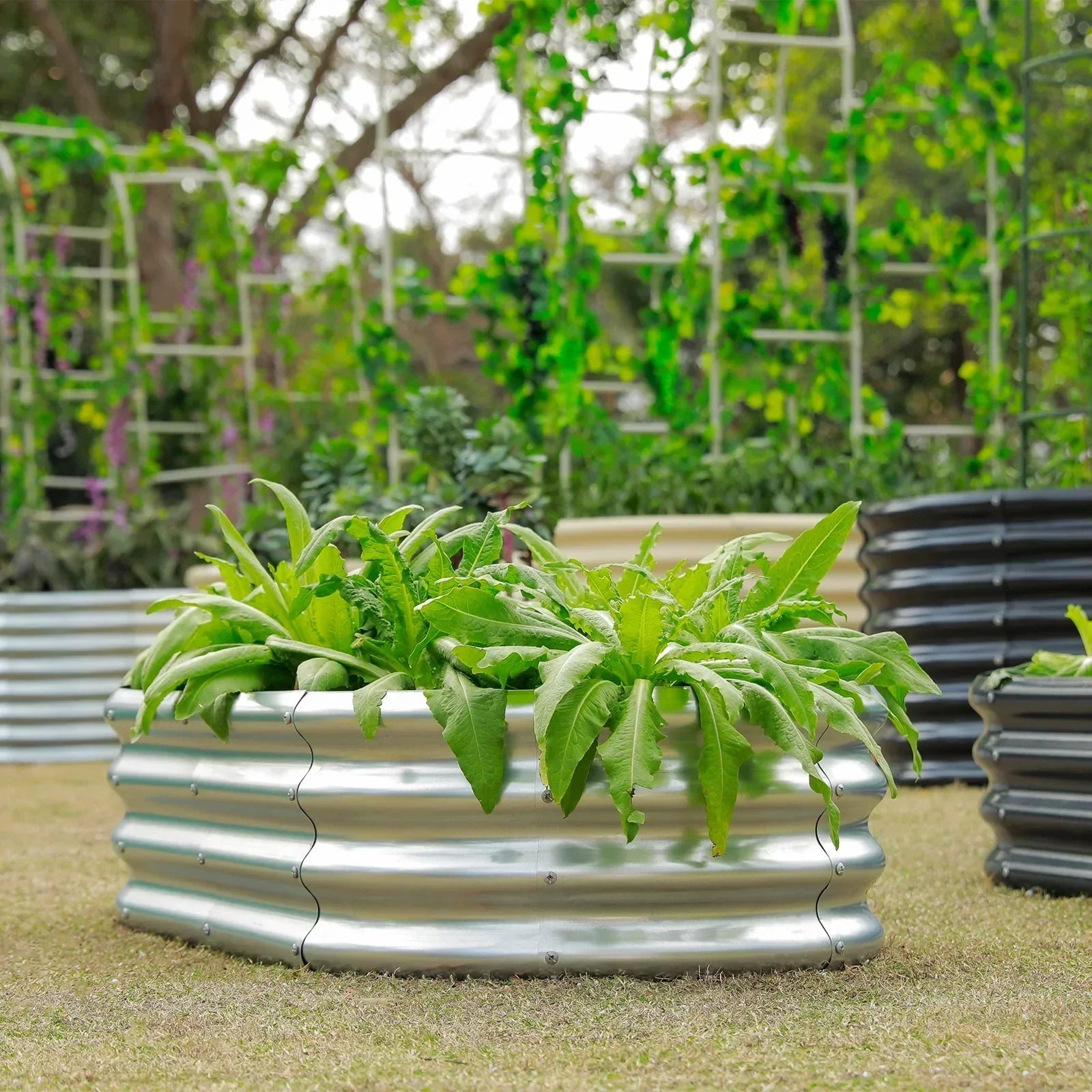
- Straw: ISU names clean, weed-free oat, wheat or soybean straw as an excellent winter mulch. It stays loose and insulates well.
- Chopped corn stalks: another option ISU lists, though harder to find in town.
- Leaves: fine as organic matter worked into empty beds, but ISU warns that whole leaves can mat down over plants like strawberries and trap ice. Shred them first, or use straw over crops.
- Keep it in place: in windy, exposed yards, ISU suggests laying wire or plastic fencing over the straw and weighing it down with bricks.
In spring, rake the straw off planted crops into the paths as growth starts, and work the rest into the soil.
Row covers and hoops for raised beds
Floating row covers are spun polypropylene or polyester fabrics that let light, air and water through. The University of Maryland Extension groups them by weight:
| Weight | Light passing through | Frost protection | Best use |
|---|---|---|---|
| Light, about 0.45 oz/sq yd | 90 to 95% | About 2°F | Insect barrier |
| Medium, 0.5 to 1.0 oz/sq yd | 70 to 85% | 4 to 6°F | Spring and fall crops |
| Heavy, 1.5 to 2.2 oz/sq yd | 30 to 50% | Up to 8°F | Overwintering crops |
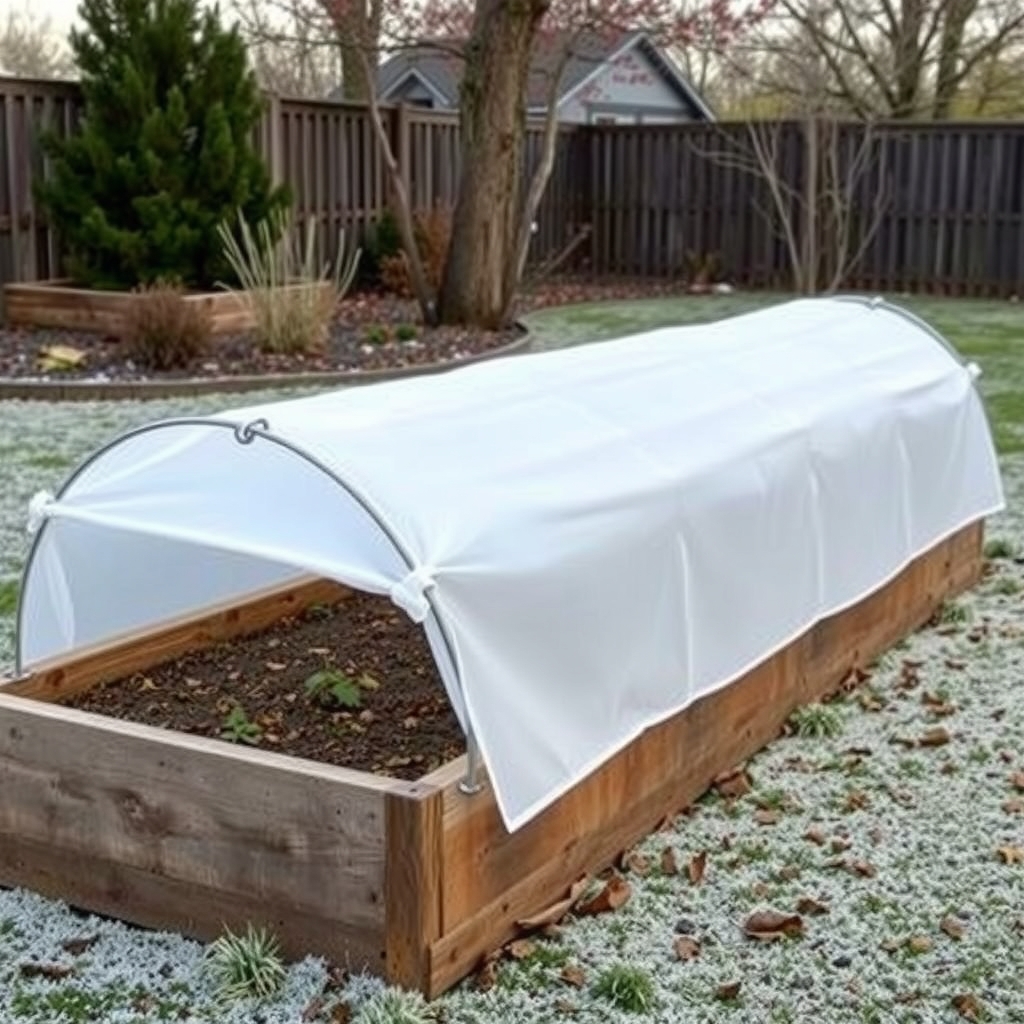
For an Iowa raised bed, a heavy cover held up on hoops works better than fabric resting on the plants, especially once snow arrives. Avoid sealing a bed under clear plastic sheeting: an ISU Extension horticulturist advised against it for overwintering garlic, because it causes wide temperature swings that can bring plants out of dormancy too early.
Tools that make winterizing easier
You may already have what you need. If not, these are the items that fit the steps above.
For frost protection: Valibe 0.9 oz Floating Row Cover
Product pick
Valibe 0.9 oz floating row cover, 10 x 30 ft
Illustrative image (AI-generated), not the exact product.
A 0.9 oz/sq yd non-woven polypropylene cover in a 10 x 30 ft piece that you can cut to fit several raised beds. It lets light, air and water through, and the seller suggests laying it loosely over plants or supporting it on hoops. At 0.9 oz it falls in the medium class in the table above (about 4 to 6°F of frost protection), which suits fall greens and frost nights. For crops you plan to keep through the coldest part of an Iowa winter, add straw mulch underneath or choose a heavier 1.5 oz cover.
Check the Valibe row cover on Amazon
For holding the cover up: MAXPACE Fiberglass Hoops
Product pick
MAXPACE fiberglass hoop kit (Type L, for beds 2.8 ft wide and up)

Illustrative image (AI-generated), not the exact product.
A kit of 25 fiberglass rods, 20 connectors and 16 clips that you join into arches over the bed. This Type L version is sold for beds 2.8 ft wide and up, so check the listing for the right size for narrower beds.
Check the MAXPACE hoops on Amazon
For hauling straw and compost: Gorilla Carts Dump Cart with No-Flat Tires
Product pick
Gorilla Carts poly dump cart, 4 cu ft, with no-flat tires

Illustrative image (AI-generated), not the exact product.
A 4 cu ft poly dump cart rated for 600 lb, with no-flat tires, so there is nothing to pump up before a cold-weather job. It saves trips when you move bales of straw, compost or bags of leaves to several beds. For more on Gorilla dump carts, see our Gorilla dump cart review and our best garden cart guide.
Check the Gorilla dump cart on Amazon
Conclusion
Raised beds run colder than the ground in an Iowa winter, so they need more cover, not less. Clear the old crops after frost, add compost while the soil is workable, plant garlic in October, and mulch thickly with straw in November. Use a row cover on hoops for any crop you still want to harvest, and your beds will be ready to plant as soon as spring arrives.
FAQs
Should I cover my raised garden bed in winter?
Yes, if anything is planted in it. Straw mulch protects garlic, strawberries and perennials, and covering bare soil with mulch or a cover crop helps protect it over winter.
How much mulch does a raised bed need in Iowa?
ISU recommends 6 to 8 inches of straw for strawberries in raised beds, and 4 to 6 inches of straw over fall-planted garlic. The layer settles as winter goes on.
When should I mulch raised beds in Iowa?
Wait until plants have hardened to the cold. For strawberries that is early November in northern Iowa, mid-November in central Iowa and late November in southern Iowa. Perennials prone to heaving get mulch after the ground freezes.
Can I use leaves instead of straw?
Shredded leaves are useful organic matter for empty beds. Over plants, ISU prefers straw, because whole leaves can mat down and trap ice.
Should I put plastic over my raised beds for winter?
It is best not to seal plants under clear plastic. It heats up on sunny days and swings back down at night, which can break dormancy too early. A breathable row cover is safer.
Sources and review scope
This guide was prepared on October 27, 2026 from the following sources. Homingwell did not perform field testing.
- Iowa State University Extension – How to Overwinter Strawberries
- Iowa State University Extension – When and where should I plant garlic?
- Iowa State University Extension – How should I prepare my perennial beds for winter?
- Iowa State University Extension – Fall planting vegetables
- Iowa State University Extension – Garden Soil Management (PM 820)
- Washington Evening Journal – ISU Extension Yard and Garden: preparing garden soil (soil testing)
- Iowa Public Radio – Cover crops with ISU Extension horticulturist Dan Fillius
- Ask Extension (Iowa State) – Planting and mulching garlic in a raised bed
- University of Maryland Extension – Row covers
Explore more Lawn & Garden buying guides.