
Lawn & Garden • Winter • Updated October 28, 2026
Best Winter Bird Feeders for the Midwest: 6 Top Picks
Explore related guides: Gardening in Iowa: all guides · Best snow shovels · Pet-safe ice melt · Fall garden cleanup.
Cardinals, chickadees, juncos and woodpeckers stay in Iowa and the Midwest all winter, and a well-stocked feeder brings them right to your window. The right winter bird feeder keeps seed dry, keeps squirrels out and is easy to clean. This guide covers feeder types, the best winter foods, where to put a feeder, how to keep it clean, and six products sold by Amazon.com.

The short answer
For most Midwest yards, start with a squirrel-proof tube or hopper feeder filled with black oil sunflower seed, plus a suet feeder for woodpeckers and nuthatches. Add a tray for ground-feeding juncos and cardinals, and a birdbath heater so birds have open water. Put feeders up in October or early November, out of the north wind and near shrubs for cover, and clean them every two weeks.
Choosing a winter bird feeder: the main types
| Feeder | Best for | Good to know |
|---|---|---|
| Tube | Chickadees, finches, nuthatches, titmice | Keeps seed fairly dry; metal ports resist squirrels |
| Hopper (house) | Cardinals, jays, sparrows and most feeder birds | Holds a lot of seed; roof protects it from snow |
| Platform or tray | Juncos, doves, sparrows, cardinals | Easy to fill; needs drainage and frequent cleaning |
| Suet cage | Woodpeckers, nuthatches, chickadees | High-energy food, best in cold weather |
| Nyjer (thistle) tube | Goldfinches, house finches | Needs small ports to stop spills |
Iowa DNR recommends offering a variety of feeder types in different spots around your yard to attract the widest range of birds. A good feeder is sturdy, keeps seed dry, and is easy to take apart and clean.
Best winter bird foods
- Black oil sunflower seed. If you offer only one food, Iowa DNR says it should be this one. It is high in fat and protein, and cardinals, chickadees, nuthatches, jays, finches and woodpeckers all eat it.
- Suet. Pure fat is a high-energy winter food for downy, hairy and red-bellied woodpeckers, nuthatches and chickadees.
- White proso millet. A favorite of juncos and native sparrows. Scatter it on a tray or packed-down snow.
- Nyjer seed. Draws goldfinches and house finches to a tube feeder with small ports.
- A simple homemade mix. Iowa State University Extension suggests 50 percent black oil sunflower, 35 percent white proso millet and 15 percent cracked corn.
- Skip the fillers. Milo, wheat, oats and red millet bulk up cheap mixes but most birds leave them on the ground.
Where to put a bird feeder in winter
- Start early. October and early November are the best time, while winter birds are setting up their feeding routes.
- Block the wind. Iowa DNR suggests a sheltered spot out of the north wind with sunny exposure.
- Give birds cover. Trees and shrubs nearby, especially evergreens, give birds a place to wait and escape. A discarded Christmas tree or brush pile works too.
- Stop squirrels. Put a baffle above hanging feeders and below pole-mounted ones, and keep feeders away from branches and roofs squirrels can jump from.
- Keep it easy to refill. In a cold snap birds can empty a feeder fast, so place it where you can reach it after a snowstorm.
- Add water. Open water is scarce in a deep freeze, so a heated birdbath helps as much as food.
How to keep feeders clean
Dirty feeders can spread diseases like salmonella between birds. Extension specialists recommend cleaning seed feeders at least every two weeks, and more often when they are busy. Cornell Lab of Ornithology’s Project FeederWatch reports that a soak in diluted bleach removes more salmonella than soap and water alone.
- Empty the feeder and scrub off all visible debris.
- Soak it for 10 minutes in a 10 percent bleach solution (1 part bleach to 9 parts water).
- Rinse thoroughly and let it dry completely before refilling.
- Rake up spilled seed and hulls under the feeder, and keep that debris out of your garden beds.
If you see sick birds, take feeders down for a week so the birds spread out.
Best bird feeders and accessories for Midwest winters
All six were listed as sold by Amazon.com at the time of writing. Check the current listing before you buy.
Best overall: Squirrel Buster Plus Squirrel-Proof Bird Feeder
Product pick
Squirrel Buster Plus Squirrel-Proof Bird Feeder
Illustrative image (AI-generated), not the exact product.
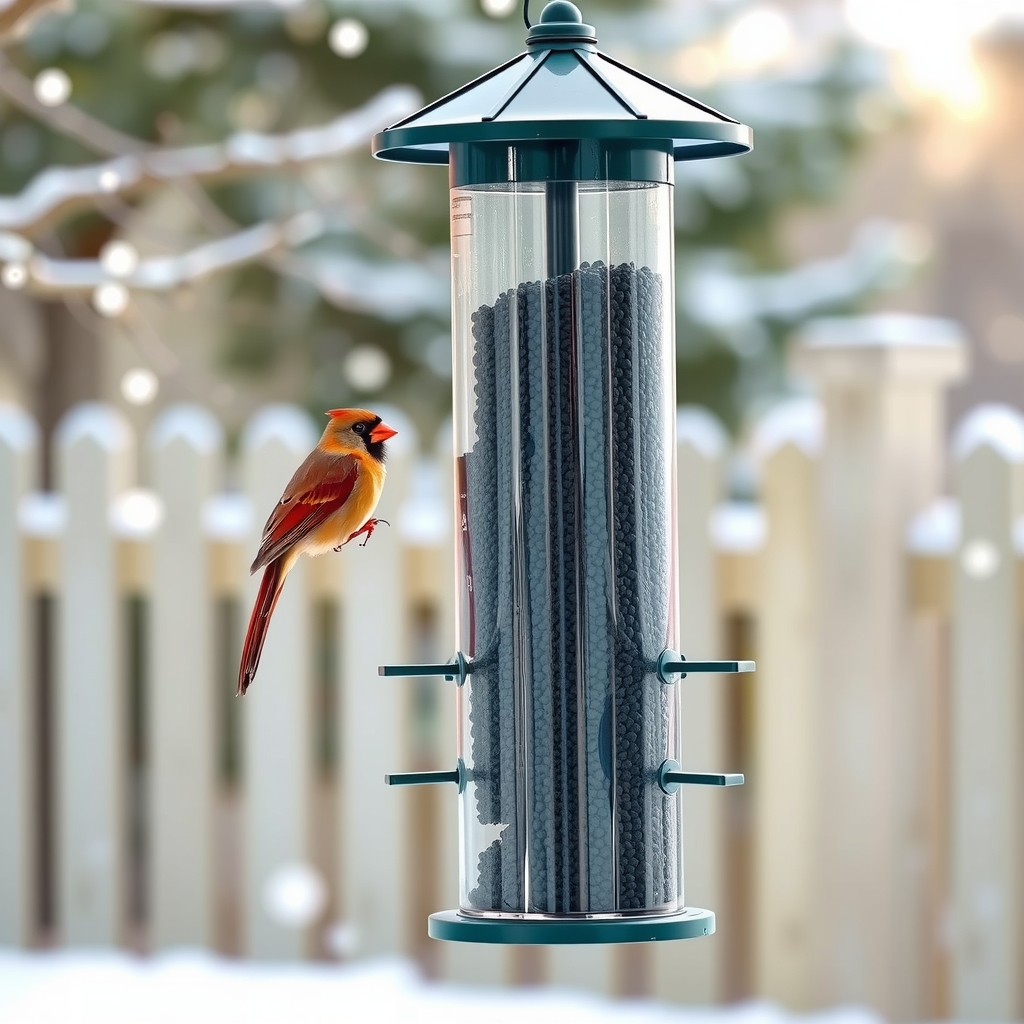
When a squirrel climbs on, its weight pulls a shroud down over the feeding ports, and the spring tension is adjustable so heavier birds like cardinals can still feed. It holds about 5 pounds of seed, has six ports and a cardinal ring, and comes apart by hand for cleaning. It costs more than a basic tube, but the maker’s point that it pays for itself in saved seed rings true in a yard full of squirrels.
Spinning squirrel deterrent: Droll Yankees Squirrel Proof Bird Feeder
Product pick
Droll Yankees Squirrel Proof Bird Feeder, 5 lb
Illustrative image (AI-generated), not the exact product.
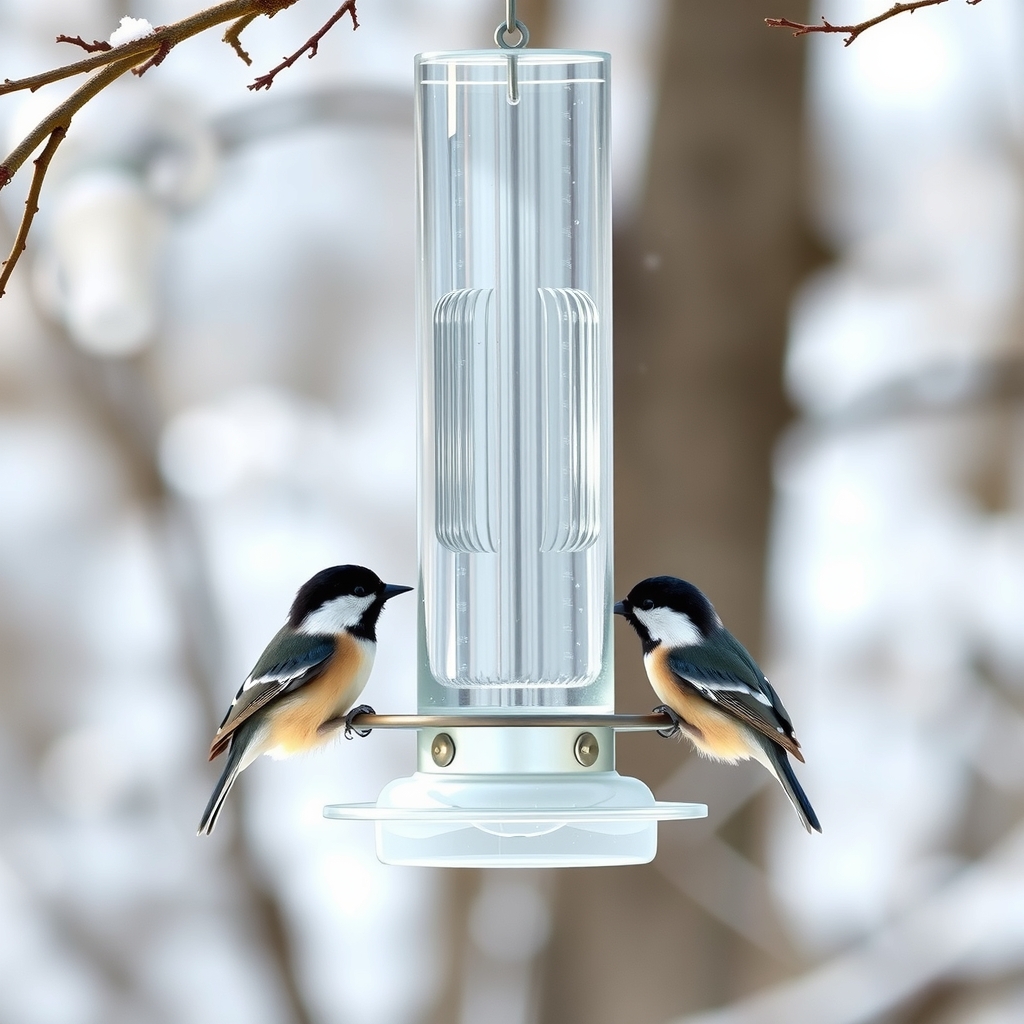
This 5-pound polycarbonate tube uses a weight-sensitive perch ring with a small motor that gently spins squirrels off, while birds feed normally. The rechargeable battery is sealed inside the feeder. It suits yards where squirrels have beaten ordinary baffles, but remember it needs recharging now and then.
For ground feeders: Wild Wings Cedar Hanging Tray Feeder
Product pick
Wild Wings Cedar Hanging Tray Bird Feeder
Illustrative image (AI-generated), not the exact product.
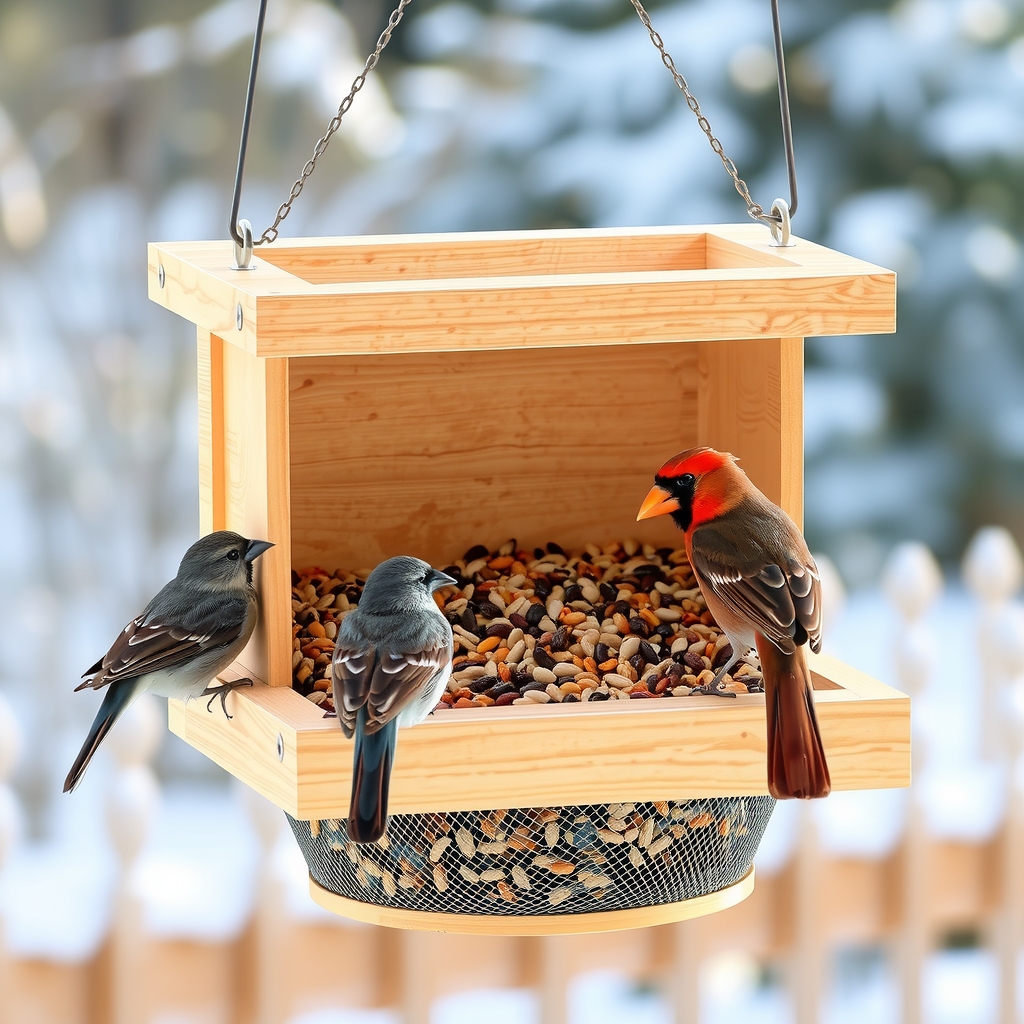
Juncos, cardinals, doves and jays like an open tray. This cedar platform has a removable mesh seed tray that drains rain and snowmelt and lifts out for cleaning, which matters because open trays get dirty faster. It holds any seed, plus in-shell peanuts and dried fruit.
For woodpeckers: More Birds Double Suet Cake Feeder
Product pick
More Birds Double Suet Cake Feeder with Weather Guard
Illustrative image (AI-generated), not the exact product.
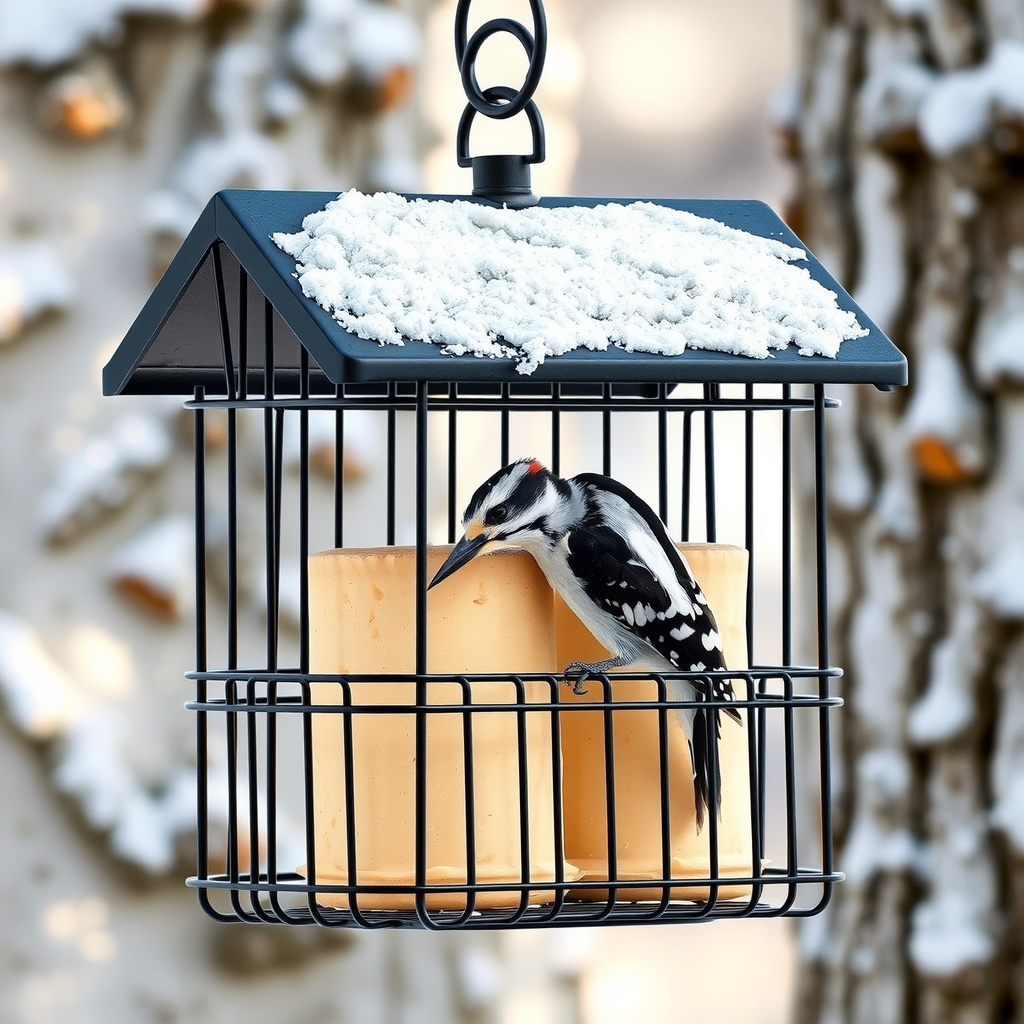
Suet is one of the best winter foods for woodpeckers and nuthatches, and this powder-coated steel cage holds two cakes at once under a roof that keeps off snow. The grid spacing suits clinging birds, and the locking closure opens quickly with gloves on.
For open water: Farm Innovators Birdbath Heater De-Icer, 44 Watt
Product pick
Farm Innovators Econo Birdbath Heater De-Icer, 44 Watt

Illustrative image (AI-generated), not the exact product.
Drop this flat 10 by 10 inch heater into a shallow birdbath to keep water from freezing. It has no thermostat, so it runs whenever it is plugged in; unplug it on mild days to save power. You will need an outdoor-rated extension cord, sold separately.
To stop squirrels: Perky-Pet 16-Inch Transparent Squirrel Baffler
Product pick
Perky-Pet 16-Inch Transparent Squirrel Baffler
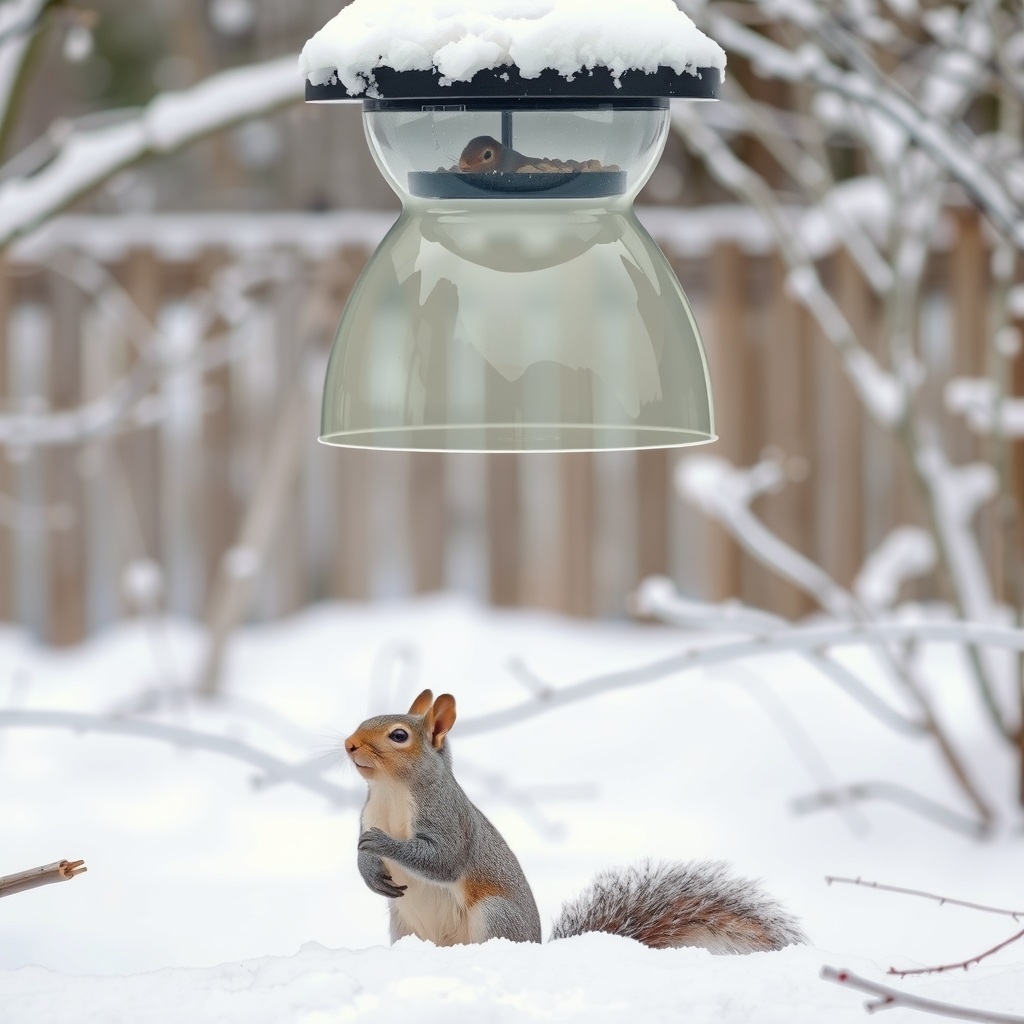
Illustrative image (AI-generated), not the exact product.
A clear 16-inch dome that hangs above a feeder or mounts on a pole below it, so squirrels cannot reach the seed. It also sheds snow off the feeder. It is the cheapest way to squirrel-proof a feeder you already own.
Conclusion
The best winter bird feeder setup is simple: a squirrel-proof seed feeder with black oil sunflower seed, a suet cage, a tray for ground feeders and open water. Put them up by early November in a sheltered spot near cover, keep them full through cold snaps, and clean them every two weeks to keep your winter birds healthy.
FAQs
When should I start feeding birds in Iowa?
October or early November is ideal. That is when birds that spend the winter in Iowa set up their feeding routes, so feeders that are up early are more likely to become part of them.
What is the best bird seed for winter?
If you offer only one food, make it black oil sunflower seed. It is high in fat and protein and attracts the widest variety of birds. Add suet for woodpeckers and nuthatches, and white proso millet for juncos and sparrows.
How do I keep squirrels off my bird feeder?
Use a weight-activated squirrel-proof feeder, or put a baffle above a hanging feeder or below a pole-mounted one. Place the feeder well away from branches, fences and roofs that squirrels can jump from.
How often should I clean a bird feeder?
Extension and Cornell Lab advice is to clean seed feeders at least every two weeks, more often in heavy use. Scrub off debris, soak in a 10 percent bleach solution, rinse well and let it dry before refilling.
Do birds need water in winter?
Yes. Water can be harder for birds to find than food in a deep freeze. A heated birdbath or a birdbath heater keeps a shallow dish of water open.
Where should I put a bird feeder in winter?
Put it out of the north wind, in a sunny spot near trees or shrubs for cover, and close enough to the house to watch and refill easily. Keep it away from places where cats can hide.
Sources and review scope
This guide was prepared on October 28, 2026 from the following sources and from the product listings on Amazon.com. Homingwell did not perform hands-on testing. Sellers were checked on Amazon.com on the same date.
- Iowa DNR – Winter bird feeding basics
- Iowa Ornithologists’ Union – Why feed the birds?
- ISU Extension Master Gardeners (via The Gazette) – Feeding winter birds
- Cornell Lab Project FeederWatch – Feeder types
- Cornell Lab Project FeederWatch – Best way to clean bird feeders
- Clemson Extension – Washing bird feeders
Explore more Lawn & Garden buying guides.