
Outdoor lighting • Iowa guide • Updated October 27, 2026
Solar Pathway Lights for Cold Climates: What Works in an Iowa Winter
Explore related guides: Gardening in Iowa: all guides · Pet-safe ice melt · Best solar pathway lights · Fall garden cleanup · Garden tool storage · Winterize raised beds · Gifts for gardeners.
Most solar pathway lights look great in July and fade by December. In a cold climate like Iowa, the problem is not the light itself but the short days, the low sun, snow on the panel and cold batteries. This guide explains what actually happens to solar lights in winter, what to look for when you buy, how to place them, and four sets sold by Amazon.com that fit the job.
The short answer
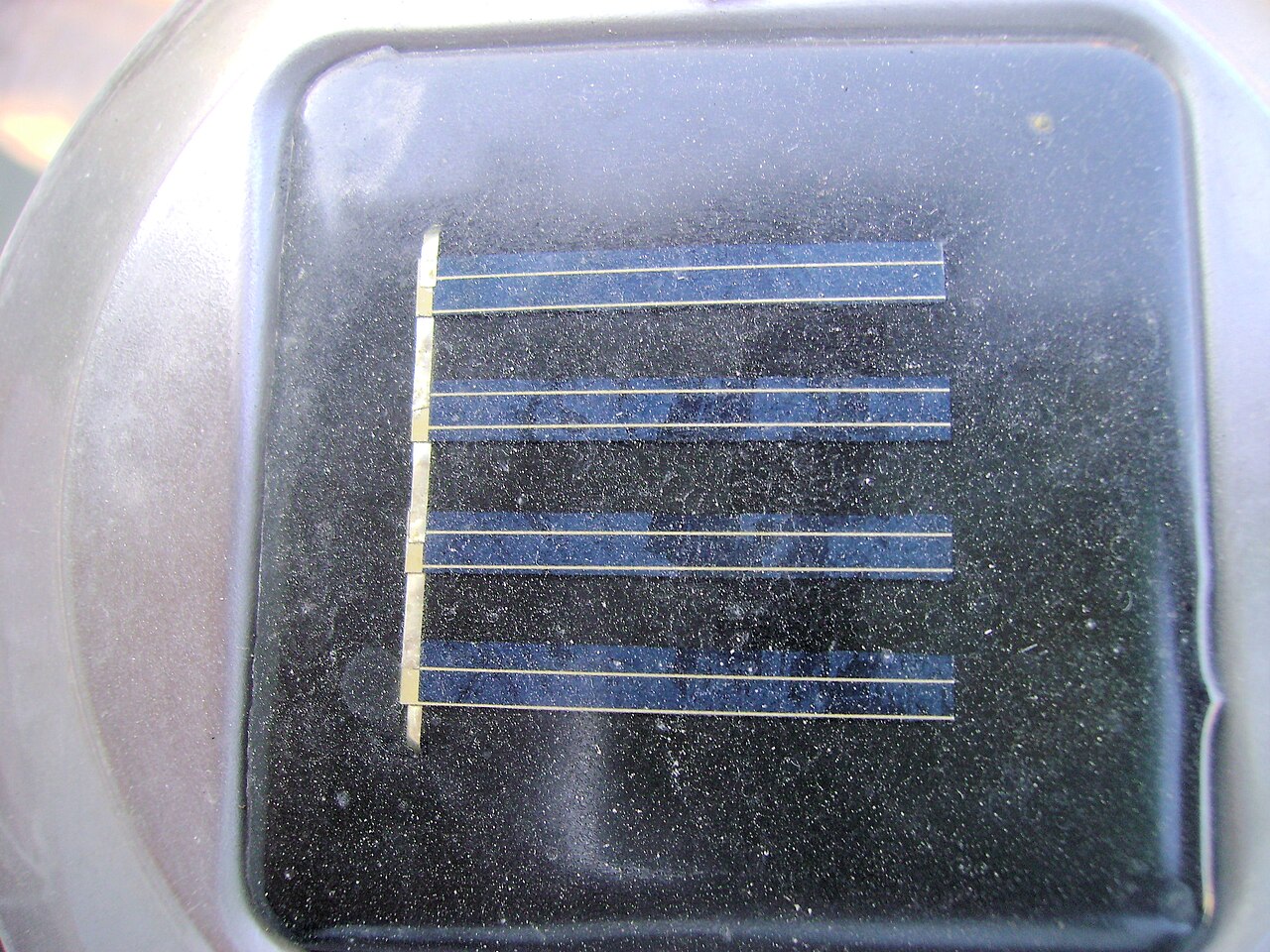
Yes, solar pathway lights work in an Iowa winter, but they give less light for fewer hours. Des Moines gets about 15 hours of daylight in late June and only about 9 hours in late December, and the sun sits much lower in the sky. Add snow on the panels and batteries that charge poorly near freezing, and a light that ran all night in summer may last only a few hours in January. Choose lights with a replaceable battery, a good weather rating and a panel you can aim at the sun, and put them where they get full winter sun.
Why solar lights fade in winter
- Short days. In Des Moines the shortest day, December 21, has about 9 hours 10 minutes of daylight, compared with about 15 hours 12 minutes on June 21. The earliest sunset is around 4:44 p.m. in early December, so the lights have to run longer on less charge.
- Low sun. The winter sun stays low in the southern sky, so houses, fences and evergreens shade panels that were sunny in summer.
- Snow and frost on the panel. Even a light dusting cuts charging, and a covered panel barely charges at all.
- Cold batteries. Batteries charge slowly and hold less usable energy when they are cold, which shortens run time.
Batteries and cold: what to know
The battery is where cold climates hit solar lights hardest. Battery University, an educational resource on rechargeable batteries, gives these charging limits:
| Battery type | Normal charge range | Below freezing |
|---|---|---|
| NiCd | 32 to 113°F | Hardier than NiMH; can take a slow charge below freezing |
| NiMH | 32 to 113°F | Only a very slow charge; fast charging limited above about 41°F |
| Lithium-ion (consumer) | 32 to 113°F | Should not be charged below 32°F; doing so can permanently damage the cell |
What this means in practice: on a sunny 20°F day, a solar light may barely charge, whatever the battery type. Lights with a standard AA or AAA rechargeable are the easiest to keep going, because you can replace a worn battery for a few dollars. Some lithium lights include a low-temperature cutoff that stops charging in deep cold; the manual or listing usually says so.
What to look for in cold-climate solar path lights
- A replaceable battery. AA or AAA NiMH or NiCd cells are cheap to replace when cold seasons wear them down.
- A real weather rating. The IP code (IEC 60529) has two digits: the first for dust, the second for water. IP44 means splash-resistant, IP65 is dust-tight and protected against water jets, and IP67 can handle short immersion. For lights that sit in snowmelt, IP65 or higher is the safer choice.
- A bigger or separate panel. A panel on a cable, or one that tilts, can be aimed at the low southern sun even if the light itself sits in shade.
- Brightness you can lower. A low or motion-sensing mode stretches a short winter charge.
- A listed operating range. If the listing gives a temperature range, check how it compares with Iowa winter nights, which often drop well below freezing and sometimes below zero.
- Sturdy stakes and materials. Metal and glass hold up better than thin plastic, which gets brittle in the cold. Push stakes in firmly before the ground freezes.
Where to put solar path lights in winter
- Face the panels south and check the spot at midday in November, when the sun is low, not in summer.
- Avoid the shadow of the house, garage, fences and evergreens. Gama Sonic, a solar lighting maker, says its lights need about 4 hours of direct sun to keep going through cloudy days.
- Stay out of the shovel and plow path. Set lights a foot or so back from the edge of the walk or driveway, where shoveled snow will not bury them.
- Go taller where snow piles up. Taller stake lights stay above shallow snow; short ones get buried.
- Light the steps first. If you only get a few hours of light in winter, put the brightest lights where people actually trip: steps, corners and the front entry.
Winter care for solar lights
- Brush snow off the panels after each snowfall. Gama Sonic suggests wiping snow, ice or debris away with a dry towel and no cleaning chemicals.
- Use the lowest useful setting in December and January so the light lasts into the evening.
- Bring decorative lights in if you do not need them through winter. Store them clean and dry with the switch off, alongside your other gear (see our garden tool storage guide).
- Check the batteries in spring. If a light that gets full sun only runs for an hour or two, a fresh rechargeable battery usually fixes it.
Doing a fall garden cleanup? It is a good time to check your lights, reset the stakes and clear any plants that will shade the panels.
Solar pathway lights for cold climates
All four were listed as sold by Amazon.com at the time of writing. Check current photos, specs and reviews on Amazon before you buy.
Best basic set with a swappable battery: Pure Garden Stainless Steel Solar Path Lights (8 Pack)
Product pick
Pure Garden Stainless Steel Solar Path Lights (8 Pack)
Illustrative image (AI-generated), not the exact product.
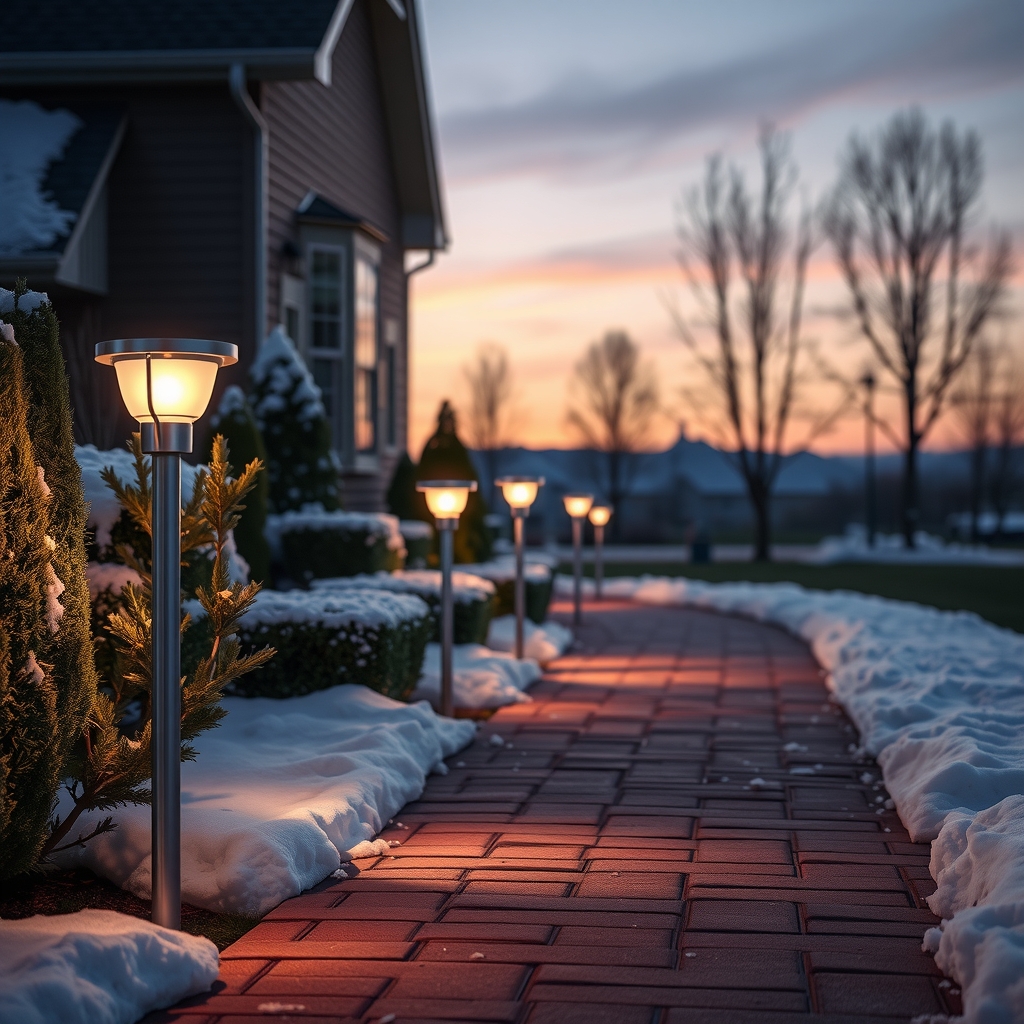
Eight 16-inch stake lights in stainless steel with a copper finish. Each runs on a standard 1.2 V, 600 mAh NiMH AA rechargeable battery, which matters in a cold climate: when the battery tires after a few winters, you swap in a new AA instead of throwing the light away. The listing rates them at about 6 lumens for up to 6 hours, which is a soft marker glow, not a floodlight.
Good to know: expect shorter run times in December and January. At 16 inches tall, they sit above a few inches of snow but will disappear in a big drift.
Brightest path light: Philips Radii Solar LED Pathway Light
Product pick
Philips Radii Solar LED Pathway Light
Illustrative image (AI-generated), not the exact product.
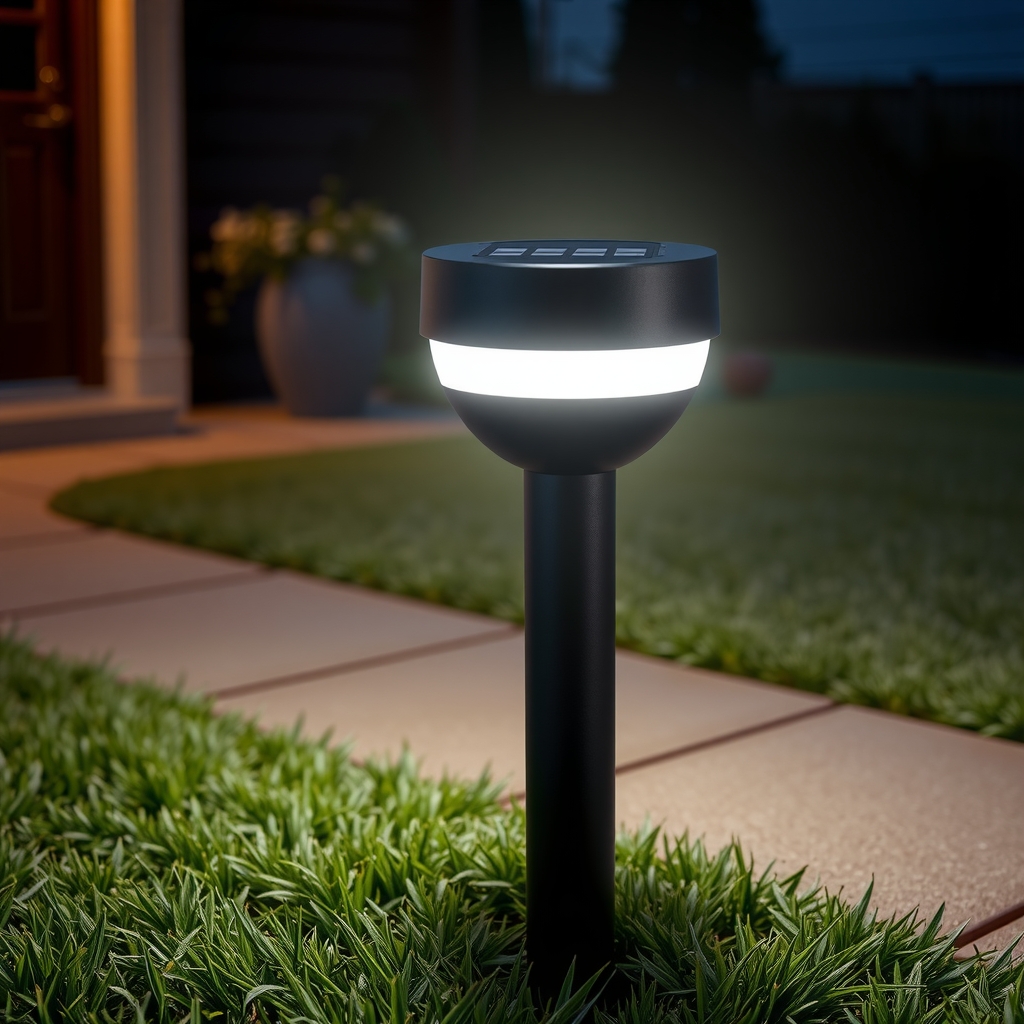
Philips says its Ultra Efficient solar technology gives about five times more light per day of charge than other solar lights, and it adds a motion sensor and dusk-to-dawn switching. Motion sensing helps in winter because the light stays dim until someone walks by, so a short day’s charge goes further. Lights can be linked so a group turns on together.
Good to know: it is sold as a single light and has an IP44 rating, which means splash-resistant rather than jet-proof. Place it where snowmelt does not pool, and expect a higher cost per light than multi-packs.
Best for steps and entries: Consciot Tunable White Solar Spot Lights (4 Pack)
Product pick
Consciot Tunable White Solar Spot Lights (4 Pack)
Illustrative image (AI-generated), not the exact product.
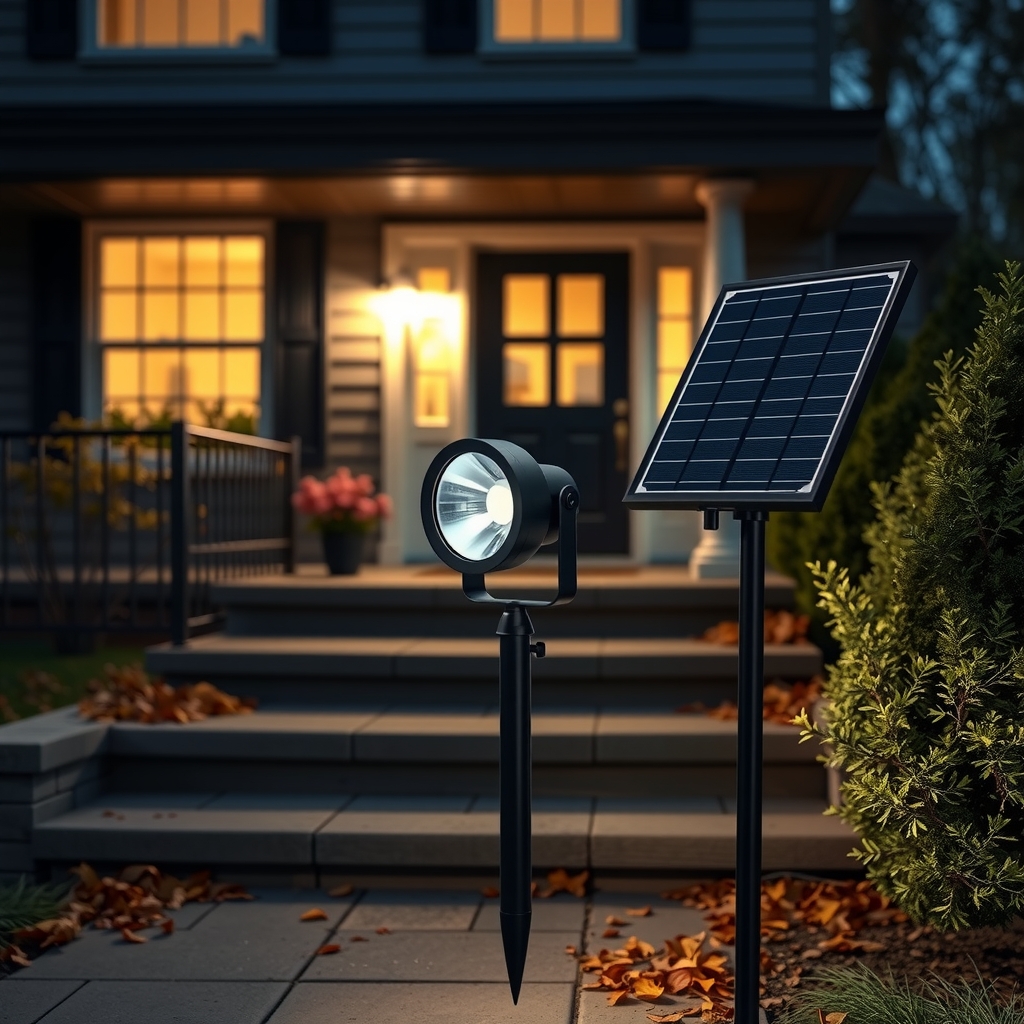
When a path needs real light rather than a glow, a solar spotlight aimed at steps or a walkway works better than small stake lights. These have 24 LEDs rated up to 600 lumens, three color temperatures (3000K, 5000K and 6500K) with three brightness levels, an IP65 rating and a panel that tilts to face the low winter sun.
Good to know: the listing gives an operating range of -10 to 40°C (14 to 104°F). Iowa nights can drop below 14°F in January, so expect weaker performance in deep cold. Use the lower brightness setting in winter to stretch the charge.
Best decorative pick: Pure Garden Mosaic Solar Path Lights (4 Pack)
Product pick
Pure Garden Mosaic Solar Path Lights (4 Pack)

Illustrative image (AI-generated), not the exact product.
Stainless steel stake lights with mosaic glass globes, made to mark a garden bed or path edge rather than to light it. Each uses a rechargeable AA Ni-Cd 600 mAh battery and is rated for up to 8 hours on a full charge. Battery University notes that NiCd cells tolerate cold charging better than NiMH or lithium-ion, which suits a Midwest winter.
Good to know: the listing rates them at 1 lumen. They are accent lights, so pair them with brighter lights where people actually walk.
Conclusion
Solar pathway lights can light an Iowa walkway all year, as long as you expect less from them in winter and set them up for it. Pick lights with a replaceable AA or AAA battery, an IP65 rating where they sit in snowmelt, and a panel you can aim south. Place them in full winter sun, out of the shovel path, and brush the snow off after each storm. Put your brightest lights on steps and entries, and use dimmer markers for the rest of the path.
FAQs
Do solar pathway lights work in winter?
Yes, but with less light. Shorter days, a low sun, snow on the panels and cold batteries all reduce charging, so expect shorter run times from November through February.
Why do my solar lights stop working in winter?
Usually because the panel is shaded or covered with snow, or the battery is cold or worn out. Clear the panel, move the light into full southern sun, and try a fresh rechargeable battery.
Can solar lights stay out in the snow?
Most stainless steel and IP65-rated lights can stay out all winter. Keep panels clear of snow and set lights back from where you shovel.
What battery is best for solar lights in cold weather?
NiCd cells tolerate cold charging best, followed by NiMH. Consumer lithium-ion cells should not be charged below 32°F. Replaceable AA or AAA cells are the easiest to maintain.
What IP rating do outdoor solar lights need?
IP65 or higher is a good choice for lights that sit in rain and snowmelt. IP44 lights resist splashes but are not protected against water jets.
Should I bring solar lights inside for the winter?
Decorative lights you do not need can be stored clean and dry with the switch off. Lights that mark steps or walkways are worth keeping out, as long as the panels get sun.
Sources and review scope
This guide was prepared on October 27, 2026 from the following sources and from the product listings on Amazon.com. Homingwell did not perform hands-on testing. Sellers were checked on Amazon.com on the same date.
- Battery University – BU-410: Charging at high and low temperatures
- WeatherSpark – Average winter weather in Des Moines, Iowa (daylight hours)
- SunriseSunset.io – Sunrise and sunset in Des Moines
- Gama Sonic – How to maintain your solar lights in the cold months
- Del Valle Box – IP rating guide (IEC 60529)
- Entergy – Outdoor lighting: focus on savings
Explore more Lawn & Garden buying guides.