
Lawn & Garden • Iowa Fruit Trees • Updated October 30, 2026
When to Prune Fruit Trees in Iowa (and How to Do It Right)
Explore related guides: Gardening in Iowa: all guides · Fall garden cleanup checklist · Protect shrubs in winter · Garden tool storage for winter · Best loppers for trees and shrubs · Best pruning shears.
Apple, pear, plum and cherry trees need regular pruning to stay healthy and produce good fruit, but timing matters as much as technique. In Iowa the window is short and specific. This guide covers when to prune fruit trees in Iowa, what to cut first, how to shape a young apple tree, how to bring back a neglected one, and which tools to have ready, based on Iowa State University Extension and Outreach guidance.
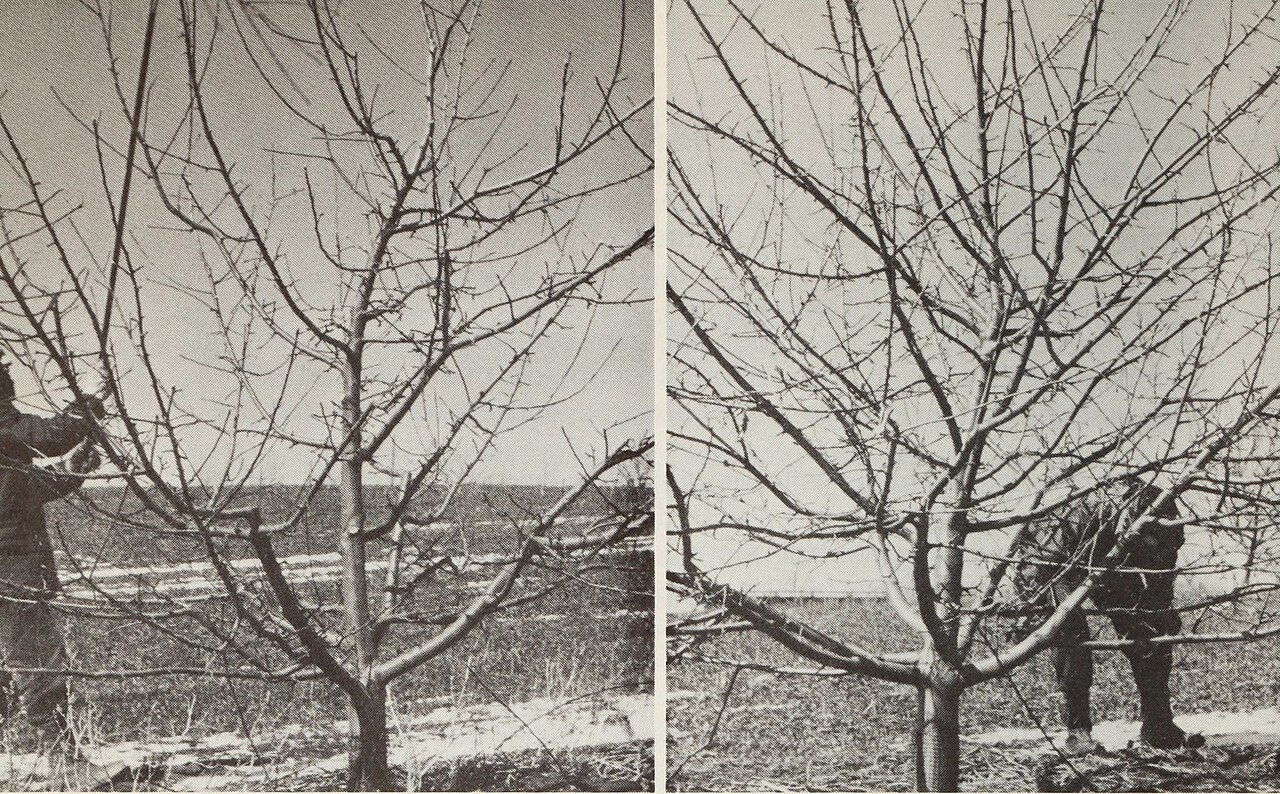
When to prune fruit trees in Iowa: the short answer
Iowa State University Extension says late February to early April is the best time to prune fruit trees in Iowa. Finish before the trees break bud and leaf out. Summer pruning is generally not recommended, with one exception: water sprouts (fast, upright shoots) can be removed in June or July.
It is fall now, so this is planning season. Don’t prune fruit trees in autumn. Use the winter to get your tools sharp and decide which branches will go, then prune on a mild, dry day in late February or March.
| When | What to do |
|---|---|
| Fall and early winter | Don’t prune. Plan cuts, sharpen and clean tools. |
| Late February to early April | Main pruning, while trees are dormant and before bud break |
| Spring (bud break onward) | Stop major pruning |
| June to July | Optional: remove water sprouts only |
| Any time | Remove dead, broken or storm-damaged branches |
Why late winter is best
- You can see the structure. With no leaves, crossing branches, narrow crotches and crowded centers are easy to spot.
- Wounds close faster. Cuts made at the end of dormancy begin to seal as soon as spring growth starts.
- Less winter injury. Pruning in fall can stimulate tender growth or leave fresh wounds exposed to a full Iowa winter.
What to cut first
- Dead, diseased and broken branches. ISU Extension makes this the first step on any tree.
- Water sprouts. Vigorous shoots growing straight up from limbs, often near old cuts.
- Suckers. Upright shoots from the base or roots. They steal energy and can harbor pests.
- Crossing and rubbing branches. Keep the better-placed one.
- Branches growing into the center. Open the canopy so sunlight and air reach the fruit.
Don’t overdo it. ISU Extension warns that excessive pruning of bearing trees weakens them and triggers vigorous shoot growth with few flower buds, which means a poor crop the next year. Young trees need light pruning every year; bearing trees need light to moderate pruning.
Small cuts
Fiskars PowerGear2 Bypass Pruning Shears, 3/4-Inch Cut
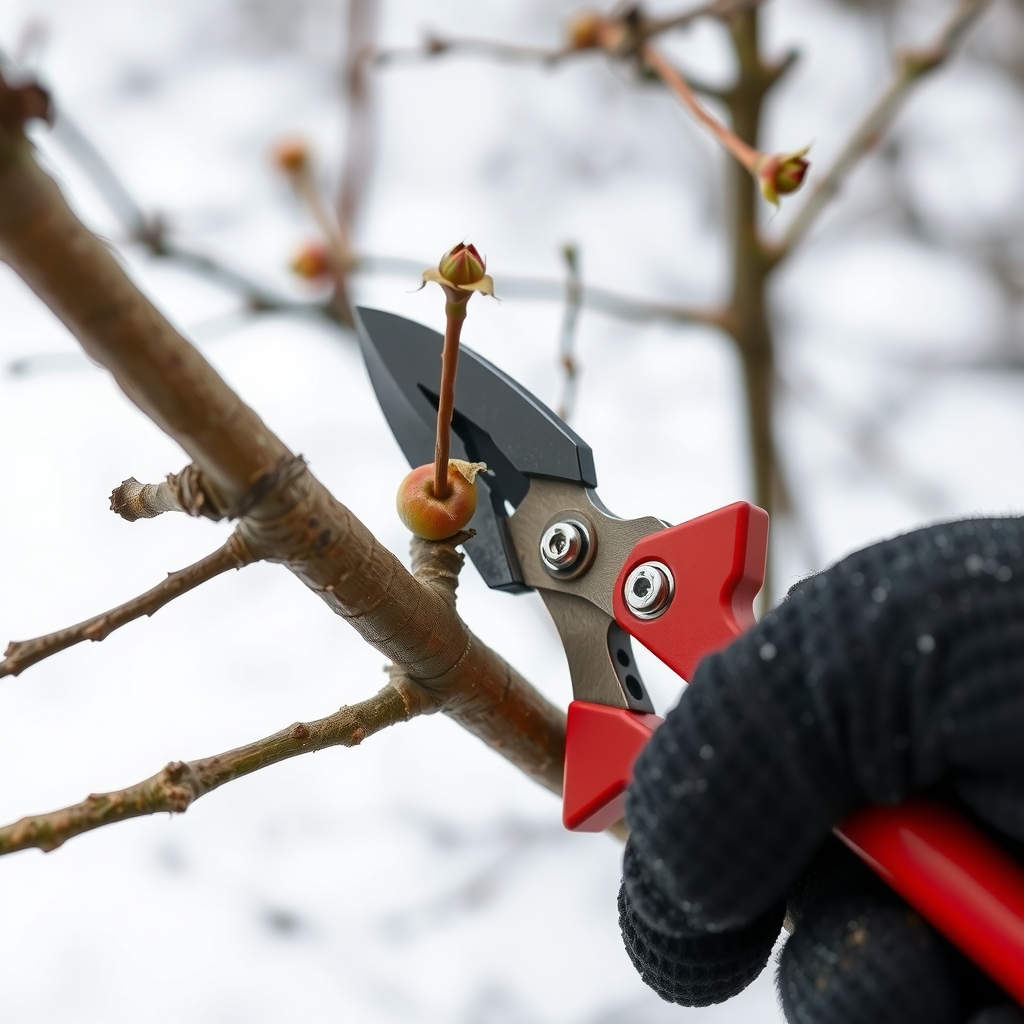
Illustrative image (AI-generated), not the exact product.
For shoots and small branches up to 3/4 inch. Bypass blades make clean cuts on live wood, and the geared handle helps on tough apple wood.
How to make a good pruning cut
- Cut just outside the branch collar, the slightly swollen ring where a branch joins the trunk or a larger limb. Don’t cut flush into the collar, and don’t leave a stub.
- Cut above an outward-facing bud when shortening a shoot, so new growth heads out, not into the tree.
- Use three cuts on heavy limbs: an undercut a foot out, a top cut a little farther out to drop the limb, then a final cut at the collar. This keeps the bark from tearing down the trunk.
- Skip the wound paint. Missouri Botanical Garden and most extension services advise against tree wound dressings; cuts close better when left open.
How to prune a young apple tree (central leader)
ISU Extension trains apple trees to a central leader: one vertical trunk with tiers of side branches, shaped like a Christmas tree, with scaffold branches growing about 30 to 45 degrees above horizontal.
- At planting, unbranched whip: cut it to 30 inches, just above a bud.
- At planting, branched tree: keep the leader and 3 to 4 wide-angled side shoots spaced around the trunk, the lowest about 2 feet above the soil. Cut them and the leader back by half, just above buds.
- Year 2: keep the best shoot at the tip of each scaffold, remove 25% of new growth, and start the second tier 24 to 30 inches above the first.
- Year 3 and on: choose 3 to 4 second-tier branches that are not directly above first-tier branches, and keep the leader the tallest shoot.
- Finished tree: 3 to 4 tiers, with upper branches shorter than lower ones so they don’t shade them.
Medium branches
Fiskars 28-Inch Bypass Loppers, 1.5-Inch Cut

Illustrative image (AI-generated), not the exact product.
Long handles give leverage and reach for branches up to 1.5 inches, like water sprouts and crossing limbs in the middle of the tree.
How to prune a neglected apple tree
A large apple tree that hasn’t been pruned for years is usually tall, crowded and full of small, poorly colored fruit. ISU Extension says it can produce good fruit again with proper pruning, but complete renovation takes two or three years. A common way to split the work:
- Year 1: remove all dead, diseased and broken branches, then a few of the largest limbs that crowd the center or make the tree too tall.
- Year 2: thin crossing branches and remove most of the water sprouts that grew after year 1.
- Year 3: fine-tune: shorten long branches and open the canopy so light reaches the inside.
Cutting too much in one year leads to a flush of water sprouts and a poor crop, so spread the work out.
Large branches
Fiskars 10-Inch Folding Pruning Saw
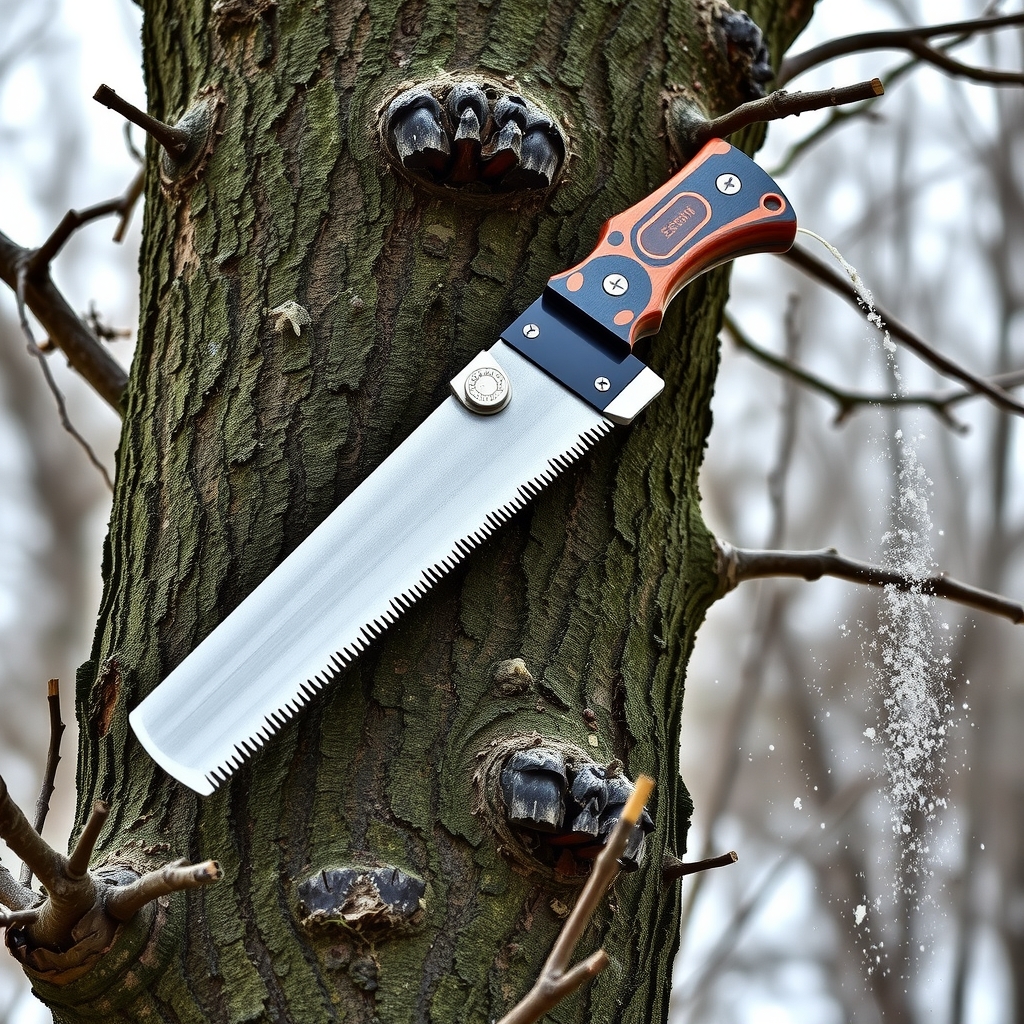
Illustrative image (AI-generated), not the exact product.
For anything thicker than loppers can handle, especially on neglected trees. A folding saw locks open for cutting and closes for safe storage.
Tools by branch size
| Branch size | Tool |
|---|---|
| Up to 3/4 inch | Bypass hand pruners |
| 3/4 to 1.5 inches | Bypass loppers |
| Over 1.5 inches | Pruning saw (three-cut method) |
Choose bypass blades for live fruit wood; anvil tools can crush stems. Clean and sharpen tools before you start, and wipe blades between trees if you cut out diseased wood. Our winter tool care guide covers sharpening and oiling.
Protect your hands: Wells Lamont Nitrile Work Gloves
Gloves
Wells Lamont Nitrile Work Gloves
Illustrative image (AI-generated), not the exact product.
Grippy gloves help on cold February days and protect against scrapes from rough bark and sharp cut ends.
FAQs
When should I prune fruit trees in Iowa?
Late February to early April, according to Iowa State University Extension. Finish pruning before the trees break bud and leaf out in spring.
Can I prune fruit trees in the fall?
It is not recommended. Fall pruning can stimulate tender growth and leaves fresh wounds exposed all winter. Wait until late February to early April. Dead or broken branches can be removed any time.
Can I prune fruit trees in summer?
Summer pruning of fruit trees is generally not recommended in Iowa, but water sprouts can be removed in June or July.
How much should I prune an apple tree?
Young trees need light pruning every year, and bearing trees need light to moderate pruning. ISU Extension warns that excessive pruning weakens trees and reduces the next year’s crop. Neglected trees should be renovated over two or three years.
Should I paint pruning cuts?
No. Most extension services, including Missouri Botanical Garden, advise against wound dressings. Make clean cuts just outside the branch collar and leave them open.
Sources
- ISU Extension – When should I prune my fruit trees?
- ISU Extension – How to Prune and Train Young Apple Trees
- ISU Extension – Proper Time to Prune Trees and Shrubs
- ISU Extension horticulturists – Prune fruit trees with care (High Plains Journal)
- Missouri Botanical Garden – How do I prune an overgrown apple tree?
Explore more Lawn & Garden guides.